
These pages provide additional information for docents on common animal-related topics within our zoo. Some are directly linked to embedded content in the database, such as species comparisons between large and small cats or details on heart disease in great apes.
Interesting Facts About Our Zoo and Our Animals
All exhibits in the Tropical Forest Complex have their primary residence space located beneath the guest-viewable exhibit. At times, when the gorillas have disagreements, it can sound quite intense from below—almost like World War III! Rest assured, keepers are always aware of the situation. Gorillas generally avoid confrontation and typically express disputes through vocalizations and occasional hair-pulling rather than physical fights.
Geckos and Snakes Run Free
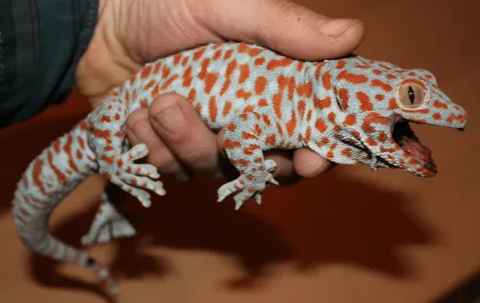
All the exhibits in the Tropical Forest Complex (TFC) have their primary animal residence space located beneath the viewing area seen by guests. Currently, Tokay geckos are present in the TFC, roaming freely, though they have not been seen recently. They are one of the largest living gecko species and are native to South and Southeast Asia. These geckos often inhabit areas close to humans, where they help control insect pests, including mice and other rodents.
On occasion, primates in the TFC have captured and killed Tokay geckos. While these geckos play a beneficial role in pest control, they are extremely aggressive and should not be approached, they are nothing like Bam Bam!. If you see a Tokay gecko, immediately notify a keeper at the TFC. There are also black rat snakes in the exhibit, though none have been seen recently. These snakes are present to help control the rodent population.
What Gorillas Teach Us About Heart Health
When most people think about heart disease, they think of humans. Heart failure is one of the most common and deadly health problems in people. It often develops when the heart becomes too weak or stiff to pump blood properly, usually after years of high blood pressure, clogged arteries, or damage from a heart attack.
Heart disease does not just affect humans. It is also the leading cause of death in adult male gorillas living in zoos and sanctuaries. The type they most often experience is called fibrosing cardiomyopathy, a serious condition where the heart muscle slowly turns into scar tissue.
Think of the heart like a strong, flexible pump. In fibrosing cardiomyopathy, that pump begins to stiffen. Instead of working like muscle, parts of the heart become more like rubbery scar tissue. This scar tissue cannot squeeze properly, and it does not conduct the electrical signals the heart needs to keep a steady beat. Over time, this can lead to sudden heart failure, even in gorillas that appeared healthy just days or weeks earlier.
We have seen this firsthand. Among our own male gorillas, Harry suffered from an aortic dissection, a life-threatening emergency where the inner layer of the aorta, the body’s main artery, tears. Blood rushes through the tear, forcing the layers of the aortic wall apart. This is often fatal in both gorillas and humans and usually strikes with little or no warning.
Ivan, another one of our males, experienced an arrhythmia, or irregular heartbeat. Arrhythmias can be caused by scar tissue, stress, or electrical imbalances in the heart. They are common in both gorillas and humans. In gorillas, arrhythmias are often linked to fibrosing cardiomyopathy and can lead to fainting, fatigue, or sudden cardiac arrest.
Because gorillas and humans share many similarities in heart conditions, veterinarians often use the same kinds of medicines to treat gorillas that doctors use for people. These include ACE inhibitors
such as lisinopril, which relax blood vessels and lower blood pressure, and beta blockers such as metoprolol, which slow the heart rate and reduce stress on the heart. These medications can improve heart function and help manage symptoms in gorillas just as they do in humans.
Recently, scientists have discovered another important clue: gorillas with heart disease tend to have altered gut microbiomes, the complex communities of bacteria living in their intestines. A 2023 study found that gorillas with fibrosing cardiomyopathy had fewer “good” gut bacteria and more of the types linked to inflammation and poor heart health. This mirrors what has been observed in humans, where gut health and heart health are closely connected.
Researchers are still trying to determine whether these gut changes cause heart disease or are a result of it. This area of study is promising and may lead to new ways to prevent or treat heart problems in both gorillas and humans through diet changes, probiotics, or gut-focused medications.
To manage these risks, many zoos now provide gorillas with regular heart checkups using ultrasound, bloodwork, and even wearable fitness trackers. Many gorillas are trained to voluntarily take part in these exams, much like people going for routine medical visits. These tools help caregivers detect problems early and improve the chances of keeping these animals healthy.
By studying gorilla heart disease, we are not only protecting an endangered species, we are also gaining valuable insights into our own health. The similarities between our hearts, our gut microbes, and our risk factors are striking. Caring for gorillas like Harry and Ivan gives us the opportunity to discover knowledge that could one day help save human lives.
Be sure to check out the Great Ape Heart Project!

Taken from the website below.
What is the Great Ape Heart Project?
Formally established in 2010, the Great Ape Heart Project (GAHP) addresses a critical need within the zoo community to investigate and understand cardiovascular disease (CVD or heart disease) in great apes. The project was founded with the goal of creating and maintaining a centralized database that can help analyze cardiac data, generate reports, and coordinate cardiac-related research activities, while greatly improving communication among zoos, research facilities, and sanctuaries where apes are housed. The data collected helps individual animals and builds a body of knowledge that benefits zoos internationally.
How did the Great Ape Heart Project come to exist?
Since the early 1990s, assessing and treating cardiovascular disease (CVD or heart disease) has been a growing concern for those caring for great apes. Heart disease is a major cause of mortality in all four great ape genera managed in captivity: western lowland gorillas (Gorilla gorilla gorilla), orangutans (Pongo pygmaeus, P. abelii, and P. hybrids), chimpanzees (Pan troglodytes), and bonobos (Pan paniscus).
greatapeheartproject.org
References:
GAHP Therapeutic Guidelines 2024 – Updated with edits
Clinical Management of a Western Lowland Gorilla (Gorilla gorilla gorilla) with a Cardiac Resynchronization Therapy Device
University of Colorado – Treating Denver Zoo’s Apes
How Do Gorillas Get Heart Disease? And More Questions From Our Readers
Cardiometabolic disease risk in gorillas is associated with altered gut microbial metabolism | npj Biofilms and Microbiomes
Primates: Categories and Differences
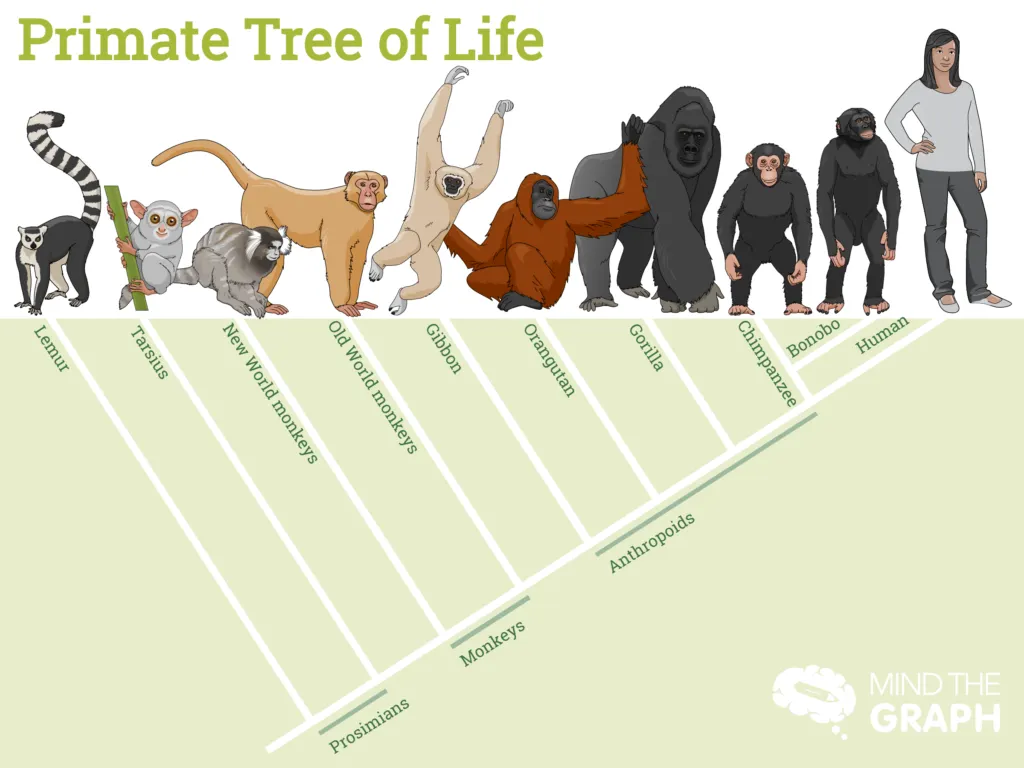
Understanding the diversity of primates is key to appreciating their unique adaptations, behaviors, and evolutionary history. Below is an overview of the major groups of primates, highlighting their distinguishing features.
Prosimians
Prosimians are considered the most primitive primates. They are found mostly in Madagascar, but also in tropical rainforests of Asia and Africa. They have smaller brains relative to body size and a strong reliance on the sense of smell. They also possess a grooming claw and a tooth comb for personal grooming. Most prosimians are nocturnal and have large eyes adapted for low light. Examples include lemurs, lorises, and galagos (bush babies).
New World Monkeys (Platyrrhines)
New World Monkeys are found in Central and South America. They have flat noses with side-facing nostrils and often possess prehensile tails capable of grasping and holding objects. They are generally smaller than Old World Monkeys and most have dichromatic vision, which provides limited color perception. Examples include capuchins, howler monkeys, spider monkeys, and tamarins.
Old World Monkeys (Cercopithecoids)
Old World Monkeys are found in Africa and Asia. Their nostrils are close together and face downward or forward. They have non-prehensile tails, and some species have no tails at all. They tend to be larger in body size than New World Monkeys. Many species have trichromatic vision, allowing full color perception. Some species also have cheek pouches for storing food. Examples include baboons, macaques, and colobus monkeys.
Lesser Apes (Family Hylobatidae)
Lesser apes are found in Southeast Asia. They are the smallest of the apes and are lightweight and agile. They do not have tails and are known for brachiation, which is swinging from branch to branch using their arms. They are highly territorial and use loud calls to mark their territory. Lesser apes live in small family groups. Gibbons are the best-known example.
Great Apes (Family Hominidae)
Great apes are found in Africa and Southeast Asia. They are the largest primates and have complex social structures and behaviors. They do not have tails and are highly intelligent, capable of tool use and problem-solving. They have prolonged developmental periods with strong parental care. Chimpanzees and bonobos are our closest relatives and are known for advanced tool use and intricate social behaviors. Gorillas are the largest primates and primarily herbivorous. Orangutans are solitary and found in Borneo and Sumatra, recognized for their long arms and arboreal lifestyle. Humans are highly social and demonstrate advanced language and cultural capabilities.
Visual Comparison
New World Monkeys typically have prehensile tails, live primarily in trees, are small in size, and have wide, sideways-facing nostrils. Old World Monkeys have non-prehensile tails, can live in both trees and on the ground, are medium to large in size, and have forward or downward-facing nostrils. Prosimians have wet, hairless noses with curved nostrils, tend to be small, and can live in varied social group sizes from solitary individuals to large groups. Lesser apes do not have tails, live in small family groups, and are fully arboreal. Great apes also lack tails, range from arboreal to terrestrial habitats, are large in size, and have complex social structures.
janegoodall.org
References:
Monkeys vs Apes: How are they different? – PASA
Primate Facts | New England Primate Conservancy
What Are Prosimians?
Overview
Elephant Endotheliotropic Herpesvirus (EEHV) is a deadly viral infection that primarily affects young elephants, both in captivity and in the wild. It is one of the leading causes of mortality in juvenile Asian elephants, though African elephants can also be affected. EEHV is known for causing acute hemorrhagic disease, which can result in sudden death if not detected and treated quickly.
Cause and Transmission
EEHV is a herpesvirus that naturally exists in both Asian and African elephant populations. Many elephants carry EEHV asymptomatically, but young calves (between 1-8 years old) are most vulnerable to developing severe disease. The virus spreads through direct contact such as saliva and trunk secretions between elephants. It can remain latent in an elephant’s body for years and reactivate under stress or immune suppression.
Symptoms
EEHV hemorrhagic disease progresses rapidly, often within 24 to 48 hours. Common symptoms include lethargy and weakness, swelling of the head, trunk, and limbs, oral ulcers or bruising on the tongue, bloodshot eyes, bluish or purplish tongue (cyanosis), blood in the trunk, mouth, or stool, loss of appetite, and sudden collapse and death if untreated.
Diagnosis
EEHV is diagnosed using PCR (Polymerase Chain Reaction) tests, which detect viral DNA in blood samples. Bloodwork often shows abnormalities such as low platelet counts and high white blood cell counts. Post-mortem examination reveals internal hemorrhaging, particularly in the heart and lungs.
Treatment
Early detection is critical. Survival rates improve dramatically with rapid and aggressive intervention. Antiviral drugs such as famciclovir or ganciclovir are administered to inhibit viral replication. Fluid therapy is essential to combat shock and maintain circulation. Plasma transfusions from healthy elephants may be given to provide antibodies and clotting factors. Supportive care includes anti-inflammatory drugs and antibiotics to prevent secondary infections.
Prevention and Management
Routine monitoring of young elephants with regular blood tests for EEHV DNA is essential. Minimizing stress is important, as stress can trigger viral activation. Maintaining strong herd immunity can help protect calves through passive immunity from adults. Research on vaccines is ongoing, but there is no widely available vaccine yet for African elephants. In June 2024, the first mRNA-based vaccine was given to Tess, a 40-year-old Asian elephant at the Houston Zoo.
Impact on Conservation
EEHV is a major threat to conservation efforts, particularly for Asian elephants, which already face habitat loss and poaching. Many zoo breeding programs monitor calves closely for early signs of EEHV and have emergency response plans. Wild elephant populations are harder to monitor, making outbreaks more difficult to detect and treat.
Notable Cases
Several high-profile elephant deaths in zoos have raised awareness about EEHV, including our own beloved elephant calf Tsuni, who passed away on February 15, 2024, after a sudden and brief battle with EEHV. The two-year-old calf lived with her herd at the International Conservation Center (ICC) in Somerset. Some elephants have survived with early detection and intensive treatment, providing hope for improved management in the future. There are thirty-six African elephants in the US who are vulnerable to death or illness from EEHV, and twenty-three Asian elephants in the US who are also at risk.
References
EEHV and the North American Advisory Group – AZA
EEHV Advisory Group – Peer-reviewed information on global EEHV research and management
Houston Zoo Elephant Receives First Ever mRNA EEHV Vaccine
In 1948, Idaho faced a strange conservation problem. Beaver populations were growing in remote mountain areas, but many of the animals needed to be moved into higher wilderness habitats where roads barely existed. Hiking them in by hand was exhausting, slow, and expensive. Naturally, humans looked at this situation and decided the reasonable solution was: “What if we dropped beavers out of airplanes?”
And somehow, it worked.
The Idaho Department of Fish and Game wanted beavers relocated because the animals were incredibly important ecosystem engineers. Their dams slowed water flow, reduced erosion, created wetlands, improved drought resistance, and provided habitat for fish, birds, amphibians, and countless other species. In many remote streams, beavers could restore damaged landscapes better than people could.
The problem was transportation. Traditional methods required pack animals and crews carrying heavy cages deep into rugged backcountry. Many beavers died from stress or overheating before even reaching release sites.
A conservation officer named Elmo Heter came up with a wildly unconventional idea: use parachutes.
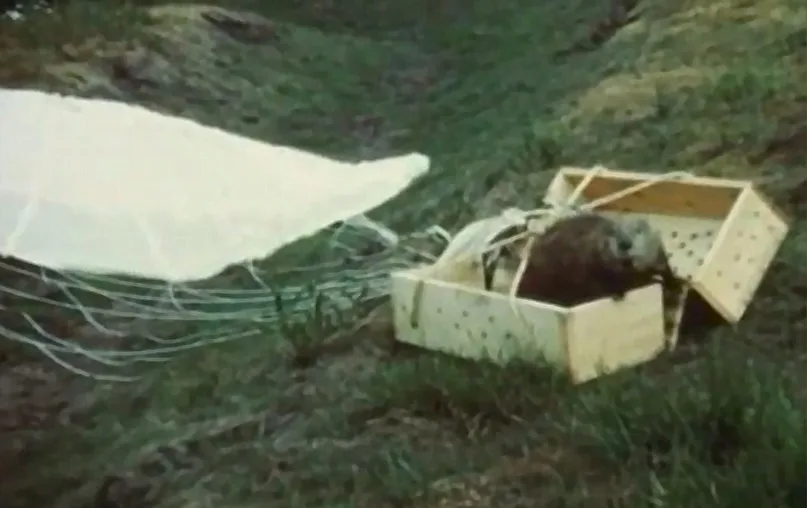
The beavers were placed into specially designed wooden boxes fitted with small parachutes. The boxes were built so they would open automatically when they hit the ground. Early tests were done with dummy weights and eventually with a single experimental beaver named Geronimo. Geronimo survived repeated test drops successfully, apparently becoming the unwilling pioneer of airborne rodent logistics.
Once the system proved safe, dozens of beavers were relocated by plane into central Idaho wilderness areas. Reports from the time suggested the survival rate was remarkably high. Most of the animals quickly settled into streams and began building dams almost immediately. Which is very beaver behavior. No existential crisis. No processing the fact they had just fallen from the sky. Straight back to infrastructure projects.
The program became one of the most famous wildlife relocation stories in American conservation history. Photos of parachuting beavers spread widely decades later and almost sound fake today, but the operation was real. The original parachute boxes are now displayed in museums, and the story remains a legendary example of mid-century wildlife management creativity, sitting somewhere between brilliant conservation science and a cartoon plot.
The project also highlighted something important about beavers themselves. These animals are not just cute oversized rodents with orange teeth. They fundamentally reshape ecosystems. A single family can create wetlands that improve biodiversity, store water during droughts, reduce wildfire spread, and stabilize stream systems for years. Modern conservationists sometimes refer to beavers as “ecosystem engineers” because their dams can restore landscapes on a scale humans often struggle to achieve artificially.
So yes, in 1948, Idaho literally dropped beavers from airplanes to restore wilderness streams. And against all odds, the beavers probably handled the situation more professionally than most human project teams.
US officials parachuted 76 beavers into the Idaho wilderness – then something astounding happened | Discover Wildlife
500 lbs (~0.25 tons)
- A large sofa with 4-5 kids sitting on it 🛋️
- A vending machine filled with snacks 🍫🥤
- 5 big science lab tables
4,000 lbs (~2 tons)
- A car 🚗
- 10 refrigerators filled with food 🥦🍕🥛
- 4 grand pianos 🎹
- 40 average washing machines
5,000 lbs (~2.5 tons)
- A full-size pickup truck (like a Ford F-150) 🚙
- 5 polar bears 🐻❄️
- 50 large bags of dog food 🐶
7,500 lbs (~3.8 tons)
- An empty school bus 🚌
- A large vending machine—stacked 10 times! 🥤🍫