
KuneKune Pig
KuneKune Pig
Kids Kingdom
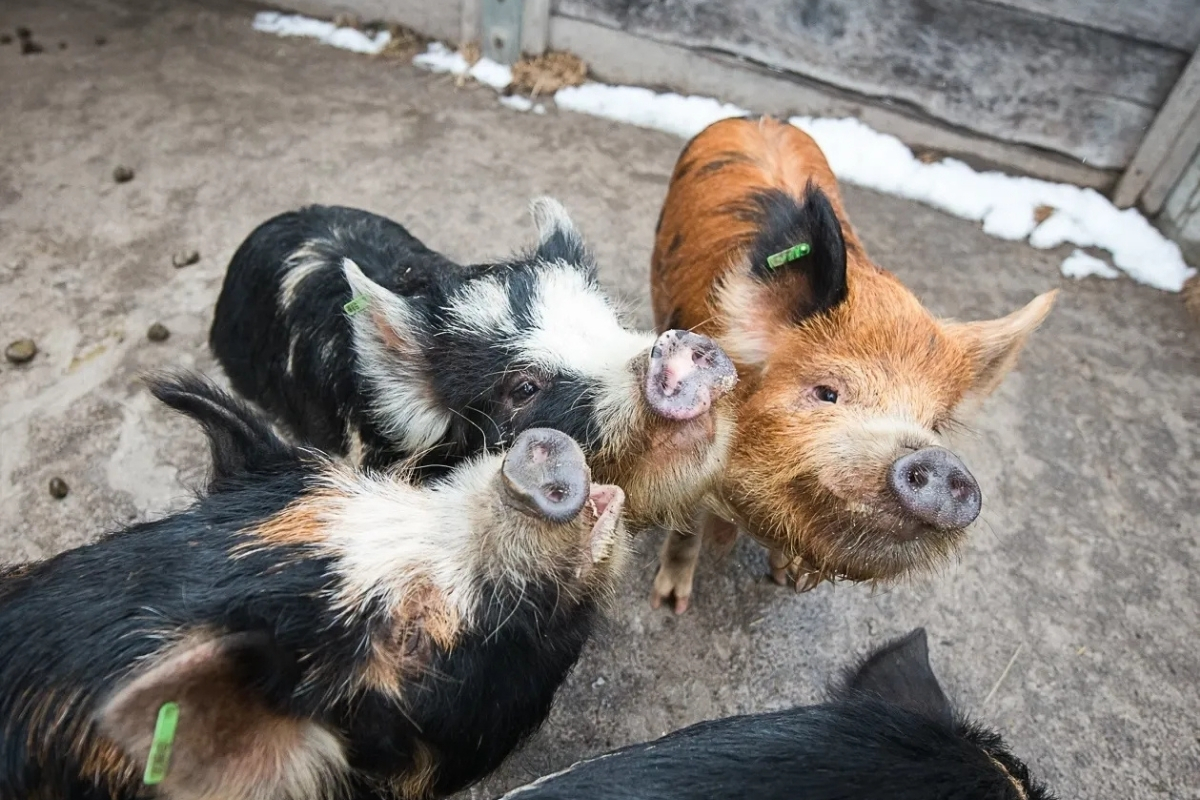
The KuneKune pig derives its name from the Maori language, where “KuneKune” translates to “fat and round,” a fitting description for this charming and unique breed. Originating in New Zealand, these pigs are believed to have descended from Asian domestic breeds introduced by whalers and traders during the early 19th century. Over time, the KuneKune became a beloved part of New Zealand’s agricultural and cultural heritage. Today, all KuneKune pigs found in the United States can trace their lineage back to imported stock from either New Zealand or the United Kingdom, ensuring that their genetics remain closely tied to their original roots. Known for their docile temperament and endearing appearance, KuneKune pigs continue to capture the hearts of animal enthusiasts worldwide.
Loki
Male • 11 yrs 7 mos
DOB: 02/01/2015
Born At: Undetermined
Date In: 08/26/2016
Markings:
Oden
Male • 11 yrs 7 mos
DOB: 02/01/2015
Born At: Undetermined
Date In: 08/26/2016
Markings:
Dager
Male • 11 yrs 7 mos
DOB: 02/01/2015
Born At: Undetermined
Date In: 08/26/2016
Markings:
Thor
Male • 11 yrs 7 mos
DOB: 02/01/2015
Born At: Undetermined
Date In: 08/26/2016
Markings:
Freya
Female • 11 yrs 7 mos
DOB: 02/01/2015
Born At: Undetermined
Date In: 08/26/2016
Markings:
Gone and Moved
Basic Information
Name Origin: “KuneKune” means “fat and round” in Maori.
Origins: Descended from Asian pigs, brought to New Zealand by traders in the early 19th century.
Size: Smallest pig breed, about 24 inches tall and 120–240 pounds.
Appearance: Known for wattles (piri piri), curly or straight hair, and varied colors like black, ginger, and tricolor.
Temperament: Friendly, docile, and highly social; ideal for zoos, farms, and as pets.
Diet: True grazing pig, thriving on grass, fruits, and vegetables; one acre sustains five pigs.
Breeding: Reach breeding age at 9–12 months; gestation lasts 116–120 days.
Conservation: Once nearly extinct, now thriving through breeding programs as domestic pigs.
Fun Fact: Great for land management, clearing vegetation sustainably.
Tiny fluffy lawnmowers with built-in mud software.

Range: Asia and New Zealand.
Habitat: Found in woodlands, pastures, and grasslands.
Native Habitat: Thrive in open grazing environments with access to shelter, shade, and soft ground for rooting.
Original Range: Believed to have originated in Asia and later brought to New Zealand by traders.
Gestation: About 116 days.
Average Litter: About 7 piglets.
Breeding Age: Boars (males) and gilts (females) reach sexual maturity at approximately 9–12 months.
Gestation Period: Lasts about 116–120 days (approximately 3.8 months).
Litter Size: Typical litters range from 4–12 piglets depending on the sow’s age and health.
Piglet Care: Piglets are weaned at around 4 months of age and begin grazing soon after birth.
Reproductive Cycle: Sows are seasonal breeders and exhibit estrus cycles approximately every 18–21 days.
Breeding Environment: Optimal breeding conditions include shelter, pasture access, and a well-maintained diet to support the health of the sow and piglets.
Coat: Covered in hair that may be long or short and either straight or curly depending on the individual.
Color: Wide range of colors including black and white, ginger, cream, gold-tipped, brown, and tricolored patterns.
Snout and Ears: Medium to short black snout with either semi-lopped or pricked ears.
Size: One of the smallest pig breeds, standing about 24 inches tall and weighing between 120 and 240 pounds.
Temperament: Known for their friendly and docile nature, KuneKune pigs enjoy human interaction.
Education Animals: Their outgoing behavior makes them ideal animals for zoos and educational programs.
Domestication: Easily domesticated, they are commonly found on farms or kept as family pets.
Diet: The only true grazing pig, thriving on a diet of grass, fruits, and vegetables.
Sustainability: One acre of grass can support up to five KuneKune pigs.
Social Structure: Highly social animals that live in groups with a clear hierarchy, communicating through grunts, squeals, and body language.
Low Rooting Behavior: Shorter snouts and calmer behavior result in less rooting and ground destruction compared to many other pig breeds.
Wattles (Piri Piri): Some individuals possess distinctive fleshy wattles hanging from the lower jaw, a feature uncommon in most domestic pigs.
Small Size: One of the smallest domestic pig breeds, allowing easier management and lower food requirements.
Heavy Hair Coat: Thicker and often curly hair provides better cold and wet weather tolerance than many commercial pig breeds.
Prey: KuneKune pigs are omnivores but primarily grazers, feeding mainly on grass, fruits, and vegetables. They may occasionally consume small invertebrates and insects while foraging.
Defenses: Adult KuneKune pigs rely on their size, thick skin, and group living for protection against predators.
Domestic, no threats
Breed Preservation: Once nearly extinct in the 1970s, KuneKune pigs recovered through dedicated breeding programs and international breed registries.
Genetic Diversity: Responsible breeding helps maintain healthy bloodlines and prevent inbreeding within the small founder population.
Heritage Livestock: Considered an important heritage breed, KuneKune pigs help preserve agricultural biodiversity and traditional farming practices.
Encyclopedia
KuneKune Pig
KuneKune pigs are a small domestic pig breed originating from New Zealand and are among the most distinctive and sociable heritage pig breeds in the world. Recognized for their compact body shape, short upturned snouts, heavy jowls, rounded build, and characteristic wattles hanging beneath the chin, KuneKune pigs differ substantially from modern commercial swine breeds developed for industrial meat production. The name “KuneKune” derives from the Māori language and translates roughly to “fat and round,” an accurate description of the breed’s compact body form and heavy-set appearance. Unlike many domestic pigs bred for rapid growth and intensive feeding systems, KuneKunes developed as slow-growing, grazing-oriented pigs strongly associated with small-scale farming, household food production, and close interaction with human communities.
KuneKune pigs possess a long and unusual history closely tied to Māori agricultural traditions and rural New Zealand life. By the mid-20th century the breed had nearly disappeared due to replacement by larger commercial swine breeds better suited for industrial pork production. Conservation breeding efforts beginning in the 1970s prevented extinction and allowed the breed to recover, eventually spreading internationally as both a heritage livestock breed and companion animal. Modern KuneKunes are now kept for meat production, conservation grazing, educational farms, petting zoos, regenerative agriculture systems, and private ownership due to their generally calm temperament and manageable size. Despite increasing popularity, however, the breed remains genetically limited compared with major commercial swine lines and continues to be monitored through breed registries and conservation programs.
Classification and Breed Origins
KuneKune pigs are domestic pigs belonging to the species Sus scrofa domesticus, the domesticated form of the Eurasian wild boar. Domestic pigs represent one of the earliest livestock species domesticated by humans and have been selectively bred for thousands of years into hundreds of regional breeds differing in body size, temperament, coloration, feeding behavior, and production characteristics. KuneKunes are considered a heritage breed, meaning they preserve older genetic traits and management characteristics that predate modern industrial livestock selection.
The precise origins of KuneKune pigs remain somewhat uncertain. Historical evidence suggests that small domesticated pigs may have been introduced into New Zealand by European sailors or whalers during the late 18th or early 19th centuries and subsequently adopted by Māori communities. Over time, these pigs were selectively maintained for traits favorable within low-input farming systems, including small size, docility, efficient grazing ability, and adaptability to local conditions. Unlike many pigs that root aggressively through soil in search of food, KuneKunes developed a strong tendency toward grazing behavior, allowing them to feed heavily on grasses and pasture vegetation with less environmental disturbance than many other swine breeds.
By the mid-1900s, changing agricultural practices and increasing reliance on industrial pig breeds caused KuneKune numbers to decline dramatically. During the 1970s only a very small number of animals remained, largely within isolated rural areas of New Zealand. Conservation efforts led by breeders and rare livestock advocates identified surviving animals and established breeding populations to preserve the breed. Modern KuneKune populations worldwide descend from a relatively limited number of founder animals, making careful genetic management important for long-term breed stability.
Physical Characteristics
KuneKune pigs possess a highly distinctive appearance that differs substantially from the body shape of most commercial swine breeds. Adults are relatively small and heavily built, with short legs, broad shoulders, rounded bodies, and compact muscular frames. Mature animals typically stand between 24 and 30 inches (60 to 75 centimeters) at the shoulder and may weigh between 100 and 300 pounds (45 to 136 kilograms), though body condition, sex, genetics, and feeding practices strongly influence size variation. Compared with large commercial meat breeds that may exceed 700 pounds, KuneKunes remain considerably smaller and slower growing.
The breed is especially recognizable for its short upturned snout, heavy jowls, rounded face, and wattles, known as “piri piri,” hanging beneath the lower jaw. Wattles are not unique to KuneKunes but are especially associated with the breed and are present in many individuals. Their ears may be erect, semi-lopped, or fully lopped depending upon bloodline and individual variation. KuneKunes also possess thick skin and a dense coat of coarse hair that may become especially shaggy during colder weather.
Coloration varies widely and includes black, ginger, cream, brown, gold, spotted, tri-colored, and mixed patterned forms. Breed registries recognize numerous traditional color classifications including ginger, willowbank, mahogany and white, black and white, cream, and tricolored patterns. This broad variation reflects both historical breed diversity and selective breeding during modern conservation recovery efforts.
Unlike lean commercial swine selectively bred for efficient muscle production, KuneKunes retain a higher proportion of body fat and slower metabolic growth rates. Their body conformation reflects adaptation to traditional low-intensity agricultural systems rather than industrial confinement production. The breed’s rounded body shape and relatively gentle facial structure contribute significantly to its popularity in educational and companion-animal settings.
Behavior and Temperament
KuneKune pigs are widely regarded as one of the most docile and sociable pig breeds. Compared with many commercial swine breeds that may display high food aggression, nervousness, or strong rooting behavior, KuneKunes are generally calm, curious, and highly tolerant of human interaction. This temperament has contributed greatly to their popularity in petting zoos, educational farms, therapy animal programs, and small homestead systems.
Like all pigs, KuneKunes are highly intelligent animals possessing strong social awareness, problem-solving ability, and complex communication behavior. They establish social hierarchies within groups and communicate through vocalizations, body posture, scent, and tactile interaction. Vocal behavior includes grunts, squeals, barks, and low-frequency contact sounds used during feeding, social interaction, and maternal care. Individuals often form strong social bonds both with other pigs and with familiar human caretakers.
KuneKunes are highly food motivated and capable of learning routines, responding to training cues, and recognizing handlers. Their intelligence and curiosity require environmental enrichment and social stimulation to prevent boredom and stress. Although generally gentle, they remain physically strong animals capable of pushing, lifting, or damaging fencing if improperly managed. Breeding males may become more territorial during mating periods, though aggression levels are typically lower than those observed in many larger swine breeds.
Unlike many pig breeds that root extensively and may rapidly destroy pasture through digging behavior, KuneKunes are notable for their relatively grazing-oriented feeding style. While they retain the ability to root like all pigs, many individuals spend large portions of time grazing grasses and browsing vegetation with comparatively less soil disturbance. This trait has made them increasingly popular in regenerative agriculture and conservation grazing systems where minimizing pasture destruction is desirable.
Habitat and Agricultural Use
KuneKune pigs are highly adaptable domestic animals capable of thriving in a variety of climates provided adequate shelter, food, water, and shade are available. Their thick coats and heavy body condition allow them to tolerate cooler weather more effectively than many lean commercial breeds, though they remain vulnerable to heat stress in excessively warm conditions. Mud wallows, shade structures, and access to fresh water are important components of swine management because pigs possess relatively poor natural heat dissipation ability.
Historically, KuneKunes were commonly maintained in free-ranging or semi-free-ranging systems where they grazed pasture, consumed kitchen scraps, and foraged around rural settlements. Modern management systems range from small hobby farms to pasture-based livestock operations emphasizing heritage breed conservation and low-input farming practices. Because of their smaller size and relatively calm temperament, KuneKunes are often easier to manage than larger industrial pig breeds in small agricultural settings.
The breed’s grazing tendency has attracted increasing interest within regenerative agriculture systems focused on rotational grazing, pasture improvement, and integrated livestock management. Some farmers utilize KuneKunes for vegetation control and low-impact grazing because they may disturb pasture less aggressively than rooting-intensive swine breeds. Nevertheless, stocking density, supplemental feeding, and pasture rotation remain important management considerations because overgrazing and soil damage may still occur under poor conditions.
Feeding Ecology and Digestive Physiology
Like all domestic pigs, KuneKunes are omnivorous and possess highly flexible feeding behavior capable of utilizing a broad range of plant and animal material. However, compared with many commercial swine breeds, KuneKunes are unusually efficient grazers and may derive a substantial portion of their nutrition from pasture vegetation under appropriate conditions. Grasses, clover, herbs, roots, fruits, vegetables, grains, and formulated pig feeds may all contribute to their diet depending upon management goals and environmental conditions.
Despite their grazing ability, KuneKunes cannot survive entirely on poor-quality pasture and still require balanced nutrition containing adequate protein, vitamins, minerals, and energy. Obesity is a common issue within captive populations because of the breed’s efficient metabolism and strong food motivation. Excessive feeding may contribute to reproductive problems, hoof issues, and reduced longevity. Nutritional management therefore plays a major role in maintaining healthy body condition.
The digestive physiology of pigs differs substantially from that of ruminant herbivores such as cattle or goats. Pigs possess a simple monogastric stomach and rely more heavily upon enzymatic digestion than microbial fermentation. Nevertheless, KuneKunes appear somewhat better adapted for forage utilization than many industrial swine breeds selectively developed for grain-intensive feeding systems.
Reproduction and Development
KuneKune pigs reach sexual maturity relatively early, with females often becoming reproductively capable between six and eight months of age, though breeding is usually delayed until greater physical maturity is achieved. Gestation lasts approximately 114 days, commonly summarized in swine husbandry as “three months, three weeks, and three days.” Litters may range from several piglets to more than ten depending upon genetics, age, and nutritional status.
Sows are generally regarded as attentive mothers with strong maternal behavior and relatively calm temperaments around piglets. Piglets are born highly mobile and begin nursing shortly after birth. Early development involves rapid growth, social interaction within the litter, and establishment of teat order among siblings. Young pigs learn feeding behavior, social hierarchy, and environmental exploration through close interaction with the sow and littermates.
Compared with commercial swine breeds selected for rapid meat production, KuneKunes mature more slowly and may require substantially longer periods to reach full adult size. This slower growth rate reflects both their heritage breed origins and reduced emphasis on industrial production efficiency.
Ecological and Agricultural Importance
Although domestic animals rather than wildlife species, KuneKune pigs possess growing significance within heritage livestock conservation, sustainable agriculture, and educational farming systems. Their grazing-oriented behavior and manageable size make them useful in certain pasture-based systems emphasizing biodiversity, rotational grazing, and reduced soil disturbance. They are also increasingly utilized in educational settings to demonstrate traditional livestock breeds, agricultural history, and domestication biology.
As a heritage breed, KuneKunes preserve genetic diversity increasingly absent from industrial livestock populations dominated by a small number of highly specialized commercial lines. Conservation of heritage livestock breeds is considered important because these animals retain adaptive traits, disease resistance characteristics, behavioral variation, and genetic diversity that may prove valuable for future agricultural resilience.
Historical and Cultural Significance
KuneKune pigs possess strong cultural associations with Māori agricultural history and rural New Zealand life. Historically they were valued for their manageable size, ability to thrive on low-input feeding systems, and utility as multipurpose household livestock. Their near-extinction during the 20th century reflects broader global trends in which industrial agriculture replaced many traditional livestock breeds with highly specialized commercial production animals.
Modern recovery of the breed is considered one of the notable success stories in heritage livestock conservation. International interest in rare breeds, small-scale farming, and sustainable agriculture contributed significantly to renewed KuneKune breeding efforts beginning in the late 20th century. Today the breed is exported and maintained in multiple countries through organized breed registries and conservation programs.
Disease and Health Concerns
Like other domestic pigs, KuneKunes are susceptible to a range of bacterial, viral, parasitic, and nutritional diseases. Common health concerns include obesity, hoof overgrowth, internal parasites, skin conditions, reproductive complications, and heat stress. Their heavy body condition and relatively short legs may increase vulnerability to joint strain if excessive weight develops.
Biosecurity remains important because domestic pigs may serve as reservoirs or transmission hosts for diseases affecting livestock populations more broadly, including swine influenza, African swine fever, and porcine reproductive diseases. Responsible breeding practices, veterinary care, and appropriate nutrition are therefore essential for maintaining healthy populations.
Conservation Status and Breed Preservation
Breed Recovery and Genetic Conservation
KuneKune pigs survived near-extinction due to conservation breeding programs initiated during the 1970s in New Zealand. A relatively small number of surviving animals formed the genetic foundation for modern populations, making careful breeding management essential for preserving genetic diversity and minimizing inbreeding. Breed societies and registries now monitor pedigrees and maintain breeding records internationally.
Although modern numbers have increased substantially compared with historical lows, KuneKunes remain a heritage breed rather than a large-scale commercial livestock population. Long-term preservation therefore depends upon continued breeder interest, responsible genetic management, and support for heritage livestock conservation initiatives.
Role in Modern Agriculture and Education
KuneKunes increasingly serve educational and ecological roles beyond traditional meat production. Their calm temperament, manageable size, and unusual appearance make them popular ambassador animals in zoos, children’s farms, agricultural education centers, and conservation farms. Educational programs frequently use KuneKunes to teach concepts involving domestication, livestock management, sustainable agriculture, and rare breed preservation.
Within regenerative agriculture systems, KuneKunes are also used experimentally for vegetation management and integrated grazing systems where reduced rooting behavior may offer advantages compared with larger swine breeds.
Conservation Action
Individuals can support KuneKune conservation by supporting responsible heritage breeders, agricultural education programs, and rare livestock conservation organizations. Preserving heritage livestock breeds helps maintain agricultural biodiversity, genetic resilience, and historical farming traditions increasingly threatened by industrial agricultural homogenization.
The continued survival of KuneKune pigs represents not only preservation of a unique domestic animal breed but also protection of agricultural history, genetic diversity, and traditional low-input livestock systems that once formed an important part of rural life in New Zealand and beyond.
KuneKunes are one of the few livestock breeds that somehow evolved the energy of a retired pub owner who enjoys snacks, sunshine, and mild conversation. Which, frankly, explains why humans got emotionally attached and refused to let the breed vanish.
References
Lasted Updated