
Amur Leopard


  • African Savanna
Back to Animals
News
Individuals
Basic Info
Guide
Biofacts
Encyclopedia

The Amur leopard (Panthera pardus orientalis) is one of the most critically endangered big cats in the world, renowned for its beauty, resilience, and elusive nature. Native to the harsh temperate forests of the Russian Far East and northeastern China, this subspecies has adapted to some of the coldest environments inhabited by leopards. Its pale gray coat, adorned with distinctive black rosettes and a reddish-yellow tinge in summer, serves as both camouflage and insulation, allowing it to thrive in snowy, mountainous terrain.
Amur leopards are solitary and highly territorial, embodying the stealth and independence for which leopards are known. With exceptional adaptations for survival—including thick fur, strong claws, and incredible night vision six times better than humans—they are masters of their environment. Their ability to climb trees and drag prey out of reach of scavengers underscores their prowess as hunters.
Despite their adaptability, the Amur leopard faces immense threats, including habitat loss, poaching, and prey scarcity. With fewer than 100 individuals estimated to remain in the wild, they are a poignant reminder of the fragility of biodiversity. Conservation efforts are critical, as this subspecies is one of only four leopards being managed internationally alongside the Persian, Chinese, and Ceylon leopards.
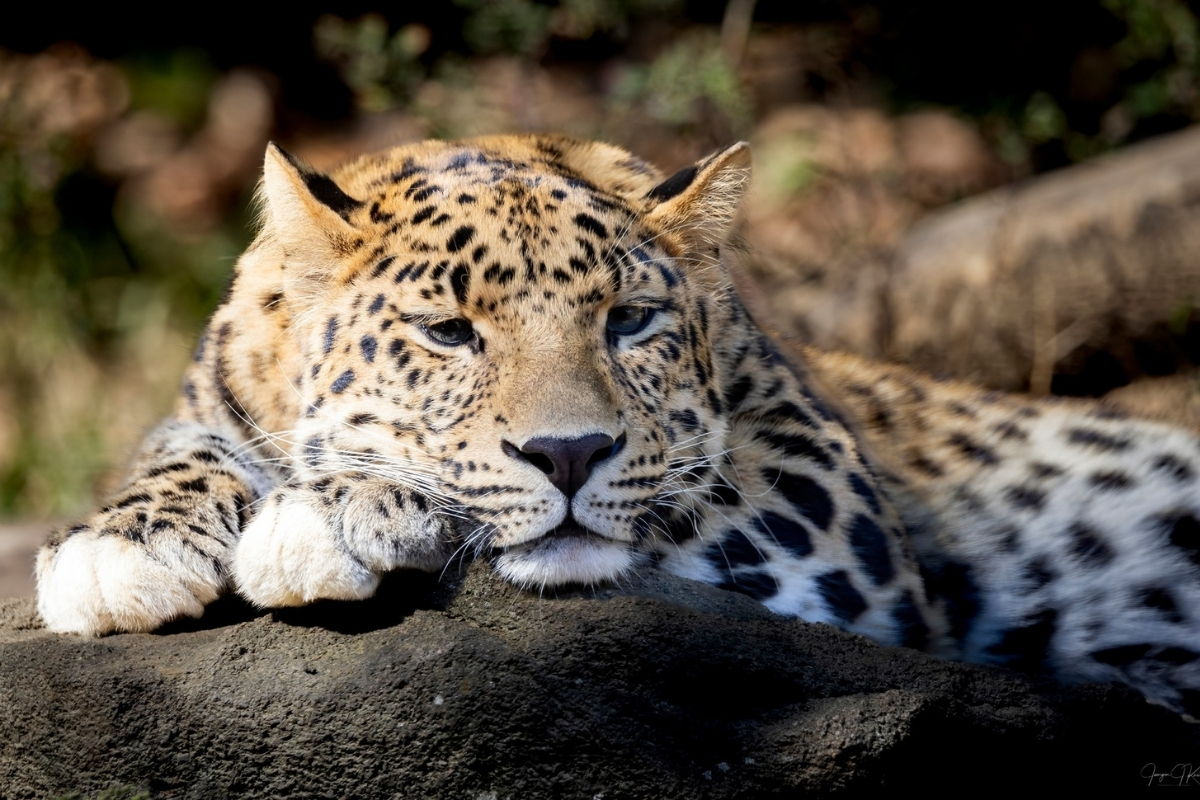
Grover was moved to the Rosamond Gifford Zoo in Syracuse (Jan 2026)
Semba
Female • 10 yrs 7 mos
DOB: 02/04/2016
Born At: Pittsburgh Zoo
Date In: 02/04/2016
Markings: Longer tail than Mila
One of the most important animals in her species due to her genetic lineage. She is the only cat to carry on her mother’s (Candy) bloodline. She has also proven to be an exceptional mother.

Roman
Male • 9 yrs 7 mos
DOB: 02/17/2017
Born At: Utah’s Hogle Zoo
Date In: 03/18/2023

Markings: White paws. He also likes to pace on exhibit


Mila
Female • 3 yrs 6 mos
DOB: 03/18/2023
Born At: Pittsburgh Zoo
Date In: 03/18/2023
Markings: Shorter tail than Semba

Gone and Moved
Grover was moved to the Rosamond Gifford Zoo in Syracuse (Jan 2026)

Basic Information

Critically Endangered: Fewer than 100 individuals remain in the wild, making the Amur leopard one of the most endangered big cats.
Species Survival Program: Zoo breeding programs help preserve genetic diversity and support future population recovery efforts.
Habitat: Found in the temperate forests and mountainous regions of the Russian Far East and northeastern China.
Diet: Carnivorous predators that feed on deer, wild boar, hares, and smaller mammals. Often drag prey into trees to protect it from scavengers.
Behavior: Solitary and primarily nocturnal. Mark territories using scent, scratches, and vocalizations. Excellent climbers and capable swimmers.
Adaptations: Possess night vision estimated to be six times better than humans and hearing roughly twice as sensitive.
Threats: Habitat loss, poaching, declining prey populations, and competition with larger predators such as tigers and bears.
Conservation Efforts: International conservation programs focus on habitat protection, anti-poaching patrols, wildlife corridors, and population recovery.
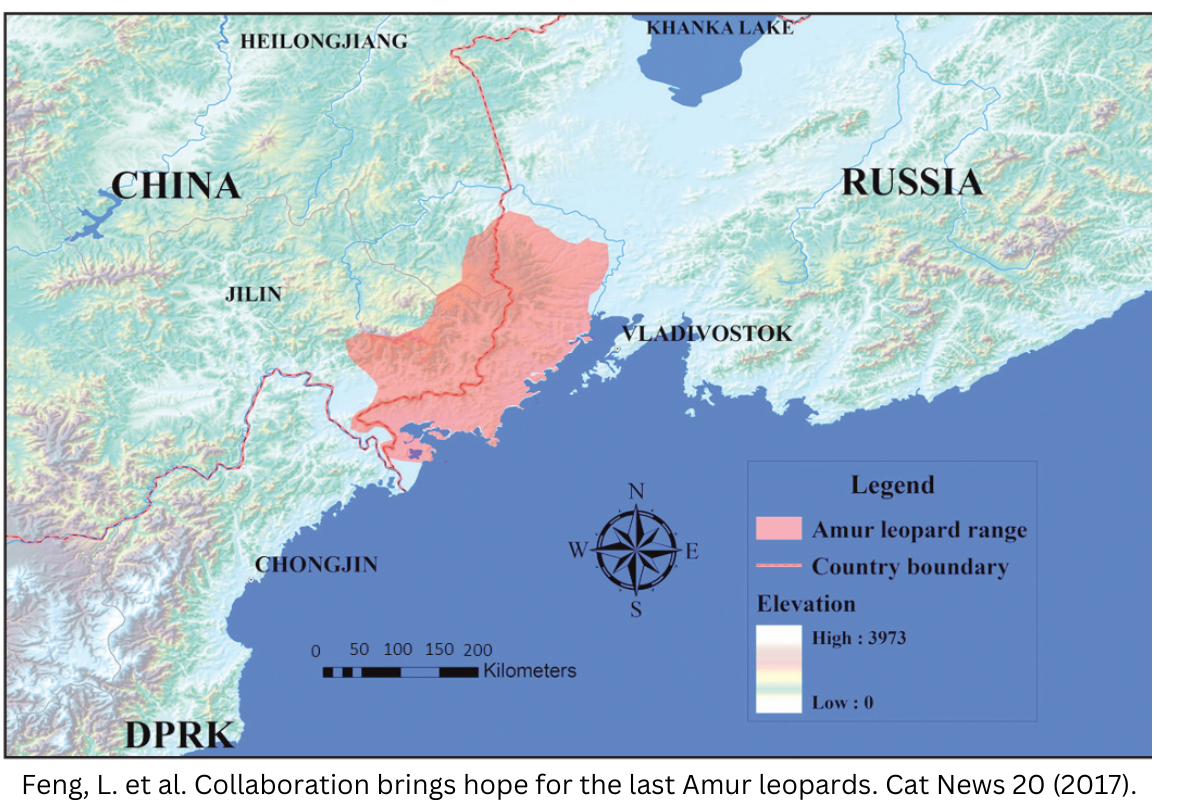
Range: Native to the Amur-Ussuri region of eastern Russia, northeastern China, and historically parts of Korea.
Territorial Range: Females maintain territories ranging from approximately 4–12 square miles, which may overlap with other females. Males maintain much larger territories that overlap with several females and are actively defended.
Climate: Survive harsh winters with heavy snowfall and temperatures that can drop below -30°F (-34°C). Summers are short and relatively cool.
Habitat: Live in temperate deciduous and coniferous forests that provide cover for stalking prey and protection from larger predators.
Terrain: Inhabit mountainous regions with steep slopes, rocky outcrops, cliffs, and forest valleys that provide hiding spots and elevated viewpoints.
Prey Availability: Depend heavily on roe deer, sika deer, wild boar, and other ungulates that inhabit forest meadows and grassland openings.
Water Sources: Streams and rivers provide reliable year-round water sources, even during severe winter conditions.

40-75″ body length, 28-37″ shoulder height, 66-155 lbs weight Males are 50% larger than females

Mating Season: Breeding can occur year-round but peaks during winter, especially January through February.
Gestation: Pregnancy lasts approximately 90 to 105 days.
Litter Size: Females typically give birth to 2–3 cubs, though litters may range from 1–4 cubs.
Cubs: Cubs are born blind and helpless, are weaned around three months of age, and may stay with their mother for up to two years.
Mother’s Role: Females raise the cubs alone and teach them stalking, climbing, and hunting behaviors needed for survival.
Independence: Young leopards eventually leave to establish their own territories, sometimes dispersing up to 30 miles from their birthplace.
Maturity: Males typically reach maturity between 3–4 years of age, while females may continue reproducing into their 10th year.

12 years in wild, 20 years under human care
Wild: Small mammals and birds Zoo: Horsemeat
Critically Endangered as of 2014
*less than 300 in the wild (100 in historic range) and less than 250 in human care in 94 facilities.

Coat Pattern: Leopards possess black spots arranged in rosette patterns across a fawn to pale brown coat, helping provide camouflage in forests and grasslands.
Amur Leopard Coat: Amur leopards have a paler grayish coat with large black rosettes and a reddish-yellow coloration during summer months. Their winter fur becomes longer and thicker for insulation.
Black Panther: Melanistic leopards are commonly called “black panthers.” Their dark coat still contains visible rosette patterns under certain lighting conditions.
Body Structure: More slender and lightly built than jaguars but more muscular and powerful than cheetahs, combining agility, climbing ability, and stealth.

Social Structure: Solitary animals that maintain large territories marked with scent. Interactions with other leopards usually occur only during mating or when females are raising cubs.
Territorial Marking: Males spray urine on logs, branches, and trees to advertise territory ownership and presence. Rasping vocalizations help communicate location to other leopards.
Nocturnal Behavior: Primarily active at night, helping them avoid humans and move more effectively through dense forest habitat.
Hunting Style: Hunt alone using stealth and camouflage to stalk prey before launching a short, rapid ambush attack.
Prey: Feed on roe deer, sika deer, wild boar, hares, birds, and other small to medium-sized animals.
Tree Climbing: Frequently drag prey into trees to protect it from scavengers and other predators. Trees are also used for resting, observation, and concealment.
Adaptations: Thick fur, powerful limbs, retractable claws, and excellent climbing ability help them survive harsh winters and rugged mountainous terrain.
Swimming Ability: Capable swimmers, although they primarily inhabit forested and mountainous environments.
Communication: Use scent marking, scratches, body posture, and rasping vocalizations to communicate, especially during breeding season.

Thick Fur: Dense coat for cold winters.
Large Paws: Act like snowshoes in deep snow.
Climbing: Excellent climbers for shelter and hunting.
Swimming: Strong swimmers, useful for crossing rivers.
Camouflage: Spotted coat blends into forest surroundings.
Sharp Claws: Retractable claws for climbing and hunting.

As an apex predator, the Amur leopard has no natural predators.
Young leopards may fall prey to tigers, wolves, or other large carnivores if they are vulnerable or unable to escape.
Prey: roe deer, sika deer, wild boar, hare, pheasants, and marmots.
An opportunistic hunter, it uses stealth to ambush prey in forests and grasslands.

Poaching: Amur leopards are illegally hunted for their spotted fur, which remains highly valuable in illegal wildlife markets.
Prey Scarcity: Overhunting of prey species such as roe deer and sika deer reduces food availability and increases nutritional stress.
Habitat Loss: Logging, agriculture, roads, and human development fragment forests and isolate already small populations.
Human-Caused Fires: Fires intentionally set to clear land can destroy critical forest habitat and reduce prey populations.
Inbreeding: Extremely small population size has resulted in low genetic diversity, increasing vulnerability to disease and reducing reproductive success.

Top Predator: Amur leopards help regulate herbivore and smaller predator populations within their ecosystem.
Biodiversity Indicator: Healthy leopard populations often indicate a healthy and functioning forest ecosystem.
Habitat Influence: By controlling prey populations, leopards indirectly influence plant growth, forest structure, and overall biodiversity.
Prey Balance: Help maintain balanced populations of roe deer, sika deer, hares, and other prey species.
Ecosystem Protection: Protecting Amur leopard habitat also safeguards forests, watersheds, prey species, and many other animals sharing the same ecosystem.

Protected Areas: Land of the Leopard National Park in Russia protects roughly 650,000 acres and contains approximately 60% of remaining Amur leopard habitat.
Anti-Poaching Efforts: Strengthened anti-poaching patrols supported by organizations such as ALTA and WWF help reduce illegal hunting and trapping.
Prey Restoration: Conservation programs work to restore populations of roe deer, sika deer, and other important prey species.
Cross-Border Collaboration: Russia and China cooperate on habitat protection, wildlife corridors, monitoring programs, and anti-poaching enforcement.
Population Monitoring: Researchers use camera traps, tracking collars, and field surveys to monitor leopard populations and movement patterns.
Community Engagement: Education programs and livestock compensation initiatives help reduce conflict between humans and leopards.
Captive Breeding: Zoos worldwide maintain genetically managed populations that support long-term conservation and possible future reintroduction programs.

Help Native Wildlife: Even though Amur leopards do not live in Pittsburgh, there are still many ways we can help protect local wildlife and ecosystems.
Wildlife-Friendly Homes: Secure garbage cans, feed pets indoors, lock pet doors, reduce outdoor water waste, disinfect bird baths regularly, and use window decals to help prevent bird collisions.
Avoid Harmful Chemicals: Use wildlife-safe alternatives to pesticides and household chemicals to help protect waterways, pollinators, and native animals.
Sustainability: Purchase recycled products when possible and properly recycle electronics to reduce environmental impact.
Respect Wildlife: Never harass, feed, or disturb wild animals, and report illegal wildlife harassment or trafficking when observed.
Protect Habitats: Supporting parks, forests, wetlands, and habitat restoration projects helps protect biodiversity both locally and globally.


Guest Engagement

  1. Saving Amur Leopards
  2. The Rarest Big Cat
  3. Built for Cold Forests
  4. Rosettes and Camouflage
  5. Smaller but More Agile
  6. Silent Tree Climbers
  7. Built for Ambush
  8. Night Vision and Hidden Movement
  9. How Amur Leopards Communicate
  10. Raising Leopard Cubs

𝗦𝗮𝘃𝗶𝗻𝗴 𝗔𝗺𝘂𝗿 𝗟𝗲𝗼𝗽𝗮𝗿𝗱𝘀
• Amur leopards are considered the rarest big cats on Earth.
• By the early 2000s, scientists believed they were dangerously close to extinction, with only around 30 remaining in the wild.
• Today, populations have increased because of major conservation efforts in Russia and China.
• Protected areas like Land of the Leopard National Park were created specifically to protect Amur leopard habitat.
• Scientists use camera traps to identify individual leopards by their unique rosette patterns, almost like fingerprints.
• Some leopards wear GPS collars so researchers can study movement, territory size, and survival.
• Wildlife corridors between Russia and China help isolated leopard populations reconnect and find mates.
• Anti-poaching patrol teams search forests for illegal traps and snares that can injure or kill leopards and their prey.
• Conservationists also protect deer and other prey species because predators cannot survive without enough food.
• Amur leopards are considered umbrella species. Protecting them also protects huge forest ecosystems shared by many other animals.

𝗧𝗵𝗲 𝗥𝗮𝗿𝗲𝘀𝘁 𝗕𝗶𝗴 𝗖𝗮𝘁
• Do you realize how lucky you are to see this animal up close? Amur leopards are considered the rarest big cats on Earth.
• At one point, scientists believed they might disappear forever, with only around 30 left in the wild.
• Even today, the total wild population is still extremely small compared to most other big cat species.
• Small populations create major challenges because isolated animals may struggle to find mates.
• Habitat fragmentation can split forests into isolated patches, trapping small populations apart from each other.
• That is why wildlife corridors between Russia and China are so important for recovery.
• Amur leopard conservation is considered one of the most important big cat recovery efforts in the world.
• Easy transition: rarity → conservation → habitat protection.

𝗕𝘂𝗶𝗹𝘁 𝗳𝗼𝗿 𝗖𝗼𝗹𝗱 𝗙𝗼𝗿𝗲𝘀𝘁𝘀
• Most people picture leopards living in warm jungles or savannas, but Amur leopards survive snowy winters in eastern Russia and northern China.
• Their fur grows much thicker and longer than other leopard subspecies during winter.
• See how pale their coat looks? Lighter fur helps camouflage them in snowy forests.
• They also have longer legs than many other leopards, helping them move through snow more easily.
• Their thick tail helps with balance while climbing and may also help cover the face for warmth while resting.
• Easy transition: cold adaptation → camouflage → hunting.

𝗥𝗼𝘀𝗲𝘁𝘁𝗲𝘀 𝗮𝗻𝗱 𝗖𝗮𝗺𝗼𝘂𝗳𝗹𝗮𝗴𝗲
• How can you tell the difference between a cheetah and a leopard?
• Leopard spots are called rosettes because they look like little roses, cheetahs have spots.
• Unlike tiger stripes that work with vertical forest shadows, leopard rosettes help break up body shape in patchy sunlight and dense vegetation.
• Rosettes make the leopard’s outline harder to recognize while hiding in brush or trees.
• Camouflage is not really about becoming invisible. It is about delaying recognition for a few extra seconds before an ambush.
• Deer often notice movement before detail, so breaking up body shape is extremely important for predators.
• Amur leopard coats are usually paler and fluffier than tropical leopard subspecies because of snowy northern forests.
• Every leopard has a completely unique rosette pattern.
• Easy transition: camouflage → stealth → hunting.

𝗦𝗺𝗮𝗹𝗹𝗲𝗿 𝗯𝘂𝘁 𝗠𝗼𝗿𝗲 𝗔𝗴𝗶𝗹𝗲
• Compared to the African leopards most people see on nature shows, or the Indian leopards seen in warmer parts of Asia, Amur leopards are built differently for snowy forests.
• Amur leopards usually have longer legs, thicker fur, and a lighter build that helps them move through snow and dense forest terrain.
• Being smaller and lighter than Amur tigers makes them incredibly agile climbers and stealth hunters.
• Leopards are built for flexibility, balance, and explosive movement rather than raw strength alone.
• See how long the tail is? That tail works almost like a balancing pole while climbing or jumping.
• Leopards can leap long distances and quickly climb trees to escape danger or protect food.
• Imagine trying to move silently through branches while balancing several feet above the ground.
• Easy transition: agility → climbing → hunting.

𝗦𝗶𝗹𝗲𝗻𝘁 𝗧𝗿𝗲𝗲 𝗖𝗹𝗶𝗺𝗯𝗲𝗿𝘀
• Leopards are among the best climbers of all big cats.
• They often drag prey into trees to keep it away from scavengers and larger predators.
• If you pay attention, you might even see a meal a leopard may have hid in a tree overhead (look to the right of the exhibit across the footpath there is a fake deer in a tree)
• In Amur leopard habitat, climbing trees can also help them avoid Amur tigers, the largest cats on Earth.
• Imagine sharing a forest with a predator that can weigh over 600 pounds. Staying smaller and more agile becomes a survival advantage.
• Strong shoulder muscles and retractable claws help leopards climb quickly and grip bark securely.
• What do you notice about how compact and flexible their body looks compared to a tiger?
• Trees provide safety, camouflage, resting spots, and observation points while hunting.
• House cats still use many of these same climbing instincts today, just on couches instead of forest trees.
• Easy transition: climbing → camouflage → hunting strategy.

𝗕𝘂𝗶𝗹𝘁 𝗳𝗼𝗿 𝗔𝗺𝗯𝘂𝘀𝗵
• Amur leopards rely on stealth and surprise rather than chasing prey long distances.
• They stalk quietly through forests and attack from close range.
• Their soft paw pads help absorb sound while moving through leaves and snow.
• Leopards are patient hunters and may spend a long time stalking before attacking.
• See how low and controlled their movement is? Staying hidden is critical for success.
• A missed hunt wastes huge amounts of energy, especially during harsh winters.
• Easy transition: hunting → prey → survival.

𝗡𝗶𝗴𝗵𝘁 𝗩𝗶𝘀𝗶𝗼𝗻 𝗮𝗻𝗱 𝗛𝗶𝗱𝗱𝗲𝗻 𝗠𝗼𝘃𝗲𝗺𝗲𝗻𝘁
• Most prey animals are active at dawn, dusk, or night, so Amur leopards are built to hunt in very low light.
• Leopards can see far better at night than humans because their eyes are specialized to gather more available light.
• Their pupils open extremely wide in darkness, helping them detect movement through forests and snow.
• What would this habitat look like at night with almost no artificial light? Humans would struggle to see much at all.
• Amur leopards combine excellent night vision with camouflage and silent movement while stalking prey.
• In snowy forests, sound also travels differently, so staying quiet becomes extremely important.
• Their pale winter coat can help them disappear surprisingly well under moonlight and snow.
• Easy transition: night vision → stealth → hunting.

𝗛𝗼𝘄 𝗔𝗺𝘂𝗿 𝗟𝗲𝗼𝗽𝗮𝗿𝗱𝘀 𝗖𝗼𝗺𝗺𝘂𝗻𝗶𝗰𝗮𝘁𝗲
• Amur leopards are solitary and secretive, so most communication happens without another leopard being nearby.
• Scent marking is like leaving a message on the forest trail saying, “I was here.”
• Leopards use scent, scratches, body posture, tail movement, facial expression, and vocal sounds to communicate.
• Scratching trees is not just claw sharpening. It leaves scent, visual marks, and information for other leopards.
• Like lions, tigers, and jaguars, leopards are one of the big cats capable of roaring because of a flexible hyoid bone structure in the throat.
• Smaller cats like house cats and cougars have a more hardened hyoid structure and cannot truly roar.
• Leopard roars are usually shorter and raspier sounding than tiger or lion roars.
• Because Amur leopards are so rare, finding mates across huge forest territories is one of their biggest challenges.
• Scent messages help males and females locate each other during breeding season without traveling together constantly.
• Their long tail helps with balance while climbing, but tail position also communicates mood, just like in house cats.
• Easy transition: communication → rarity → finding mates → conservation corridors.

𝗥𝗮𝗶𝘀𝗶𝗻𝗴 𝗟𝗲𝗼𝗽𝗮𝗿𝗱 𝗖𝘂𝗯𝘀
• It is strange to imagine such skilled predators starting life completely helpless.
• Cubs are born blind and depend entirely on their mother.
• Mothers hide cubs carefully because young leopards are vulnerable to predators and harsh weather.
• Cubs learn hunting skills through play, stalking, climbing, and watching their mother.
• Climbing is an especially important survival skill for leopards.
• Young leopards stay with their mother for many months before becoming independent.
• Easy transition: cubs → survival → conservation.

  1. AMUR LEOPARD PAW PRINT
  2. AMUR LEOPARD CLAWS
  3. AMUR LEOPARD FUR
  4. AMUR LEOPARD SKULL
  5. AMUR LEOPARD CANINES

𝗔𝗠𝗨𝗥 𝗟𝗘𝗢𝗣𝗔𝗥𝗗 𝗣𝗔𝗪 𝗣𝗥𝗜𝗡𝗧
• If you saw tracks like this in the snow, would you know a predator had walked past you? Most people walk right past animal tracks without realizing how much information they contain.
• Leopard tracks are rounder and quieter-looking than dog or wolf tracks because cats stalk prey instead of chasing it over long distances.
• Notice there are usually no claw marks. Like house cats, leopards keep claws retracted while walking so they stay sharp for climbing and gripping prey.
• Amur leopards live in snowy forests where every sound matters. Soft padded feet help them move almost silently through leaves, snow, and rocky terrain.
• Researchers can identify where animals hunt, rest, travel, and patrol territory just from footprints and camera traps.
• In the wild, seeing tracks may be the only sign a leopard was ever nearby because these cats are extremely secretive and rarely seen directly.

𝗔𝗠𝗨𝗥 𝗟𝗘𝗢𝗣𝗔𝗥𝗗 𝗖𝗟𝗔𝗪𝗦

• These claws stay hidden most of the time, almost like folding pocket knives. Why might keeping them protected matter for a predator?
• Unlike dogs, cats keep claws sharp by retracting them while walking. That helps prevent wear from constantly hitting the ground.
• Feel how curved the claws are. They work more like climbing hooks than straight nails.
• Leopards are some of the best climbers among big cats and can drag prey into trees to protect it from scavengers and larger predators.
• House cats use the same claw system when climbing furniture or grabbing toys, just scaled down dramatically.
• Compared to cheetahs, which use claws more like track spikes for traction, leopard claws prioritize climbing, gripping, and ambush hunting.

𝗔𝗠𝗨𝗥 𝗟𝗘𝗢𝗣𝗔𝗥𝗗 𝗙𝗨𝗥
• What do you notice first about the color and pattern? Most people expect leopards to look bright yellow, but Amur leopards are much paler because they live in cold northern forests.
• Their winter coat grows much thicker and longer than African leopard fur to help survive freezing temperatures and snow.
• The large rosette patterns break up the outline of the body, making it surprisingly difficult to spot a leopard hiding in brush or rocky terrain.
• Imagine trying to notice this pattern through trees, snow, and shadows while the leopard stays completely still. Camouflage works best when prey never realizes the predator is there.
• Every leopard has a unique rosette pattern, similar to fingerprints in humans. Scientists use those patterns to identify individuals in camera trap photos.
• Fewer than 100 Amur leopards remain in the wild, so researchers track individual animals very carefully to monitor survival and breeding.

𝗔𝗠𝗨𝗥 𝗟𝗘𝗢𝗣𝗔𝗥𝗗 𝗦𝗞𝗨𝗟𝗟
• What stands out most about the skull? Many people immediately notice the large canine teeth and forward-facing eyes.
• Forward-facing eyes help predators judge distance accurately, especially important for climbing, stalking, and ambush attacks.
• Leopards rely on stealth and close-range power rather than chasing prey long distances like wolves or wild dogs.
• Notice how large the canine teeth are compared to the skull size. Leopards need powerful bites to quickly control prey before it can escape or fight back.
• Leopards are strong enough to carry prey heavier than themselves into trees, which requires powerful jaw, neck, and shoulder muscles.
• Compared to lions or tigers, leopard skulls are smaller and lighter, helping balance strength with climbing agility.
• The sharp cheek teeth work almost like scissors for slicing meat efficiently before larger predators or scavengers arrive.

𝗔𝗠𝗨𝗥 𝗟𝗘𝗢𝗣𝗔𝗥𝗗 𝗖𝗔𝗡𝗜𝗡𝗘𝗦
• What do these teeth look designed to do, cut or grip? Leopard canine teeth are specialized more for gripping and controlling prey than slicing meat.
• Ambush predators need to control prey quickly because struggling animals can still seriously injure the predator.
• Leopards usually kill using a throat or neck bite that restricts breathing or movement.
• Imagine trying to hold onto a struggling deer using only your mouth. Large cats depend heavily on jaw strength and neck muscles during hunts.
• Leopards often move prey into trees afterward to protect it from scavengers or larger predators like tigers and bears.
• Compared to scavengers like hyenas, leopard teeth are built more for precision and grip than crushing bone.

Encyclopedia

Introduction
The Amur leopard (Panthera pardus orientalis) is a critically endangered leopard subspecies native to the temperate forests of the Russian Far East and northeastern China. It is considered one of the rarest big cats in the world and is specially adapted for survival in cold, snowy environments. Unlike the African leopards commonly seen in savannas and warmer climates, Amur leopards possess long winter fur, pale coloration, and physical adaptations suited for mountainous forests and harsh winters. Historically, Amur leopards ranged across parts of eastern Russia, northeastern China, and the Korean Peninsula. Habitat loss, poaching, declining prey populations, and habitat fragmentation caused severe population declines during the twentieth century. By the early 2000s, the wild population had fallen to dangerously low numbers. Intensive conservation programs in Russia and China have helped stabilize and slowly increase the population, though the subspecies remains critically endangered.

Physical Appearance
Amur leopards are medium-sized big cats with long legs, a slender body, and a thick tail used for balance. Males are larger than females and may weigh between 66 and 155 pounds (30 to 70 kg). Their body structure emphasizes agility and climbing ability rather than the massive strength seen in larger cats such as Amur tigers. The coat changes significantly between seasons. During winter, the fur becomes long, thick, and pale cream to gray in coloration, helping provide insulation and camouflage in snowy forests. Summer coats are shorter and more reddish-yellow. Large black rosettes cover the body and help break up the animal’s outline while stalking prey through forests and tall vegetation.

Adaptations for Cold Climates
The Amur leopard is the only leopard subspecies adapted specifically for cold northern forests. Winter temperatures within its range may fall below -30°F (-34°C), requiring several specialized adaptations for survival. Their winter coat is among the thickest of all leopard subspecies and provides protection from snow and freezing winds. Large paws help distribute body weight across snow-covered ground, while long legs improve movement through deep snow and uneven terrain. Excellent night vision and highly developed hearing allow them to hunt effectively during low-light conditions common in dense forests. Their pale winter coloration provides effective camouflage within snowy landscapes, allowing the leopard to remain hidden while stalking prey.

Hunting and Diet
Amur leopards are solitary ambush predators that rely on stealth and camouflage rather than speed or endurance. They typically stalk prey quietly before launching a short, explosive attack from close range. Their diet includes roe deer, sika deer, wild boar, hares, birds, marmots, and other small to medium-sized mammals. Hunting success depends heavily on concealment and patience. Soft paw pads allow them to move quietly across snow, leaves, and forest debris without alerting prey. Unlike cheetahs, which pursue prey across open grasslands, Amur leopards hunt primarily within dense forests and rugged mountainous terrain.

Climbing Ability
Amur leopards are highly skilled climbers and spend significant time using trees for protection, observation, and prey storage. Their flexible body, retractable claws, strong forelimbs, and long tail provide excellent balance and climbing ability. Leopards frequently drag prey into trees to protect carcasses from scavengers and competing predators. Within Amur leopard habitat, climbing may also reduce the risk of encounters with Amur tigers, the largest cats on Earth. Many climbing and stalking behaviors observed in Amur leopards are also present in domestic cats, reflecting shared evolutionary adaptations among felines.

Communication and Behavior
Amur leopards are solitary and territorial animals. Adults typically interact only during breeding periods or when females are raising cubs. Communication occurs through scent marking, scratches on trees, vocalizations, body posture, and facial expressions. Males often produce rough rasping vocalizations commonly described as “sawing” calls. Although leopards belong to the genus Panthera, often referred to as the “roaring cats,” their vocalizations differ substantially from the deep roars produced by lions and tigers. Territories are marked using urine spraying, claw marks, and scent glands. These markings help reduce direct conflict between individuals and assist in locating mates across large forest territories.

Habitat and Range
Amur leopards inhabit temperate forests, mountainous terrain, river valleys, and mixed coniferous-deciduous forests in eastern Russia and northeastern China. Their habitat includes rocky slopes, dense forests, and regions with significant seasonal snowfall. Because prey is spread across large forest regions, Amur leopards require extensive territories to survive. Habitat fragmentation caused by roads, logging, development, and agriculture can isolate populations and reduce genetic diversity. Historically, the subspecies occupied a much larger geographic range, including portions of the Korean Peninsula. Modern populations are now restricted to fragmented habitats near the Russia-China border.

Reproduction and Cubs
Female Amur leopards usually give birth to one to four cubs following a gestation period of approximately 90 to 105 days. Cubs are born blind and remain completely dependent on their mother during early development. Females hide cubs in sheltered dens and gradually teach them survival behaviors including stalking, climbing, camouflage, and hunting. Young leopards may remain with their mother for up to two years before dispersing to establish their own territories. Survival rates for cubs are strongly influenced by prey availability, habitat quality, weather conditions, and human disturbance.

Conservation Challenges
Amur leopards face numerous threats in the wild, including habitat destruction, illegal poaching, declining prey populations, human-caused forest fires, and habitat fragmentation. Small population size also creates severe genetic concerns related to inbreeding and reduced genetic diversity. Illegal traps and snares intended for other animals may also injure or kill leopards. Increasing human activity within forest habitats continues to place pressure on remaining populations. Because the wild population declined to extremely low numbers, conservationists remain concerned about long-term genetic health and population stability.

Conservation Efforts
Large-scale international conservation efforts are currently focused on protecting and recovering Amur leopard populations. One of the most important protected regions is Land of the Leopard National Park in Russia, which preserves much of the remaining habitat. Researchers use camera traps to identify individuals through unique rosette patterns, similar to fingerprints. GPS tracking collars help scientists monitor movement, territory size, survival, and habitat use. Russia and China also cooperate on wildlife corridor development intended to reconnect isolated populations and improve genetic exchange. Anti-poaching patrols, prey restoration programs, captive breeding programs, habitat protection, and community education initiatives all contribute to ongoing conservation efforts.

Ecological Importance
As apex predators, Amur leopards play an important ecological role by regulating prey populations and helping maintain healthy forest ecosystems. Their presence influences herbivore behavior, vegetation growth, and broader ecosystem structure. Because protecting Amur leopard habitat also protects numerous other species within the same ecosystem, the subspecies is considered an important umbrella species for conservation throughout northeastern Asia.

Sources
IUCN Red List https://www.iucnredlist.org/
World Wildlife Fund (WWF) https://www.worldwildlife.org/species/amur-leopard
Panthera https://panthera.org/
Land of the Leopard National Park https://leopard-land.ru/
Smithsonian National Zoo https://nationalzoo.si.edu/
San Diego Zoo Wildlife Alliance https://animals.sandiegozoo.org/

Lasted Updated

Views: 0

© 2026 Pittsburgh Zoo Docents