
Amur Tiger


  • Forest Passage
Back to Animals
News
Individuals
Basic Info
Guide
Biofacts
Encyclopedia

The Amur tiger, the largest of all tiger subspecies and the largest wild cat globally, is highly adapted to cold environments, with the heaviest recorded individual weighing 850 pounds. Historically, Amur tigers roamed across vast areas of Asia, but today their range is restricted to specific regions of Siberia, Northeast China, and North Korea. By the 1940s, their population had plummeted to fewer than 50 individuals due to extensive hunting and habitat loss. Thanks to conservation efforts, including anti-poaching measures and habitat restoration, the wild population has rebounded to an estimated 540–600 individuals today, primarily in the Russian Far East.
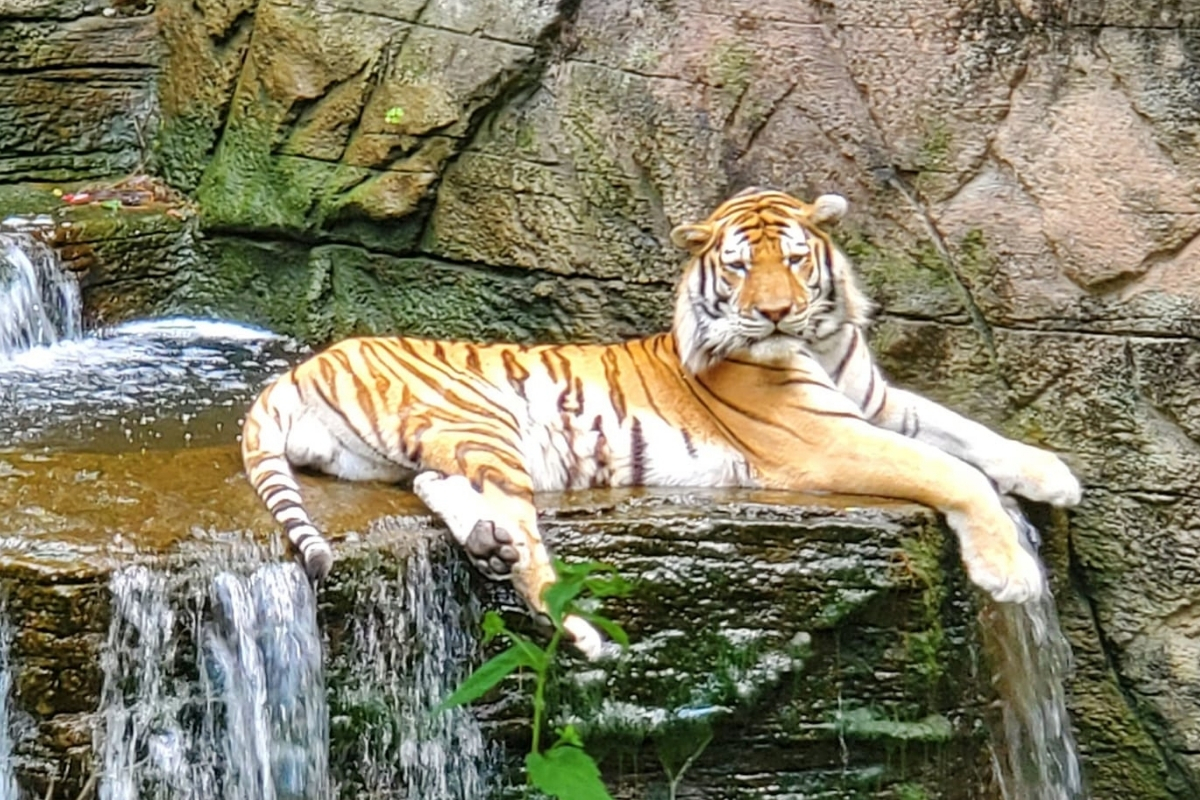
Pasha (Pavel) moved to Bronx Zoo in early 2026. Sasha came to the zoo in Nov 2025
Terney • View Photo
Female • 19 yrs 4 mos • 210 lbs
DOB: 05/24/2007
Born At: Philadelphia Zoo
Date In: 11/17/2015
Markings:

Tesha • View Photo
Female • 9 yrs 0 mos • 150 lbs
DOB: 09/25/2017
Born: Pittsburgh Zoo
Date In:
Markings: Small black spot that looks like a fish above her eye

Sasha • View Photo
Female • 14 yrs 3 mos •
DOB: 06/24/2012
Born: Peoria Zoo
Date in: 11/07/2025

Markings: small black dots on her nose not as orange as Tesha


Andre • View Photo
Male • 9 yrs 0 mos • 300 lbs
DOB: 09/25/2017
Born: Pittsburgh Zoo
Markings:

Gone or Moved
Pasha (Pavel) moved to Bronx Zoo in early 2026

They like fresh snow, they roll in it and even lick it. Very scent oriented, especially strong designer colognes (Obsession, Chanel 5 etc) Also like spices – cinnamon, pumpkin and herbs.
Like to shred things – pumpkins, melon, produce and paper bags. Scents like cinnamon, pumpkin and cologne. Gets a bone on Wed and Sun

Basic Information

Largest Cat: Amur tigers are the largest wild cats. Males can weigh up to 660 pounds and measure over 10 feet long.
Fast and Powerful: They can run up to 40 mph in short bursts and leap long distances to ambush prey.
Strong Swimmers: Amur tigers can cross rivers while hunting or moving through their territory.
Wild Habitat: They live in cold, remote forests with enough space, cover, and prey to survive.
Top Predator: As apex predators, they help keep prey populations balanced and support a healthy forest ecosystem.
Endangered: Fewer than 600 remain in the wild, mostly in the Russian Far East, with small populations in China and North Korea.
Main Threats: Habitat loss, poaching, human conflict, and declining prey populations.
Conservation: Protection efforts focus on anti-poaching patrols, habitat restoration, prey management, and international cooperation.
Largest Cat: Amur tigers are the largest wild cats on earth. Males can weigh up to 660 pounds and measure over 10 feet long.
Fast and Powerful: They can run up to 40 mph in short bursts and leap long distances to ambush prey.
Strong Swimmers: Amur tigers can cross rivers while hunting or moving through their territory.
Wild Habitat: They live in cold, remote forests with enough space, cover, and prey to survive.
Top Predator: As apex predators, they help keep prey populations balanced and support a healthy forest ecosystem.
Endangered: Fewer than 600 remain in the wild, mostly in the Russian Far East, with small populations in China and North Korea.
Main Threats: Habitat loss, poaching, human conflict, and declining prey populations.
Conservation: Protection efforts focus on anti-poaching patrols, habitat restoration, prey management, and international cooperation.

Size: Male Amur tigers are 9 to 12 feet long and can weigh up to 675 pounds. Females are 7 to 11 feet long and weigh around 220 pounds. Adults can stand about 3.5 feet tall at the shoulder.

Breeding: Mating season occurs during winter, usually from December to February.
Gestation lasts about 3 to 3.5 months, and females typically give birth to 3 to 4 cubs in a secluded den.
Cubs: Cubs are born blind and helpless. Their eyes open around 2 weeks old, and they begin walking by 3 weeks.
Weaning: Cubs are weaned at about 3 months old but remain with their mother for 1 to 2 years while learning to hunt and survive.
Independence: Young tigers usually become independent between 2 and 3 years old, with females often staying with their mother longer than males.

Up to 15 yrs in wild, up to 25 in human care
Wild: Deer, wild boar, elk, lynx, bear, fish and rabbits Zoo: Horsemeat, treats include chicken, liver and beef bones.
Endangered as of 2011
Estimated population 600

Size: Largest wild cat, males weigh up to 660 pounds and reach over 10 feet in length; females weigh 220–370 pounds.
Cold Adaptation: Thick, pale winter coat with brown stripes for camouflage; a fat layer along the belly helps retain warmth.
Stripes: Unique patterns on both skin and fur; a mark on the forehead resembles the Chinese symbol for “king” (王).
Vision: Binocular and color vision, with night vision 5 times better than humans.
Claws and Teeth: Retractable curved claws and 30 teeth, including 3-inch canines, the largest among big cats.
Paws: Large, snowshoe-like paws help movement in deep snow.
Powerful Muscles: Enable strong leaps and efficient hunting of large prey.
Stealth and Endurance: Adapted to stalk prey over long distances before striking.
Solitary: Territorial, communicating with scent markings and vocalizations.

Solitary: Amur tigers are solitary, meeting only to mate. Cubs stay with mothers for up to two years before becoming independent.
Territorial: Defend large territories (120–500 square miles) using scent marks, scratch marks, and vocalizations.
Hunting: Apex predators using stealth and ambush to take down prey up to three times their size. Can consume up to 90 pounds of meat in one meal.
Nocturnal: Active mainly at night, using their excellent night vision to hunt.
Communication: Use vocalizations, body language, and scent marking for territory and mating communication.
Adaptable: Conserve energy and seek shelter in dense vegetation or dens during harsh winters.

Thick Fur Coat: Provides insulation against cold temperatures.
Large Paws: Act like snowshoes, aiding movement in deep snow.
Camouflage: Their striped coat helps them blend into snowy forests.

Predators:
Adult Amur tigers have no natural predators.
Cubs can be vulnerable to larger carnivores, such as bears and wolves (Wildlife Conservation Society).
The primary threat to Amur tigers is humans and human activities, including habitat destruction and poaching (World Wildlife Fund).
Prey:
In the wild, they hunt a variety of animals, including deer, wild boar, elk, lynx, bear, fish, and rabbits (Wildlife Conservation Society).
Often hide their kills under brush and consume them near water sources (Panthera).

Habitat Loss: Deforestation, road construction, and industrial development fragment the Amur tiger’s habitat and reduce access to prey.
Poaching: Tigers are hunted for their fur, bones, and body parts, which are sold illegally in wildlife trade markets.
Human-Wildlife Conflict: Expanding human settlements increase encounters with tigers, leading to retaliatory killings when livestock or pets are threatened.
Prey Depletion: Overhunting by humans reduces populations of deer and wild boar, causing food shortages, malnutrition, and starvation.
Climate Change: Warming temperatures and changing ecosystems affect habitat quality and prey distribution.
Habitat Fragmentation: Isolated tiger populations have fewer opportunities to find mates, reducing genetic diversity.
Illegal Logging: Logging operations destroy forest cover and create roads that make poaching easier.
Low Population Size: Small populations are more vulnerable to disease outbreaks, inbreeding, and environmental disasters.
Slow Reproduction: Females raise cubs for years, so population recovery happens very slowly after declines.
Disease Transmission: Domestic animals near tiger habitats can spread diseases to both tigers and their prey species.

Top Predator: Regulates prey populations, helping maintain ecosystem balance.
Biodiversity Support: Controls herbivore numbers, preventing overgrazing and helping preserve plant diversity.
Habitat Indicator: Presence of Amur tigers signals healthy, large, undisturbed forest ecosystems.
Keystone Species: Influences the entire ecosystem, affecting animal populations, vegetation, and habitat structure.
Ecosystem Stability: Helps maintain the structure and long-term health of forest habitats.
Prey Health: Predators often target weaker, sick, or older animals, which can help strengthen prey populations over time.
Forest Regeneration: Balanced prey populations reduce damage to young trees and vegetation, supporting forest growth.
Food Web Balance: Helps prevent one species from dominating the ecosystem and disrupting natural relationships.
Umbrella Species: Protecting tiger habitat also protects countless other plants and animals living in the same ecosystem.
Nutrient Cycling: Leftover prey remains provide food for scavengers and return nutrients back into the ecosystem.

China: National policies supporting environmental stewardship, including the Natural Forest Protection Project and the creation of wildlife reserves.
Anti-Poaching: Increased patrols, monitoring, and law enforcement to combat illegal hunting and wildlife trade.
Protected Areas: Expansion and protection of reserves like Sikhote-Alin in Russia to secure critical habitat.
Prey Restoration: Managing forests and wildlife populations to restore deer, wild boar, and other prey species.
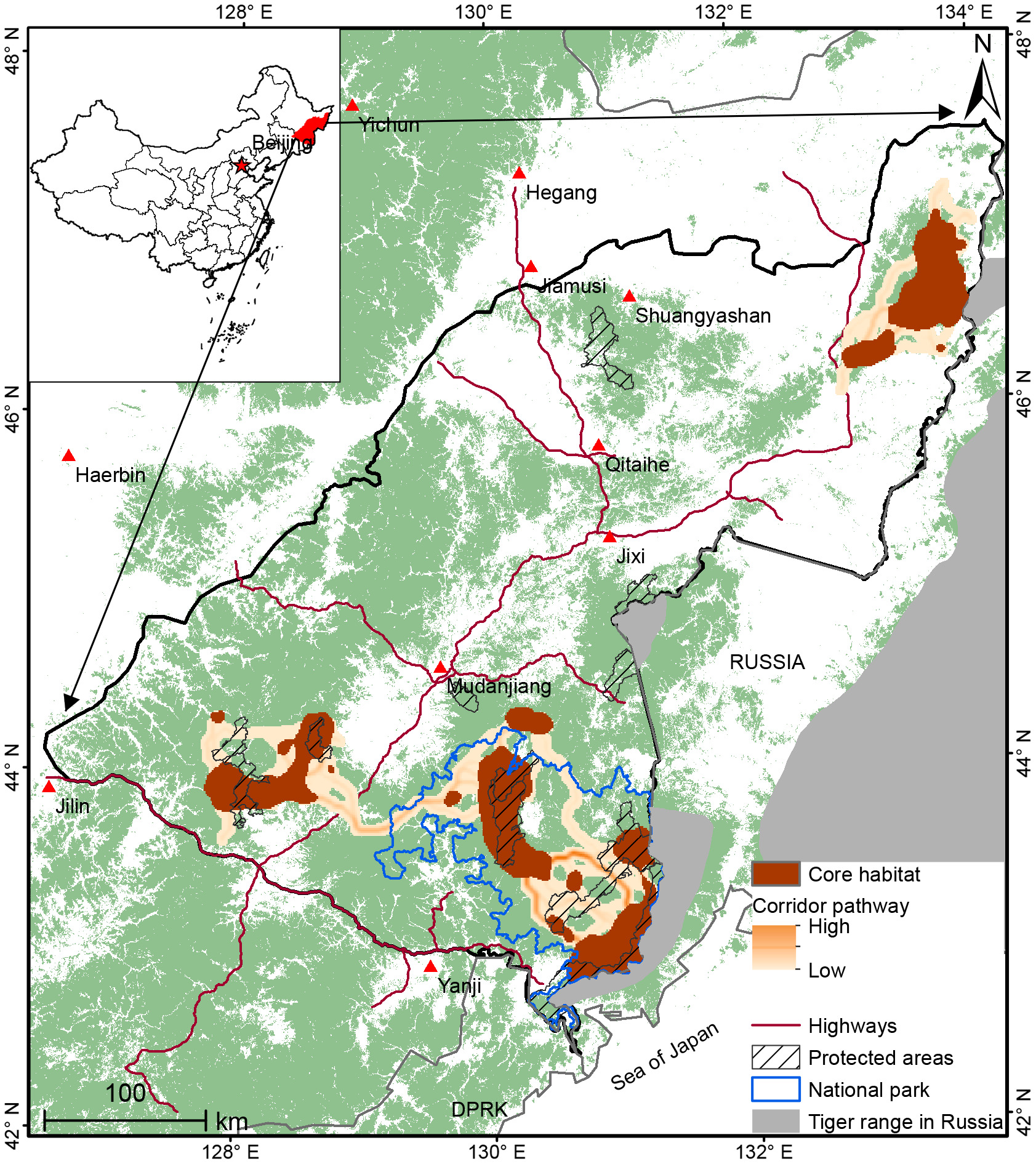
Transboundary Conservation: Collaboration between Russia and China to protect migration routes and habitat corridors across borders.
Captive Breeding: Breeding programs help maintain genetic diversity and support long-term population stability.
Community Engagement: Eco-tourism, education, and alternative livelihoods help reduce human-wildlife conflict.
Wildlife Corridors: Connecting fragmented habitats allows tigers to travel, find mates, and maintain healthy populations.
Camera Trap Monitoring: Scientists use motion-activated cameras to track tiger populations, behavior, and territory use.
Stronger Wildlife Laws: Increased penalties and international cooperation help reduce trafficking of tiger parts.
Forest Restoration: Replanting and protecting forests improves habitat quality for both tigers and prey animals.
Public Education: Awareness campaigns encourage conservation support and reduce demand for illegal wildlife products.

Wildlife-friendly Home: Secure garbage, feed pets indoors, lock pet doors, reduce water use, disinfect bird baths, and add window decals to help prevent bird collisions.
Avoid Chemicals: Use wildlife-safe alternatives to pesticides, herbicides, and rodenticides that can poison native animals and waterways.
Sustainability: Buy recycled products, recycle electronics, reduce plastic waste, and conserve energy to lower environmental impact.
Don’t Harass Wildlife: Observe animals from a distance and report illegal wildlife harassment, trapping, or trafficking.
Protect Habitats: Support parks, wetlands, forests, and native plant gardens that provide shelter and food for wildlife.
Keep Cats Indoors: Outdoor cats kill billions of birds and small mammals each year and are also at risk from cars, disease, and predators.
Plant Native Species: Native flowers, trees, and shrubs support pollinators, birds, and other local wildlife better than many ornamental plants.
Reduce Light Pollution: Turn off unnecessary outdoor lights at night to help migrating birds and nocturnal animals.
Drive Carefully: Slow down in wildlife crossing areas, especially at night when many animals are most active.
Support Conservation Organizations: Donations, volunteering, and community science projects help fund wildlife rescue, habitat restoration, and education efforts.

Other Info
One of the few wild cat species that likes water. They are strong swimmers and often cross rivers to hunt prey.


Guest Engagement

  1. Saving Amur Tigers
  2. Built for Siberia
  3. Stripes and Camouflage
  4. Biggest Cat Alive
  5. Silent Hunter
  6. Tiger Paws
  7. Cats That Like Water
  8. Tiger Communication
  9. Raising Tiger Cubs
  10. One Big Meal

𝗦𝗮𝘃𝗶𝗻𝗴 𝗔𝗺𝘂𝗿 𝗧𝗶𝗴𝗲𝗿𝘀
• Imagine needing an area larger than an entire city just to survive.
• Amur tigers need enormous forest territories because prey animals are spread out across northern forests.
• Roads, logging, and development can split forests into isolated pieces, making it harder for tigers to travel, hunt, and find mates.
• Russia and China are working together to reconnect forests using wildlife corridors so tiger populations do not become trapped in isolated habitat patches.
• Scientists use camera traps to identify individual tigers by their stripe patterns, almost like fingerprints.
• Some tigers wear GPS collars so researchers can study movement, territory size, and where conflict with humans happens.
• Anti-poaching patrol teams search forests for illegal traps and snares before animals are harmed.
• Conservationists also rebuild prey populations like deer and wild boar because tigers cannot survive without enough food.
• In the 1940s, fewer than 50 Amur tigers remained in the wild. Today there are roughly 500–600 because conservation efforts started before extinction occurred.
• Amur tigers are considered an umbrella species. Protecting tiger habitat also protects huge forest ecosystems and many other species living there

𝗕𝘂𝗶𝗹𝘁 𝗳𝗼𝗿 𝗦𝗶𝗯𝗲𝗿𝗶𝗮
• Imagine trying to survive outside during a Siberian winter with no heated house, no fire, and temperatures far below freezing.
• Amur tigers live farther north than any other tiger subspecies and survive in snowy forests during brutal winters.
• See how pale and fluffy they look compared to tropical tigers? Their lighter fur helps camouflage them in snow-covered forests.
• Their winter coat grows much thicker during cold months for insulation.
• They also build up a fat layer along the belly that helps trap body heat.
• Their ears are slightly smaller than tropical tiger subspecies, helping reduce heat loss in freezing temperatures.
• Easy transition: fur → camouflage → hunting.

𝗦𝘁𝗿𝗶𝗽𝗲𝘀 𝗮𝗻𝗱 𝗖𝗮𝗺𝗼𝘂𝗳𝗹𝗮𝗴𝗲
• What do you notice about the stripes? They help break up the tiger’s outline in forests and tall grass.
• Unlike cheetahs that use spots in open grasslands, or jaguars and leopards that use rosettes in forests with broken sunlight, tiger stripes work especially well in reeds, branches, and vertical forest shadows.
• If you look at trees or tall grass from far away, you can see lots of vertical lines. Tiger stripes help them blend into those patterns instead of looking like one solid body shape.
• Camouflage is not really about becoming invisible. It is about delaying recognition for a few extra seconds during an ambush.
• Deer and wild boar do not see color the same way humans do, so the orange coat blends into bark, dead grass, and filtered sunlight much better than we expect.
• See how the white fur is mostly underneath the body? That lighter underside softens shadows and helps hide body shape.
• Every tiger has a completely unique stripe pattern, almost like a fingerprint.
• Amur tigers are usually paler than tropical tiger subspecies because lighter fur blends better into snowy forests.
• Tigers combine camouflage with extremely quiet movement while stalking prey.
• Easy transition: camouflage → stealth → hunting.

𝗕𝗶𝗴𝗴𝗲𝘀𝘁 𝗖𝗮𝘁 𝗔𝗹𝗶𝘃𝗲
• Most people think lions are the largest cats, but Amur tigers are actually bigger.
• Large males can weigh over 600 pounds and stretch more than 10 feet long.
• Historical records describe some individuals approaching 850 pounds.
• See how thick the shoulders and front legs are? Those muscles help overpower prey like deer and wild boar.
• Tigers are built more like powerful ambush wrestlers than long-distance runners.
• Imagine your house cat scaled up to the size of a small car. Same predator instincts, dramatically worse consequences.
• Easy transition: body size → prey → hunting strategy.

𝗦𝗶𝗹𝗲𝗻𝘁 𝗛𝘂𝗻𝘁𝗲𝗿
• Tigers do not usually chase prey long distances like wolves.
• Instead, they rely on stealth, patience, camouflage, and explosive power at close range.
• See how low they can hold their body while moving? Staying low helps them remain hidden before attacking.
• Even at several hundred pounds, they can move surprisingly quietly.
• Their soft paw pads absorb sound while stalking prey through snow and forest debris.
• A tiger may stalk prey for long periods before attacking from only a short distance away.
• Easy transition: hunting → paws → claws.

𝗧𝗶𝗴𝗲𝗿 𝗣𝗮𝘄𝘀
• See how oversized the paws look? They act almost like snowshoes in deep snow.
• Large paws spread out body weight so the tiger sinks less while walking through snow.
• Thick fur between the paw pads helps protect against freezing ground and ice.
• Their retractable claws stay sharp because they remain hidden while walking.
• Front paws are powerful enough to grab and pin struggling prey instantly.
• House cats use the same paw-and-claw mechanics on toys and furniture, just at a much smaller scale.
• Easy transition: paws → climbing → swimming.

𝗖𝗮𝘁𝘀 𝗧𝗵𝗮𝘁 𝗟𝗶𝗸𝗲 𝗪𝗮𝘁𝗲𝗿
• Most people think all cats hate water, but tigers are excellent swimmers.
• Amur tigers regularly cross rivers while exploring territory or hunting prey.
• In warmer weather, they sometimes cool off by resting in streams or ponds.
• Their powerful legs help them swim efficiently through strong currents.
• Rivers are not really barriers when you are a predator this powerful.
• “Does your cat like water?” is usually a great conversation starter with visitors.
• Easy transition: water → territory → habitat.

𝗛𝗼𝘄 𝗔𝗺𝘂𝗿 𝗧𝗶𝗴𝗲𝗿𝘀 𝗖𝗼𝗺𝗺𝘂𝗻𝗶𝗰𝗮𝘁𝗲
• Tigers are solitary, so communication helps them claim space without constantly fighting other tigers.
• To a tiger, the forest is covered in invisible scent messages left on trees, rocks, logs, and trails.
• Scent marks can tell another tiger who passed through, how recently, whether they are male or female, and if they may be ready to breed.
• Tigers also scratch trees, which leaves both scent and visible claw marks high enough to show body size.
• Tigers are one of the “roaring cats” because of a special hyoid bone structure in the throat that is not fully hardened like in smaller cats.
• Lions, tigers, leopards, and jaguars can roar because of this flexible hyoid structure, while smaller cats like cougars and house cats cannot truly roar.
• A tiger roar can travel long distances through forest habitat and helps advertise territory or locate other tigers.
• But most tiger communication is actually quieter than people expect. Tigers also chuff, growl, hiss, moan, and use body posture depending on mood and distance.
• See how much body language cats use? Tail movement, ears, posture, and facial expression all help signal warning, curiosity, or comfort.
• House cats still use many of the same communication tools, including rubbing, scratching, scent marking, tail position, and different vocal sounds.
• Easy transition: communication → territory → why tigers need huge forests.

𝗥𝗮𝗶𝘀𝗶𝗻𝗴 𝗧𝗶𝗴𝗲𝗿 𝗖𝘂𝗯𝘀
• It is strange to imagine something this powerful starting life blind and tiny enough to fit in your hands.
• Cubs are born helpless and depend completely on their mother.
• Young tigers stay with their mother for up to two years learning how to survive and hunt.
• Cubs learn by watching, practicing, stalking, wrestling, and making mistakes.
• Hunting is not automatic. Tigers need years of learning and experience.
• Mothers must also protect cubs from freezing temperatures, predators, and unfamiliar male tigers.
• Easy transition: cubs → survival → conservation.

𝗢𝗻𝗲 𝗕𝗶𝗴 𝗠𝗲𝗮𝗹
• Imagine eating enough food to last several days in one sitting.
• A tiger can eat up to 90 pounds of meat after a successful hunt.
• Hunting burns enormous energy, especially during winter.
• Tigers often drag prey into cover before feeding.
• One large prey animal may feed a tiger for several days.
• In harsh northern habitats, wasting energy or losing a meal can become dangerous very quickly.
• Easy transition: prey → habitat → ecosystem role.

Encyclopedia

Amur Tiger

The Amur tiger (Panthera tigris altaica), also called the Siberian tiger, is the largest of all tiger subspecies and the largest wild cat on Earth. Native to the forests of the Russian Far East, northeastern China, and historically northern Korea, Amur tigers are highly specialized predators adapted for survival in some of the coldest environments inhabited by any big cat. Their massive size, thick fur, powerful muscles, and large snowshoe-like paws allow them to move efficiently through snowy forests while hunting large prey.

By the 1940s, Amur tiger populations had declined to fewer than 50 individuals in the wild due to habitat destruction, prey depletion, and intensive hunting. Conservation programs, anti-poaching enforcement, and habitat protection have helped populations recover, with current estimates ranging between 500 and 600 wild individuals. Despite this recovery, Amur tigers remain endangered and continue to face threats from poaching, habitat fragmentation, and human expansion.

Classification and Subspecies

Amur tigers belong to the family Felidae and are one of several tiger subspecies found across Asia. They are genetically and physically distinct from Bengal, Malayan, Sumatran, and Indochinese tigers. Amur tigers are uniquely adapted for cold northern climates and are recognized by their pale orange coat, widely spaced brown or black stripes, and thick insulating fur.

Historically, Amur tigers ranged across eastern Russia, northeastern China, and the Korean Peninsula. Today, most remaining wild individuals are concentrated in the Russian Far East, particularly within the Sikhote-Alin mountain region.

Physical Characteristics

Amur tigers are the largest living cats, with adult males commonly reaching 9 to 12 feet in total length and weighing up to 675 pounds. Exceptional historical individuals have reportedly exceeded 800 pounds. Females are smaller, typically measuring 7 to 11 feet long and weighing between 220 and 370 pounds. Adults can stand approximately 3 to 3.5 feet tall at the shoulder.

Unlike tropical tiger subspecies, Amur tigers possess several adaptations for surviving harsh winters. Their fur becomes thicker and lighter in color during winter months, helping provide insulation and camouflage against snow-covered forests. A layer of fat along the abdomen further protects against freezing temperatures. Their large paws distribute weight across snow and function similarly to snowshoes, allowing them to travel efficiently through deep snow.

Like all tigers, each Amur tiger has a unique stripe pattern found on both the fur and skin. A distinctive marking on the forehead often resembles the Chinese character for “king” (王), contributing to the tiger’s long-standing symbolic importance in Asian cultures.

Habitat and Range

Amur tigers inhabit temperate forests, mixed conifer forests, birch woodlands, and mountainous regions across the Amur-Ussuri region of eastern Russia and northeastern China. These forests provide dense cover, large hunting territories, and access to prey species such as deer and wild boar.

Unlike many large predators, Amur tigers require enormous territories to survive due to relatively low prey density in northern forests. Individual territories may range from 120 to more than 500 square miles depending on prey availability and habitat quality.

Behavior and Social Structure

Amur tigers are solitary and territorial animals. Adults generally meet only for mating, while cubs remain with their mothers for up to two years before dispersing to establish territories of their own. Tigers communicate through scent marking, scratch marks, vocalizations, and body language.

These tigers are primarily nocturnal or crepuscular hunters, relying on stealth, patience, and camouflage to stalk prey before launching a rapid ambush. Their powerful hind limbs allow them to leap long distances and overpower animals significantly larger than themselves.

Amur tigers are also strong swimmers and are among the few cat species known to regularly enter water voluntarily. They may cross rivers while hunting, traveling, or exploring territory.

Diet and Hunting

Amur tigers are apex predators that feed primarily on deer and wild boar, though they may also hunt elk, lynx, rabbits, fish, and occasionally bears. Their hunting strategy depends on stealth and endurance rather than long chases. Tigers may stalk prey over considerable distances before attacking at close range.

An adult Amur tiger can consume up to 90 pounds of meat in a single feeding and often drags kills into cover or near water sources to feed over several days.

Reproduction and Development

Breeding typically occurs during winter between December and February. After a gestation period of approximately 93 to 112 days, females give birth to litters of two to four cubs within sheltered dens.

Cubs are born blind and helpless, opening their eyes at around two weeks old and beginning to walk by three weeks. They are weaned at approximately three months of age but remain dependent on their mother for hunting instruction, protection, and survival training. Young tigers usually become independent between two and three years old.

Predators and Threats

Adult Amur tigers have no natural predators, though cubs may occasionally be vulnerable to wolves or bears. The greatest threat to Amur tigers is human activity.

Poaching remains one of the most significant dangers, driven by illegal trade in tiger fur, bones, and body parts. Habitat fragmentation caused by logging, roads, industrial development, and expanding settlements reduces territory size and isolates tiger populations. Declining prey populations caused by overhunting also threaten tiger survival by limiting food availability.

Climate change may further impact Amur tiger habitat by altering forest composition and prey distribution across northern Asia.

Ecological Importance

As apex predators, Amur tigers play an essential role in maintaining ecosystem stability. By regulating populations of deer and wild boar, they help prevent overgrazing and maintain forest health. Their presence is considered an indicator of healthy, large-scale forest ecosystems with intact biodiversity.

Because Amur tigers require extensive territories and abundant prey, conservation efforts aimed at protecting tiger habitat also safeguard many other species that share the same environment.

Conservation Efforts

Conservation programs for Amur tigers include anti-poaching patrols, habitat protection, prey restoration, wildlife corridor development, and international cooperation between Russia and China. Protected areas such as the Sikhote-Alin Biosphere Reserve play an important role in preserving habitat and supporting population recovery.

Zoos and conservation organizations also contribute through captive breeding programs, research, education, and public awareness initiatives designed to reduce illegal wildlife trade and support long-term conservation.

Although Amur tiger populations have recovered from near extinction, their future still depends on continued habitat protection, strong anti-poaching enforcement, and international conservation cooperation.

References

IUCN Red List: Amur Tiger
World Wildlife Fund: Tigers
Panthera: Amur Tiger
Wildlife Conservation Society: Amur Tiger
Smithsonian National Zoo: Amur Tiger
WildCats Conservation Alliance: Amur Tiger

Lasted Updated

Views: 0

© 2026 Pittsburgh Zoo Docents