
Binturong
The binturong (Arctictis binturong), sometimes called the bearcat, is a unique rainforest mammal native to South and Southeast Asia. Despite its nickname, the binturong is neither a bear nor a cat, but a member of the civet family. Known for its shaggy black coat, long whiskers, and fully prehensile tail, the binturong is one of the few carnivores in the world with a tail capable of grasping branches like a monkey. Binturongs spend most of their lives in the rainforest canopy, moving carefully among trees in search of food. Although classified as carnivores, they are actually omnivores, with fruit making up a major portion of their diet. They play an especially important ecological role as seed dispersers, particularly for strangler figs, helping maintain healthy rainforest ecosystems. One of the most famous characteristics of the binturong is its unusual scent. Their urine contains a compound called 2-AP, the same chemical responsible for the smell of buttered popcorn. This scent is used for communication and territorial marking throughout the forest canopy. Binturongs face increasing threats from habitat destruction, palm oil plantation expansion, hunting, and the illegal wildlife trade.

Basic Information
Not a Bear or Cat: Binturongs are members of the civet family.
Popcorn Smell: Their scent smells like buttered popcorn due to a chemical in their urine.
Prehensile Tail: One of the few carnivores with a fully prehensile tail.
Rainforest Seed Disperser: Important for spreading fig seeds through tropical forests.
Mostly Arboreal: Spend much of their lives high in trees.
Solitary Lifestyle: Usually live alone except during breeding.
Omnivores: Eat fruit, insects, eggs, and small animals.
Vulnerable Species: Threatened by habitat loss and illegal wildlife trade.
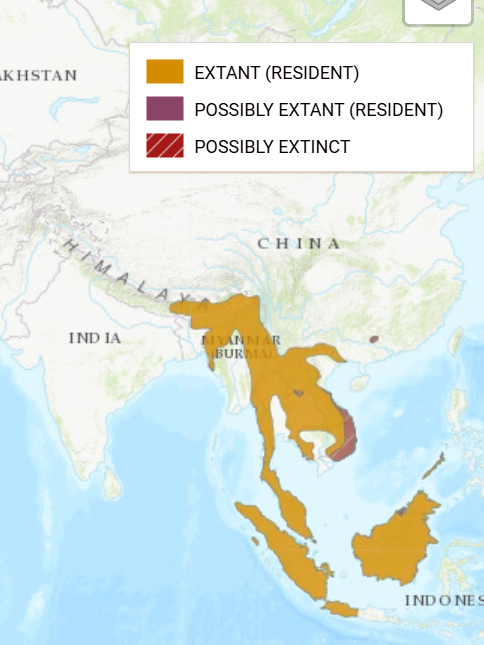
Native Range: South and Southeast Asia including India, Nepal, Bhutan, Bangladesh, Myanmar, Thailand, Malaysia, Indonesia, Laos, Cambodia, Vietnam, and the Philippines.
Habitat: Tropical rainforests, evergreen forests, secondary forests, mangroves, and dense canopy habitats.
Breeding Season: Year-round with peaks February-April.
Gestation: 84-99 days.
Litter Size: Usually 1-3 cubs.
Young: Born blind in tree hollows or dens.
Maturity: Sexual maturity around 2.5 years.
Fur: Long shaggy black fur with silver-tipped hairs.
Face: White whiskers and ear tufts.
Body Shape: Stocky body with short powerful legs.
Tail: Fully prehensile tail used like a fifth limb.
Movement: Plantigrade walking style similar to bears.
Activity: Mostly nocturnal and crepuscular.
Climbing: Slow deliberate climbers in the canopy.
Resting: Spend much of the day resting in trees.
Movement: Can descend trees headfirst using rotating hind feet.
Prehensile Tail: Improves climbing stability and grip.
Rotating Ankles: Allow headfirst descent from trees.
Strong Claws: Help grip bark and branches.
Thick Fur: Protects from rain and insects.
Night Vision: Excellent nocturnal vision.
Predators: Large pythons, clouded leopards, tigers, leopards, and humans.
Prey: Figs, fruit, birds, eggs, rodents, insects, and small mammals.
Habitat Loss: Logging, agriculture, and palm oil plantations destroy habitat.
Illegal Wildlife Trade: Captured for pets and traditional medicine.
Hunting: Hunted for meat and fur.
Habitat Fragmentation: Roads and development isolate populations.
Climate Change: Alters rainforest ecosystems and food availability.
Seed Dispersal: Major rainforest seed dispersers, especially for fig trees.
Forest Regeneration: Support rainforest diversity and regrowth.
Food Web Role: Serve as predator and prey in rainforest ecosystems.
Indicator Species: Presence can indicate healthy canopy ecosystems.
Protected Areas: National parks and rainforest reserves protect habitat.
Anti-Poaching: Enforcement targets illegal hunting and wildlife trafficking.
CITES Protection: Protected under international wildlife trade regulations.
Zoo Programs: Breeding programs maintain assurance populations.
Research: Monitoring programs track populations and habitat health.
Palm Oil Choices: Choose sustainably sourced palm oil products.
Reduce Waste: Recycle electronics and reduce rainforest-linked consumption.
Avoid Exotic Pets: Do not support wildlife trade.
Support Conservation: Support accredited zoos and rainforest organizations.
Education: Spread awareness about rainforest conservation.
Bearcat Name: Called “bearcats” despite being neither bears nor cats.
Popcorn Smell: Scent resembles buttered popcorn.
Canopy Lifestyle: Spend much of their lives in trees.
Fig Trees: Important seed dispersers for rainforest fig species.
Guest Engagement
Encyclopedia
Lasted Updated