
Black-Capped Capuchin Monkey
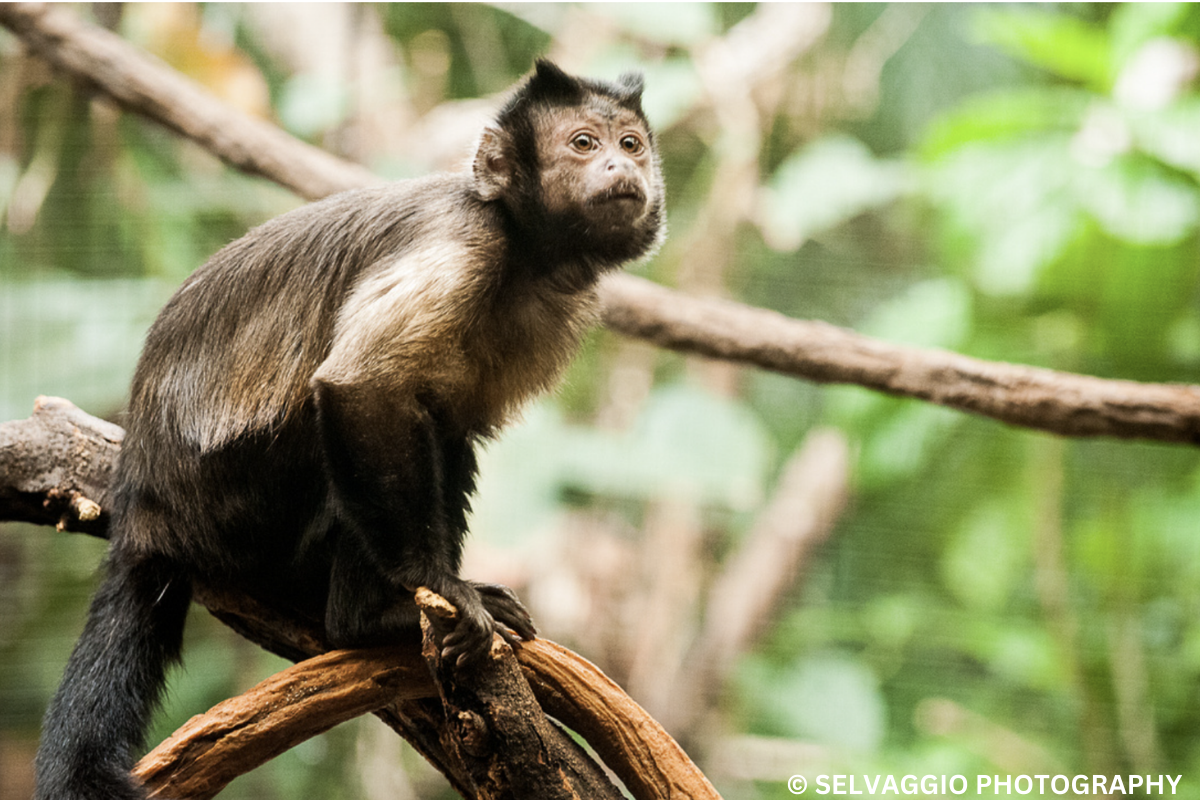
The black-capped capuchin monkey, also known as the tufted capuchin, is a highly intelligent and adaptable primate native to the tropical rainforests of South America. These monkeys are known for their tool use, such as using stones and sticks to crack nuts and extract insects. Living in troops led by a dominant male, they have a complex social structure that includes grooming behaviors to strengthen bonds within the group.
Capuchins are distinguished by their prehensile tail, which acts as a fifth limb for balance and grasping branches. They also use millipedes as a natural insect repellent, rubbing them on their fur to ward off pests. Adaptable and resilient, they thrive in a range of habitats, from dense jungles to human-altered environments, demonstrating the versatility of New World monkeys. Their social bonds, intelligence, and ability to adapt make them an iconic species of the primate world.
Basic Information
Name: The capuchin’s name comes from the distinctive cap of hair on its head, resembling the hood worn by Capuchin monks.
Also Known As: Commonly called the tufted capuchin because of the hair tufts on top of the head.
Intelligence: Among the most intelligent New World monkeys, capable of solving problems and learning complex behaviors.
Tool Use: Use rocks, sticks, and other objects to access food, including cracking nuts with stone tools.
Social Structure: Live in troops of 8–15 individuals led by a dominant male.
Dominance: Dominant males typically receive priority access to food, mates, and preferred resting areas.
Communication: Use vocalizations, facial expressions, body language, and alarm calls to communicate.
Defense: Troops use alarm whistles and calls to warn each other of predators such as hawks and eagles.
Prehensile Tail: Tail functions as a fifth limb, providing balance and helping grip branches.
Dexterous Hands: Highly skilled hands allow precise manipulation of food, tools, and objects.
Adaptability: Found in tropical rainforests, dry forests, savannas, and some human-altered environments.
Physical Traits: Fur ranges from pale brown to black, often with lighter underparts and a distinctive dark cap and sideburns.
Breeding: Breed year-round, with births most common during the dry season.
Sexual Maturity: Females mature at 3–4 years, while males typically mature around 7 years.
Parental Care: Mothers provide nearly all infant care, carrying and protecting their young.
Male Dispersal: Young males leave their birth troop and join new groups as they mature.

Range: South America.
Habitat: Found in a variety of forest types east of the Andes, ranging from Colombia and Venezuela south to Paraguay and northern Argentina.
Forest Use: Spend most of their time in the understory and middle canopy layers of forests.
Ground Activity: Occasionally descend to the ground while foraging or traveling.

Social Structure: Live in troops of 8–15 individuals led by a dominant male who typically mates, eats first, and helps protect the group.
Coloration: Fur ranges from pale to dark brown, mustard yellow, or black, with lighter shoulders and underparts.
Distinctive Markings: Have a black patch on the head and prominent black sideburns.
Sexual Dimorphism: Males are noticeably larger than females.
Intelligence: Highly intelligent primates capable of problem-solving and tool use.
Tool Use: Use rocks to crack nuts and sticks to extract insects and other food items.
Adaptability: Thrive in a wide range of habitats, including tropical rainforests, dry forests, savannas, and human-altered environments.
Social Structure: Live in troops of 8–15 individuals led by a dominant male who mates, eats first, and helps protect the group.
Dominant Male’s Role: Maintains a select group of favored females and younger monkeys that often receive priority access to food and other resources during times of scarcity.
Social Grooming: Frequently groom one another to strengthen social bonds, reduce conflict, and maintain group cohesion.
Defense: Use alarm whistles and calls to warn troop members when predators, such as hawks or eagles, are nearby.
Habitat Loss: Deforestation for agriculture, cattle ranching, and logging continues to reduce and fragment their native forest habitat.
Illegal Pet Trade: Frequently captured for the exotic pet trade because of their intelligence and manageable size.
Hunting: In some regions, capuchins are hunted for bushmeat or killed when considered agricultural pests.
Human Encroachment: Expanding roads, settlements, and development increase human-wildlife conflict and reduce forest connectivity.
Disease Transmission: Greater contact with humans can increase the spread of diseases between people and wild primates.
Habitat Fragmentation: Isolated forest patches can limit movement, reduce genetic diversity, and make populations more vulnerable to environmental changes.
Seed Dispersal: Eat a wide variety of fruits and disperse seeds throughout the forest, helping plants regenerate and maintain biodiversity.
Insect Control: Feed on insects and other small animals, helping regulate prey populations.
Forest Engineers: Their foraging and tool-use behaviors can alter the environment by opening nuts, disturbing bark, and turning over soil.
Prey Species: Serve as an important food source for large predators, contributing to rainforest food webs.
Indicator Species: Population health and behavior can reflect the condition, connectivity, and overall health of forest ecosystems.
Ecosystem Balance: By feeding on a variety of plant and animal foods, capuchins help maintain balance within tropical forest communities.
Guest Engagement
Encyclopedia
Lasted Updated