
Bronzewing Pigeon
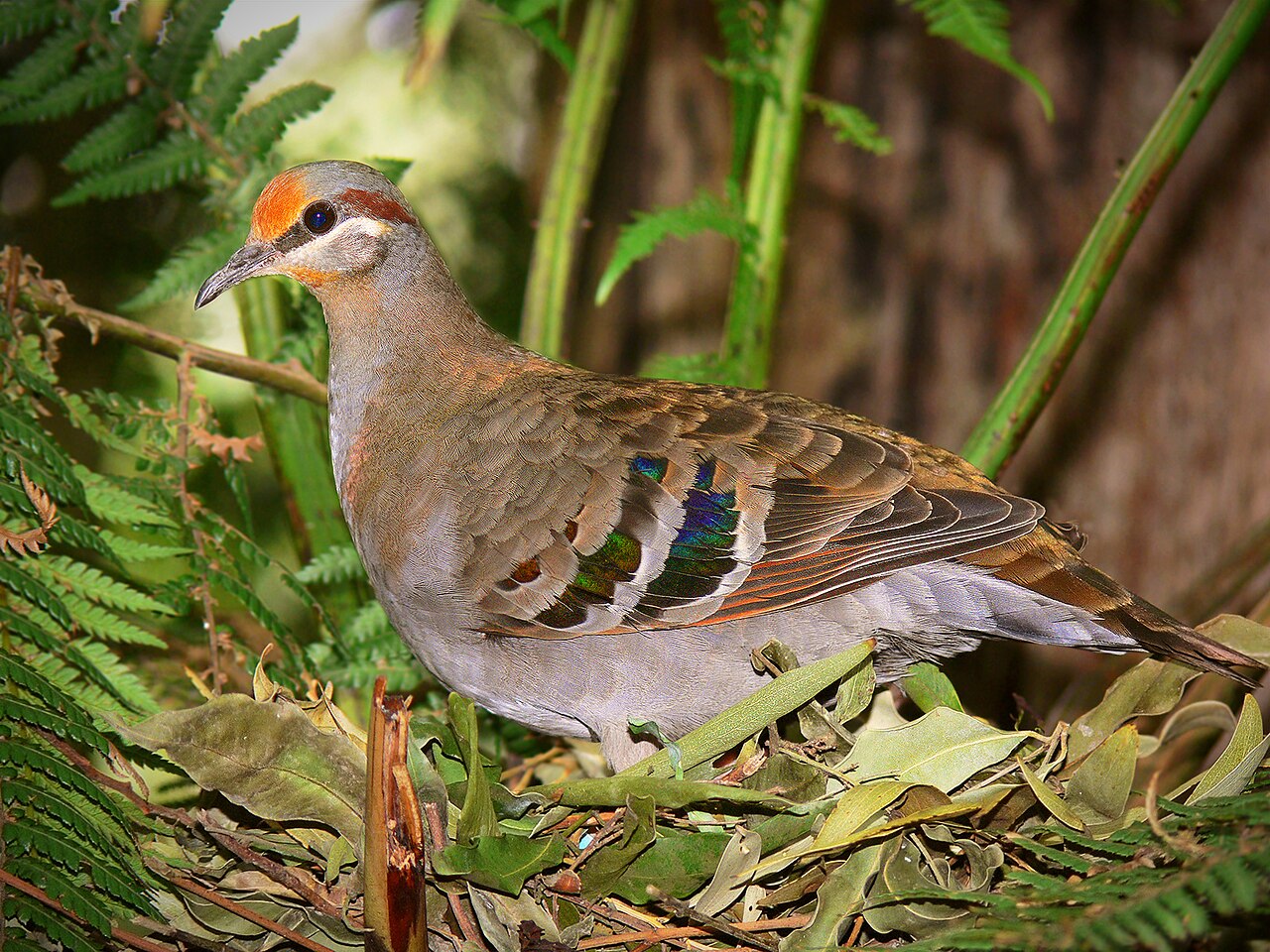
Bronzewing Pigeons are a group of ground-dwelling pigeons native to Australia, known for the iridescent bronze and green metallic feathers found on their wings. Unlike city pigeons that spend much of their time around buildings and people, bronzewings are adapted for life in forests, woodlands, scrublands, and grasslands, where they forage along the ground for seeds and plant material. Their camouflage coloration helps them blend into leaf litter and dry vegetation, while the flashing metallic wing feathers become highly visible in sunlight or during flight. Although often quiet and difficult to spot, bronzewing pigeons are strong fast fliers capable of traveling long distances between feeding and water sources.
Basic Information
Metallic Wings: Their bronze-colored wing feathers can flash bright green, copper, or gold in sunlight.
Not City Pigeons: Bronzewings are wild woodland pigeons adapted for forests and grasslands rather than urban environments.
Ground Feeders: They spend much of their time walking and searching for seeds on the ground.
Fast Fliers: Despite their calm appearance, they are extremely fast and powerful fliers.
Excellent Camouflage: Their natural colors help them disappear into leaf litter and dry vegetation.
Australian Native Birds: Bronzewings are found naturally across much of Australia.
Quiet Birds: They are often heard before they are seen because of their sudden explosive takeoff flight.
Water Travelers: Some individuals travel long distances each day to reach water sources.
Native Range: Australia, including forests, woodlands, shrublands, and grasslands.
Habitat: Prefer areas with ground cover, access to water, and open spaces for foraging.
Movement: Some populations move seasonally in response to rainfall and food availability.
Length: Usually 12–15 inches long.
Weight: Approximately 7–14 ounces depending on species.
Sexual Maturity: Usually reached within the first year of life.
Breeding Season: Varies by region and rainfall conditions, often increasing during warmer months.
Nest Construction: Build small platform nests from sticks and twigs, usually in shrubs or low trees.
Eggs: Typically lay 1–2 white eggs per clutch.
Incubation: Eggs hatch after approximately 2–3 weeks.
Parental Care: Both parents help incubate eggs and care for chicks.
Chick Development: Young pigeons grow rapidly and leave the nest within several weeks.

Metallic Wing Feathers: Iridescent bronze and green feathers reflect sunlight during movement and flight.
Camouflage: Brown, gray, and earth-toned plumage helps them blend into ground vegetation.
Ground Foraging: Spend much of their time walking and feeding on the ground.
Strong Flight: Fast direct fliers capable of traveling long distances.
Quiet Nature: Often shy and difficult to observe in dense vegetation.
Ground-Dwelling: Frequently walk while feeding rather than hopping like many smaller birds.
Water Dependence: Often travel daily to reliable water sources.
Flight Sound: Wings can produce loud whistling or clapping sounds during takeoff.
Pair Bonds: Often observed alone, in pairs, or in small groups.
Sun Basking: Sometimes rest in open sunlight while spreading feathers to regulate temperature.
Camouflage Plumage: Earth-toned feathers help conceal them from predators while feeding.
Powerful Flight Muscles: Allow rapid escape from threats.
Efficient Seed Digestion: Specialized digestive system processes hard seeds and plant material.
Ground Mobility: Strong legs adapted for walking and foraging.
Iridescent Feathers: Metallic wing patches may help with signaling and species recognition.
Predators: Raptors, snakes, foxes, feral cats, and other introduced predators.
Defense: Rely heavily on camouflage, rapid flight, and remaining motionless to avoid detection.
Nest Vulnerability: Eggs and chicks are vulnerable to predation from snakes and mammals.
Habitat Loss: Clearing forests and grasslands reduces feeding and nesting areas.
Introduced Predators: Feral cats and foxes prey on adults, eggs, and chicks.
Drought: Reduced rainfall can limit food and water availability.
Human Disturbance: Development and habitat fragmentation can disrupt breeding areas.
Seed Dispersal: Help spread seeds while feeding across large areas.
Food Web Role: Serve as prey for native predators and raptors.
Ground Foraging Impact: Their feeding behavior influences seed distribution and vegetation patterns.
Ecosystem Health: Healthy bird populations are indicators of stable woodland ecosystems.
Habitat Protection: Preserving Australian woodland and grassland habitats supports healthy populations.
Predator Control: Managing invasive predators helps improve nesting success.
Wildlife Monitoring: Researchers track bird populations and habitat changes across Australia.
Public Education: Conservation programs help raise awareness about native Australian bird species.
Protect Native Habitats: Support conservation of forests, woodlands, and grasslands used by native birds.
Reduce Invasive Predators: Responsible pet ownership and invasive predator management help protect ground-nesting birds.
Support Conservation Organizations: Wildlife conservation groups help monitor and preserve Australian ecosystems.
Educate Others: Teaching about native bird species increases awareness of habitat conservation.
Metallic Feathers: Their wing feathers can appear bronze, green, gold, or copper depending on the light.
Explosive Takeoff: Bronzewings often burst suddenly into flight when startled.
Excellent Camouflage: They can become nearly invisible while standing still on the forest floor.
Strong Daily Flyers: Some travel long distances between feeding and watering areas.
Ground Specialists: Unlike many pigeons, they spend most of their lives on the ground rather than perched high in trees.
Guest Engagement
Encyclopedia
Lasted Updated