
Brown Pelican
Kids Kingdom
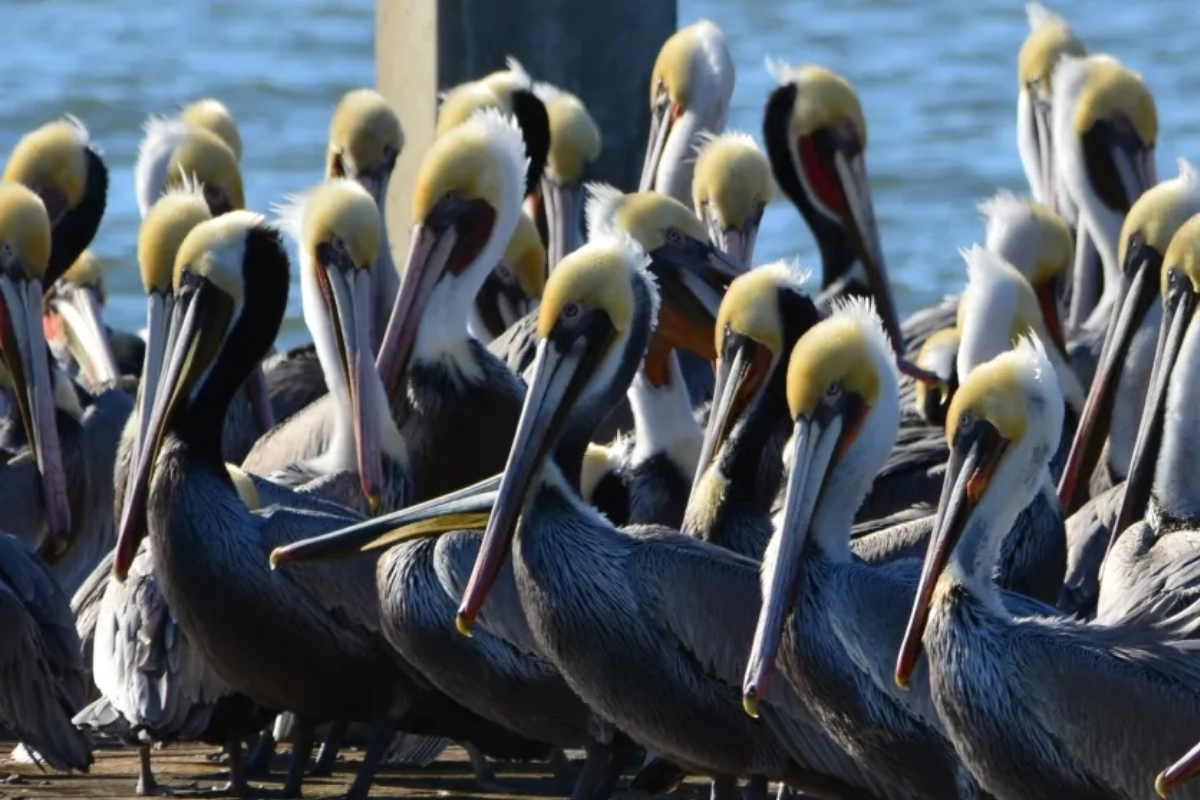
The Brown Pelican is a large, coastal seabird known for its graceful flight, dramatic plunge-diving, and distinctive throat pouch used for catching fish. Adults have a brown-gray body, white head, and a long, hooked bill with an expandable pouch that can hold more than 2 gallons of water. With a wingspan of up to 7.5 feet and a streamlined body, it glides effortlessly just above the ocean surface. Brown pelicans live in social colonies, nest on isolated coasts, and are excellent swimmers thanks to their fully webbed feet. Once nearly lost due to pesticide exposure, they are now a conservation success story and a symbol of the importance of protecting marine ecosystems.
Felicity
Female •
DOB: Unknown
Born At: Wild (Florida)
Date In: 07/01/2025
Markings:
Joey
Male •
DOB: Unknown
Born At: Wild (Florida)
Date In: 07/01/2025
Markings:
Pierre
Male •
DOB: Unknown
Born At: Wild (Florida)
Date In: 07/01/2025
Markings:
Gone and Moved
Basic Information
Large Bird: Brown pelicans are 3.5 to 5 feet long, with a wingspan up to 7.5 feet—one of the largest birds along North and South American coasts.
Light but Strong: Despite their size, they weigh only 6 to 12 pounds thanks to hollow bones and internal air sacs.
Longevity: In the wild, they can live up to 25 years; in human care, they may reach 30 years.
Breeding : Brown pelicans nest in large colonies and share parenting duties. Both parents incubate eggs using their feet and regurgitate fish to feed the chicks.
Chick Development: Chicks fledge in about 9–12 weeks but may continue receiving food from their parents after leaving the nest.
Plunge-Diving: They are the only pelican species that hunt by diving from heights, using sharp vision and shock-absorbing air sacs to catch fish.
Throat Pouch: Their expandable pouch can hold over 2 gallons of water, allowing them to scoop up fish before draining and swallowing.
Social Lifestyle: Brown pelicans live and travel in groups, often flying in V-formations or straight lines just above the water.
Conservation Story: Once endangered by DDT, they’ve made a dramatic comeback thanks to pesticide bans and coastal protection.
Pollution : Still at risk from oil spills, plastic ingestion, and fishing gear entanglement.
Ecosystem Role: Help keep fish populations balanced and serve as indicators of ocean health.
Pittsburgh Connection: Even in Pittsburgh, our actions matter—proper trash disposal, safe chemical disposal, and river cleanups help protect birds like pelicans downstream.
Zoo Purpose: At zoos, brown pelicans serve as ambassadors for marine conservation, helping guests understand human impact on wildlife.
Coasts of North, Central, and South America including the United States, Mexico, the Caribbean, and parts of northern South America.Habitat
Ecosystem Type: Coastal marine and estuarine environments.
Nesting Sites: Sandy beaches, mangrove islands, coastal cliffs, and salt marshes.
Water Access: Always found near saltwater—open ocean, bays, harbors, and lagoons.
Climate: Prefers warm, subtropical to tropical climates year-round.
Environmental Needs: Requires shallow waters for feeding and isolated areas for nesting colonies.
Shelter: Uses low vegetation or ground cover for nesting protection in colonies.
Season: Varies by location; generally spring and summer.
Clutch Size: 2 to 3 eggs.
Incubation: Around 30 days.Breeding Info
Courtship Displays: Males perform head swaying and pouch inflation to attract females.
Pair Formation: Monogamous during a breeding season; pairs form each year at the nest site.
Nesting Sites: Nests are built on isolated islands, in mangroves, or on coastal cliffs.
Nest Construction: Made from sticks, grasses, and debris; built by the female while the male gathers materials.
Eggs: Usually 2–3 white eggs laid per clutch.
Incubation: Both parents incubate eggs using their feet for about 28–30 days.
Chick Development: Chicks are born helpless and naked, later developing down feathers.
Parental Care: Both parents feed chicks by regurgitating partially digested fish.
Fledging: Chicks leave the nest at 9–12 weeks, but may continue receiving food from parents for some time.

Coloration: Adults have brown-gray bodies with white heads.
Breeding Colors: Head turns yellowish during breeding season.
Juveniles: All brown with pale underparts.
Bill: Long gray bill with a hooked tip.
Throat Pouch: Expandable pouch can hold over 2 gallons of water.
Wingspan: Up to 7.5 feet; broad for gliding flight.
Flight Pattern: Flies low over water, often in lines or V-shapes.
Feet: Fully webbed feet (totipalmate) help with swimming and diving.
Vision: Excellent eyesight for spotting fish from high above.
Air Sacs: Beneath the skin to cushion plunge-dives.
Body Shape: Streamlined body reduces drag during dives.
Size: Males are slightly larger than females.
Social Structure: Highly social; lives, roosts, and breeds in colonies.
Feeding Groups: Often forages alone, but may feed in loose flocks when fish are abundant.
Roosting: Gathers in large groups on sandbars, piers, and rocky outcrops.
Communication: Adults are mostly quiet; bill clapping, hissing, and grunting used during breeding.
Chick Vocalizations: Young produce rasping calls to communicate with parents.
Daily Activity: Diurnal, active during the day, especially at dawn and dusk.
Territoriality: Territorial around nest sites, especially during breeding season.
Migration: Northern populations may migrate seasonally, while tropical populations are mostly resident.
Plunge-Diving: Only pelican species that dives from heights up to 60 feet to catch fish.
Shock Absorption: Air sacs beneath the skin cushion internal organs during high-impact dives.
Expandable Pouch: Large gular pouch stretches to scoop up fish and water, then drains before swallowing.
Keen Vision: Sharp eyesight allows precise targeting of fish from high above the surface.
Waterproof Feathers: Oil gland near the tail helps maintain waterproofing and buoyancy.
Webbed Feet: Totipalmate feet aid in steering during dives and strong propulsion in water.
Prey: Eats small schooling fish such as menhaden, sardines, anchovies, and mullet.
Hunting Method: Locates prey while flying, then plunge-dives from heights to scoop fish into its pouch.
Foraging Zones: Typically feeds in shallow coastal waters, estuaries, and nearshore environments.
Feeding Frequency: May consume up to 4 pounds of fish per day.
Predators (Adults): Few natural predators; large birds of prey or alligators may occasionally pose a threat.
Predators (Eggs/Chicks): Eggs and chicks are vulnerable to gulls, raccoons, snakes, and other scavengers if nests are not isolated.
Pollution: Oil spills coat feathers, reduce buoyancy, and lead to hypothermia or drowning.
Pesticides: Past exposure to DDT caused eggshell thinning and population crashes; still threatened by chemical runoff.
Plastic Ingestion: Mistakes plastic debris for food, which can cause internal injury or starvation.
Fishing Gear: At risk of entanglement in nets and fishing lines, leading to injury or death.
Habitat Loss: Coastal development and human disturbance can degrade or eliminate nesting sites.
Climate Change: Rising sea levels and storm intensity threaten low-lying nesting habitats.
Ecological Importance
Prey Regulation: Helps control populations of small schooling fish, maintaining balance in coastal food webs.
Scavenger Role: Occasionally scavenges, helping clean up dead fish and organic matter near shores.
Indicator Species: Sensitive to environmental changes, especially pollution and fish stock health, making them valuable for monitoring ecosystem health.
Nesting Impact: Nesting colonies may fertilize coastal vegetation with droppings, contributing nutrients to local ecosystems.
Legal Protections: Protected under the U.S. Migratory Bird Treaty Act; removed from the U.S. Endangered Species List in 2009 after successful recovery.
Habitat Protection: Many nesting and roosting sites are located in wildlife refuges and protected coastal zones.
Pollution Control: DDT banned in the 1970s, aiding in population rebound; ongoing efforts to reduce chemical runoff and plastic waste.
Wildlife Rehabilitation: Organizations respond to oil spills and fishing injuries, treating and releasing affected birds.
Public Education: Coastal communities and visitors are educated on safe boating, waste disposal, and wildlife-friendly practices.
Monitoring Programs: Populations are monitored by agencies and nonprofits to track trends and detect emerging threats.
Protect Waterways: Dispose of trash properly and keep storm drains clean to reduce water pollution.
Avoid Plastic: Bring reusable bags and bottles to reduce marine plastic that harms seabirds like pelicans.
Support Cleanups: Join local Pittsburgh river and park clean-up events to prevent trash from reaching coastal habitats.
Reduce Carbon Footprint: Use public transit or carpooling to help slow climate change that threatens nesting sites.
Encyclopedia
Brown Pelican
Brown pelicans (Pelecanus occidentalis) are large coastal waterbirds native to the Americas and among the most recognizable seabirds of tropical and subtropical shorelines. Unlike many fish-eating birds that capture prey through diving pursuit or surface skimming, brown pelicans are specialized plunge-divers capable of dropping dramatically from the air into the water to capture fish within their expandable throat pouch. Their distinctive body shape, oversized bill, social behavior, and close association with coastlines have made them iconic symbols of marine ecosystems throughout North and South America.
Brown pelicans belong to the family Pelecanidae, a group of highly specialized aquatic birds characterized by elongated bills and expandable gular pouches used for prey capture. They are the smallest of the world’s pelican species but remain among the heaviest flying birds capable of plunge diving. Historically abundant throughout coastal habitats, brown pelicans experienced severe population declines during the mid-20th century due to pesticide contamination and habitat disturbance. Their recovery following environmental protections and conservation measures has become one of the most significant success stories in North American wildlife conservation.
Classification and Taxonomy
Brown pelicans belong to the genus Pelecanus, which contains several species distributed across marine, freshwater, and coastal ecosystems worldwide. Within this group, brown pelicans are most closely associated with warm coastal marine environments and are unique among pelicans for their extensive plunge-diving behavior. Most other pelican species feed cooperatively at the water surface rather than diving directly into the water from the air.
The scientific name Pelecanus occidentalis reflects the species’ historical classification as a western pelican of the Americas. Multiple subspecies are recognized across their extensive geographic range, with variation in body size, plumage tone, and breeding characteristics occurring between Caribbean, Pacific, Atlantic, and South American populations. These regional differences reflect adaptation to local marine environments, climate conditions, and prey availability.
Fossil evidence indicates that ancestral pelicans have existed for tens of millions of years, with ancient relatives occupying marine and freshwater ecosystems long before the appearance of modern coastal birds. Pelicans represent one of the oldest surviving lineages of large aquatic birds and have retained many specialized feeding adaptations throughout their evolutionary history.
Physical Characteristics
Brown pelicans are large heavy-bodied seabirds measuring approximately 40 to 54 inches (102 to 137 centimeters) in length with wingspans ranging from 6 to more than 7 feet (1.8 to 2.3 meters). Adults generally weigh between 4 and 11 pounds (1.8 to 5 kilograms), though body size varies geographically. Their long narrow wings, lightweight skeletal structure, and extensive air sacs assist with buoyancy and flight efficiency despite their substantial size.
The species is immediately recognizable by its enormous bill and expandable throat pouch, known as the gular pouch, which is capable of holding several gallons of water and fish during feeding attempts. Contrary to popular misconception, the pouch is not primarily used to store food long-term but instead functions as a temporary capture net. After plunging into the water, pelicans drain excess water from the pouch before swallowing prey.
Adult plumage changes seasonally and varies between breeding and non-breeding conditions. During breeding season, adults develop richer coloration including yellowish heads, reddish throat patches, and chestnut neck coloration in some populations. Non-breeding birds generally appear more muted with gray-brown plumage. Juveniles are predominantly brown with lighter undersides and gradually develop adult coloration over several years.
Brown pelicans possess several anatomical adaptations associated with plunge diving and marine life. Air sacs beneath the skin help cushion impact during dives into water, while dense waterproof feathers provide insulation and buoyancy. Their long wings enable efficient gliding flight using ocean winds and thermal currents, allowing individuals to travel large distances while conserving energy.
Habitat and Behavior
Habitat and Distribution
Brown pelicans are distributed throughout coastal regions of the Atlantic, Pacific, and Gulf coasts of the Americas. Their range extends from the eastern United States southward through Central America and much of South America, as well as along the Pacific coast from California to Chile. They inhabit beaches, estuaries, mangroves, bays, lagoons, harbors, coastal islands, and nearshore marine ecosystems where fish populations are abundant.
The species is strongly associated with saltwater and brackish coastal habitats, though individuals occasionally enter freshwater systems near coastlines. Offshore islands and protected mangrove areas are especially important for nesting colonies because they reduce access by terrestrial predators and human disturbance. Roosting sites typically include sandbars, docks, pilings, rocks, and shoreline vegetation where birds gather communally.
Brown pelican movements are influenced by prey availability, breeding cycles, weather patterns, and ocean conditions. Some populations remain resident year-round while others exhibit seasonal dispersal or regional migration depending on environmental conditions and food supply.
Feeding Ecology and Hunting Behavior
Brown pelicans are highly specialized fish predators feeding primarily on small schooling fish such as menhaden, anchovies, sardines, mullet, and herring. Unlike many seabirds that pursue prey underwater, brown pelicans capture fish using dramatic plunge-diving behavior. Individuals typically fly low above the water while visually locating prey schools before folding their wings and diving headfirst into the water from heights that may exceed 60 feet (18 meters).
Upon impact, the bill and pouch expand to capture fish and water simultaneously. Pelicans then resurface, drain excess water from the pouch, and swallow prey headfirst. Although plunge diving appears forceful, the bird’s anatomy is highly specialized to withstand repeated impacts with the water surface.
Brown pelicans are social feeders and often forage in loose groups where multiple individuals exploit concentrated schools of fish. Feeding activity may also occur alongside dolphins, predatory fish, gulls, or other seabirds that drive prey toward the surface. Cooperative environmental interactions such as these increase feeding efficiency within dynamic coastal ecosystems.
In addition to active hunting, pelicans occasionally scavenge discarded fish near harbors or fishing operations. However, dependence upon human-associated food sources may increase risks associated with entanglement, pollution, or habitat disturbance.
Social Structure and Communication
Brown pelicans are highly social birds that roost, feed, and breed communally. Large groups may gather along coastlines, docks, sandbars, and nesting islands where individuals engage in synchronized resting, preening, and feeding activity. Flight formations frequently involve long gliding lines traveling just above wave height, taking advantage of aerodynamic lift generated by ocean winds.
Communication occurs through body posture, bill displays, visual signaling, and low vocalizations. Although generally quieter than many colonial seabirds, pelicans may produce grunts, hisses, or clicking sounds during territorial interactions and breeding displays. Courtship behavior often involves ritualized head movements, pouch displays, bowing, and synchronized movements between potential mates.
Colonial nesting behavior provides advantages including increased predator detection and access to suitable breeding habitat, though dense colonies may also intensify competition for nesting space and increase disease transmission risk.
Reproduction and Development
Brown pelicans typically breed in colonies located on isolated coastal islands, mangrove stands, dunes, or protected shoreline habitats. Nesting season varies geographically depending on climate and prey abundance. Males usually select nesting sites and attract females through display behavior involving head movements, pouch inflation, and presentation of nesting materials.
Nests are constructed from sticks, grasses, reeds, and vegetation placed on the ground, within shrubs, or in low trees depending on habitat type. Females generally lay two to three eggs, and both parents participate in incubation, which lasts approximately 30 days. Adults incubate eggs using the webbed feet rather than feathered brood patches, transferring heat directly through vascularized skin.
Young pelicans hatch blind and largely featherless, requiring extensive parental care. Chicks are fed through regurgitation and gradually develop waterproof plumage and flight capability over several months. Juveniles often gather in groups known as pods while learning feeding and social behaviors prior to full independence.
Natural Predators and Mortality
Adult brown pelicans possess relatively few natural predators due to their large size, colonial nesting behavior, and aquatic lifestyle. Eggs and chicks, however, may be vulnerable to gulls, crows, raccoons, foxes, snakes, and other opportunistic predators depending on nesting location. Severe storms and flooding may also destroy nesting colonies or reduce breeding success.
Marine predators including sharks and large fish occasionally capture young birds during feeding attempts or while resting on the water surface. However, the most significant mortality factors affecting brown pelicans are associated with human activity rather than natural predation.
Adaptations and Ecological Importance
Brown pelicans possess numerous specialized adaptations associated with marine feeding ecology. Their expandable gular pouch functions as an efficient prey-capture structure during plunge diving, while air sacs throughout the body help absorb impact and improve buoyancy. Long wings and lightweight bones permit highly energy-efficient soaring over coastal waters.
As upper-level marine predators, brown pelicans contribute to regulation of fish populations and serve as important indicators of coastal ecosystem health. Because they occupy high trophic levels within marine food webs, contaminants accumulating within fish populations may also accumulate within pelicans, making the species particularly sensitive to environmental pollution and ecosystem disruption.
Pelican colonies additionally contribute nutrients to coastal ecosystems through guano deposition, influencing vegetation and nutrient cycling on nesting islands and shoreline habitats.
Cultural Significance and Human Interest
Brown pelicans have long held cultural significance throughout coastal communities where they are viewed as symbols of marine ecosystems, fishing culture, and shoreline wildlife. Their dramatic plunge-diving behavior and highly recognizable silhouette have made them popular subjects in art, photography, literature, and ecotourism.
The species is especially associated with the Gulf Coast region of the United States and serves as the state bird of Louisiana. Pelicans frequently appear in regional folklore, conservation campaigns, and coastal identity symbolism tied to fisheries and wetland ecosystems.
Because of their visibility and charismatic behavior, brown pelicans have become important ambassadors for marine conservation and public awareness regarding pollution, fisheries management, and coastal habitat preservation.
Disease and Human-Associated Threats
Brown pelicans face numerous human-associated threats including habitat destruction, coastal development, oil spills, plastic pollution, entanglement in fishing gear, and disturbance at nesting colonies. Ingestion of hooks, fishing line, and plastic debris remains a significant source of injury and mortality throughout portions of their range.
Disease outbreaks including avian botulism, Newcastle disease, and avian influenza may spread rapidly within dense colonies. Harmful algal blooms and marine toxin accumulation can also affect pelican populations by contaminating prey species and disrupting marine food webs.
Climate change presents additional long-term challenges through rising sea levels, intensifying storms, altered fish distributions, and erosion of low-lying nesting islands critical for breeding colonies.
Conservation Status and Efforts
Historical Decline and Recovery
Brown pelican populations declined dramatically during the mid-20th century due primarily to the pesticide DDT and related organochlorine contaminants. These chemicals accumulated through marine food webs via biomagnification and interfered with calcium metabolism in breeding birds, causing eggshell thinning and reproductive failure similar to declines observed in bald eagles, peregrine falcons, and other predatory birds.
By the 1960s and 1970s, brown pelicans had disappeared from portions of their historical range including Louisiana, where populations collapsed entirely. Legal protections under the Endangered Species Act, combined with the eventual ban on DDT in the United States in 1972, allowed populations to recover gradually through improved reproductive success and habitat protection.
Restoration efforts including reintroduction programs, colony protection, wetland conservation, and environmental monitoring contributed significantly to population recovery. The species was removed from the United States federal endangered species list in 2009 following substantial recovery throughout much of its range.
Current Threats
Despite recovery success, brown pelicans continue to face environmental pressures associated with coastal development, marine pollution, fisheries interactions, and climate-related habitat changes. Oil spills remain particularly devastating because petroleum contamination damages waterproof feathers, reduces insulation, and exposes birds to toxic compounds during preening.
Human recreation near nesting colonies may disrupt breeding success, especially during incubation and chick-rearing periods. Plastic pollution and discarded fishing gear continue to injure birds through ingestion and entanglement.
Changes in ocean temperature, prey distribution, and storm frequency associated with climate change may also alter long-term habitat suitability and food availability throughout portions of the species’ range.
Conservation Organizations and Initiatives
Numerous governmental agencies, conservation organizations, marine research institutions, and rehabilitation centers work to monitor and protect brown pelican populations throughout the Americas. Conservation efforts focus on coastal habitat preservation, pollution reduction, nesting colony monitoring, fisheries management, and public education regarding marine debris and wildlife disturbance.
Wildlife rehabilitation centers play a major role in treating pelicans injured by oil contamination, fishing gear entanglement, starvation, or disease outbreaks. Long-term population studies and environmental monitoring programs also provide important information regarding marine ecosystem health and contaminant exposure.
Public awareness campaigns emphasizing responsible fishing practices and reduction of plastic waste have become increasingly important components of pelican conservation.
Role of Zoological Institutions
Accredited zoological institutions contribute to brown pelican conservation through rehabilitation partnerships, veterinary care, public education, and outreach concerning marine ecosystem conservation. Many pelicans housed within zoological facilities are non-releasable individuals recovering from injuries associated with fishing hooks, wing trauma, or human-associated accidents.
These ambassador animals provide opportunities for education regarding coastal ecosystems, marine pollution, sustainable fisheries, and seabird biology. Zoological institutions also support research involving nutrition, behavior, veterinary medicine, and rehabilitation techniques for injured seabirds.
Conservation Action
Individuals can support brown pelican conservation by properly disposing of fishing materials, reducing plastic waste, supporting wetland and coastal habitat protection, avoiding disturbance near nesting colonies, and participating in shoreline cleanup efforts. Sustainable fisheries management and reduction of marine pollution remain critical for long-term conservation success.
The recovery of the brown pelican represents one of the clearest examples of successful environmental legislation and coordinated wildlife conservation in North America. Continued protection of coastal ecosystems, marine food webs, and nesting habitat remains essential to ensuring the long-term survival of these highly specialized and ecologically important seabirds.
References
Cornell Lab of Ornithology: Brown Pelican
U.S. Fish & Wildlife Service: Brown Pelican
Smithsonian’s National Zoo and Conservation Biology Institute: Brown Pelican
National Audubon Society: Brown Pelican
International Union for Conservation of Nature (IUCN) Red List: Brown Pelican
Louisiana Department of Wildlife and Fisheries: Brown Pelican
NOAA Fisheries and Marine Ecosystem Studies
Lasted Updated
