
Gentoo Penguin
The Gentoo penguin (Pygoscelis papua) is a charismatic and distinctive species known for its bold white bonnet-like stripe across the top of its head, red-orange bill, and remarkable swimming abilities. Found in the sub-Antarctic and Antarctic regions, Gentoos thrive in harsh environments, nesting on rocky and sandy beaches or grassy coastal lowlands. Renowned for being the fastest underwater swimmer among all birds, reaching speeds of up to 22.3 mph (36 km/h), they are well-adapted to their marine lifestyle. Their colonies, ranging from a few hundred to several thousand individuals, exhibit complex social structures and cooperative behaviors, particularly during the breeding season. With their endearing courtship rituals, where males present stones to attract mates, and their attentive parental care, Gentoos are a fascinating subject of study for scientists and a favorite among wildlife enthusiasts.
Basic Information
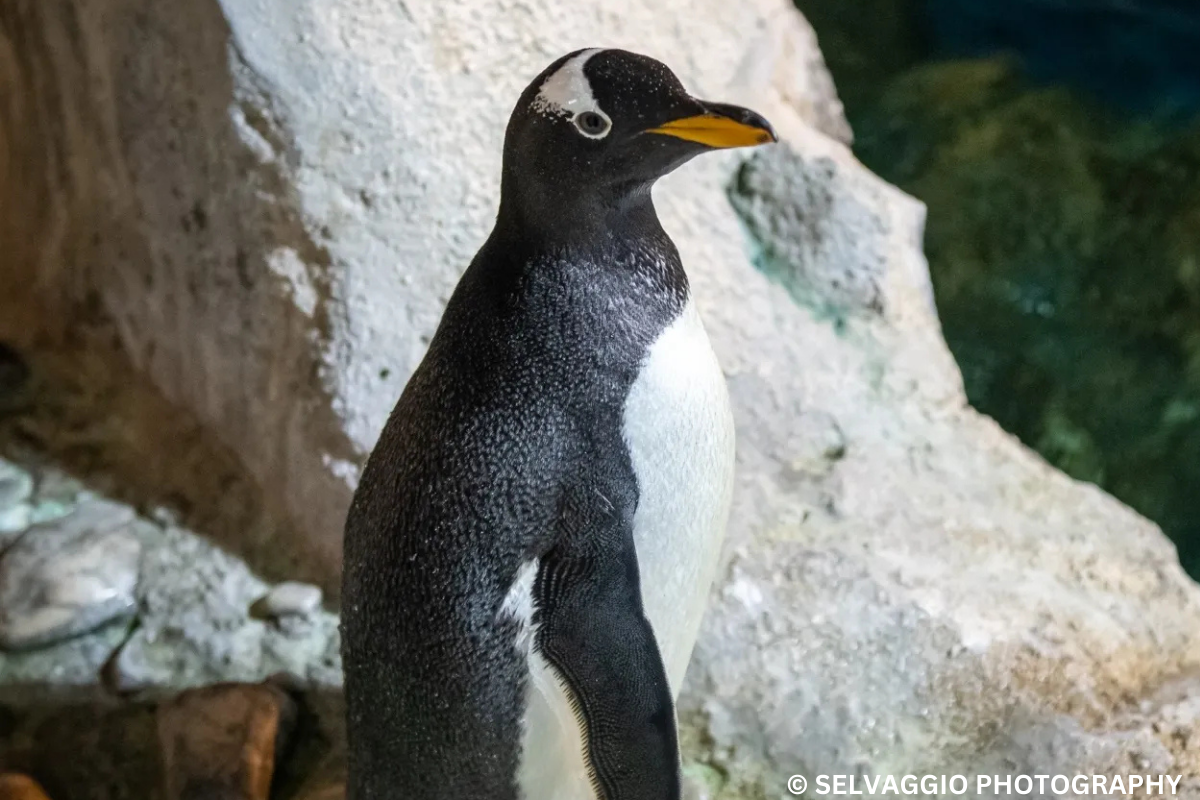
Distinctive Appearance: Recognized by the white stripe extending across their head, red bill, brown eyes, and black-and-white plumage. Their yellow feet and bonnet-like head marking make them easy to identify.
Swimming Ability: The fastest underwater swimming bird, reaching speeds of 22.3 mph. They use their strong flippers and webbed feet for propulsion and steering.
Habitat: Found in sub-Antarctic regions, including the Antarctic Peninsula and surrounding islands. Prefer rocky beaches or grassy lowlands for nesting.
Breeding: Males arrive early to build stone nests to attract mates. They lay two eggs, which hatch after 34–36 days, with both parents sharing incubation duties.
Chick Development: Chicks stay in nests for 30 days, then form crèches for safety and socialization before heading to sea at 80–100 days old.
Diet: Primarily feed on krill, squid, and small fish, using their speed and agility underwater to catch prey.
Predators: Face threats from leopard seals, fur seals, orca whales, and sea lions. Eggs and chicks are vulnerable to skuas and giant petrels.
Unique Adaptations: Equipped with dense waterproof feathers for insulation, salt glands to excrete excess salt from seawater, and powerful swimming adaptations.
Communication: Use loud braying calls to communicate with mates and colony members.
Conservation Status: Currently classified as least concerned.

Sub-Antarctic islands, including the Falklands, South Georgia and Kerguelen and the Antarctic Peninsula.Habitat
Preferred Environment: Nest on rocky, sandy beaches or grassy lowlands near the coast.
Breeding Colonies: Prefer areas free of heavy ice, often selecting flat or gently sloping terrain for nesting.
Marine Habitat: Spend significant time in the ocean, typically foraging in shallow coastal waters near the breeding grounds.
Nest Building: Males arrive early during the breeding season to establish nests. Nests are constructed from a roughly circular pile of stones and can be quite large, measuring 8 inches high and 10 inches in diameter.
Egg Laying and Incubation: Females lay two eggs, each weighing approximately 130 grams. Both parents share incubation duties, switching daily.
Hatching: Eggs hatch after 34–36 days, with parents providing equal care during this period.
Chick Development: Chicks remain in the nests for about 30 days before forming crèches (groups of young penguins for protection and socialization).
Fledging: Chicks molt into sub-adult plumage and head out to sea at approximately 80–100 days old.
Zoo: Capelin, sardines, small herring and squid.

Largest Stiff-Tailed Penguin: The largest of the ‘stiff-tailed penguins’.
Swimming Abilities: Use webbed feet and tail to steer when swimming; the fastest underwater swimming bird, reaching speeds of 22.3 mph. Can stay underwater for 2–3 minutes before surfacing for air.
Distinctive Appearance: Wide white stripe resembling a bonnet across the top of their heads, red bill, brown eyes, black upperparts, and white underparts for camouflage. Feet are yellow, with a bright yellow-orange crest on their heads.
Communication: Use loud braying calls to communicate.
Social Structure: Gentoo penguins are highly social and form colonies that can range from a few hundred to several thousand individuals, especially during the breeding season.
Communication: They utilize a variety of vocalizations, including loud braying calls, to communicate with mates, chicks, and other colony members.
Nesting and Courtship: During the breeding season, Gentoos construct nests from small stones, often engaging in courtship behaviors where males present pebbles to females. This pebble-giving behavior strengthens pair bonds.
Parental Care: Both parents share responsibilities in incubating eggs and feeding chicks. They are known to be attentive and protective, with some same-sex pairs observed adopting and raising chicks successfully.
Foraging and Diving: Gentoo penguins are adept swimmers, capable of reaching speeds up to 22 mph (36 km/h) underwater. They primarily feed on krill, squid, and fish, often making short dives averaging 3–20 meters, though they can dive deeper if necessary.
Predation and Defense: In the water, Gentoos face threats from predators such as leopard seals, sea lions, and orcas. On land, while adults have few natural predators, eggs and chicks are vulnerable to birds of prey like skuas and caracaras.
Molting: Annually, Gentoo penguins undergo a molting period where they replace old feathers with new ones. During this time, they remain on land and rely on stored fat reserves, as their new feathers are not yet waterproof.
Waterproof Feathers: Dense, waterproof feathers provide insulation, keeping them warm in cold waters.
Salt Excretion: Specialized salt glands above their eyes allow them to excrete excess salt from seawater, enabling them to drink while at sea.
Powerful Flippers: Strong flippers enable highly efficient underwater swimming, making them one of the fastest swimming birds.
Predators:
Chicks/Eggs: Vulnerable to skuas and giant petrels, which may take and eat them.
Adults/Juveniles: Preyed upon by leopard seals, fur seals, orca whales, and sea lions.
Prey:
Diet consists primarily of krill, squid, and small fish.
Guest Engagement
Encyclopedia
Lasted Updated