
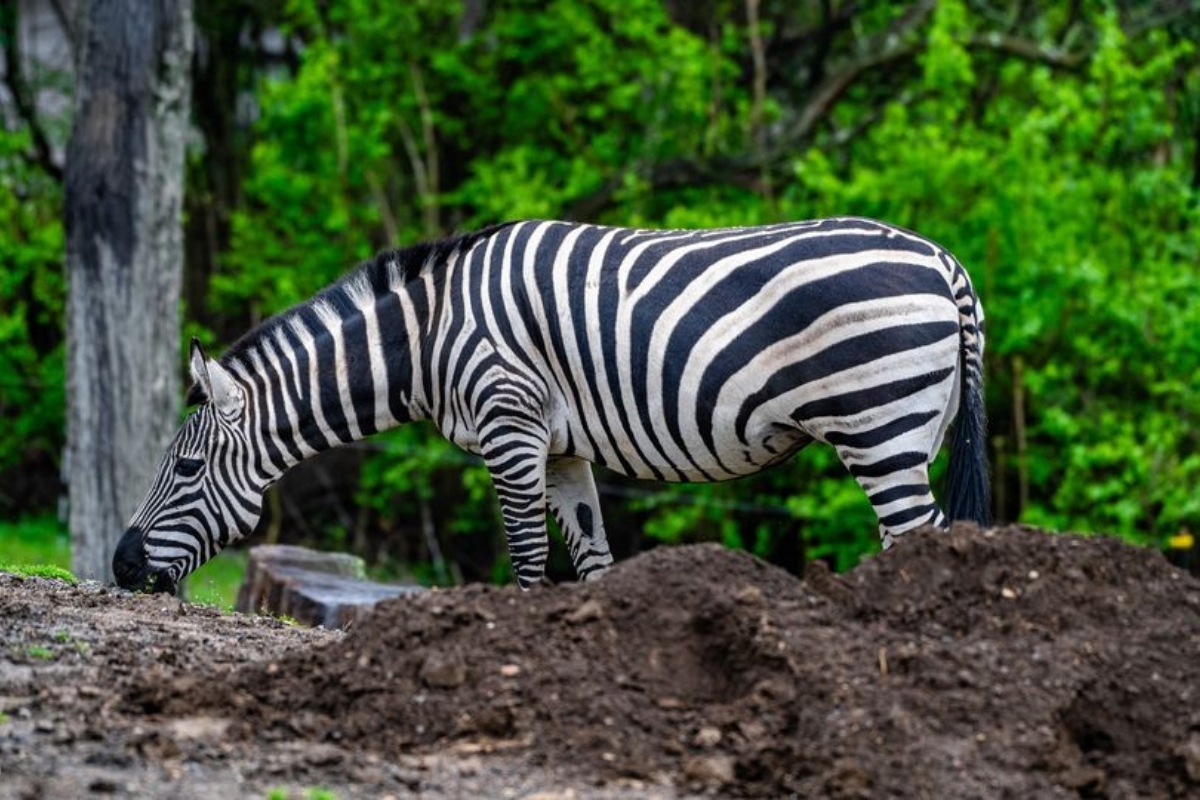
Grant’s Zebra
Zebras are African equids closely related to horses, recognized for their striking black-and-white striped coats. There are three primary species: the Plains Zebra (Grant’s Zebra), Mountain Zebra, and Grevy’s Zebra, each adapted to different ecosystems across Africa, from lush grasslands to arid savannas.
Zebras are highly social animals, living in herds and playing a crucial role in maintaining ecosystem balance. As keystone species, they shape their environment in several ways. By grazing on taller, tougher vegetation, they clear the way for smaller herbivores to access shorter, more nutritious grasses, promoting biodiversity. Their grazing also prevents overgrowth of certain plant species, maintaining the health of grasslands. Additionally, zebras contribute to seed dispersal through their dung, enriching soil fertility and vegetation growth. Beyond their impact on plant life, zebras are an essential part of the food chain, serving as prey for predators such as lions, hyenas, and wild dogs. Their presence supports a balanced ecosystem, ensuring the survival of numerous other specie
Basic Information

Plains Zebra: Found in grasslands and savannas of East Africa, ranging from Kenya to South Africa.
Sexual Maturity: Mares reach sexual maturity at 1-2 years, while colts mature around 5 years.
Gestation: Lasts approximately 12 months, with typically one foal born per pregnancy.
Foal Development: Newborns can stand within an hour of birth, begin grazing within weeks, and are typically weaned between 8-13 months.
Breeding Cycle: Females often skip a year between pregnancies due to the physical strain of raising a foal.
Bachelor Herds: Males leave their natal herd at 2-3 years old, joining bachelor groups where they remain until they mature and can establish their own harems.
Maternal Bond: Mares form strong bonds with their foals, staying close and defending them fiercely from predators or threats.
Stallion Role: The harem stallion guards his group, mating with mares in estrus and protecting foals from rival males.
Birth Timing: Most foals are born during the rainy season, when food and water are more abundant, increasing survival chances.
Reproductive: Mating often involves courtship displays, with stallions showing dominance and mares signaling receptivity through body language and vocalizations.
Stripes: Unique to each individual, like fingerprints, with no two zebras sharing the same pattern.
Body Structure: Similar to a horse but with shorter legs and a stockier build.
Coat: Broad vertical stripes on the body that transition to horizontal stripes on the haunches.
Vision: Eyes set far back in the skull provide a wide field of view, except directly behind the head. Zebras have binocular vision in front.
Hearing: Rotating ears help detect sounds from great distances and locate their source without shifting their body.
Communication: Moods are communicated through ear, mouth, and tail positions.
Activity: Zebras are very active, noisy, and alert, preferring open spaces where they rely on visibility over concealment.
Predator Response: Zebras never freeze to avoid predators; instead, they rely on the safety of the herd, where numbers and movement can confuse and deter attacks. Individual zebras may kick or bite when cornered, using powerful hind legs as a defense mechanism.
Resting Habits: Zebras rest in exposed locations, prioritizing a clear view of their surroundings over camouflage. They take turns sleeping, with some members of the herd standing guard to ensure safety.
Migration: During the dry season, zebras migrate with wildebeests and gazelles in search of food and water. These migrations can cover hundreds of miles, requiring exceptional endurance and navigation skills.
Social Structure: Zebras live in harems, with one stallion leading 2-20 mares and their offspring within a defined home range. Harem members form strong bonds, often grooming one another to reinforce social ties.
Communication: Zebras communicate using a variety of vocalizations, including whinnies, barks, and snorts. Body language, such as ear position, tail movement, and facial expressions, also plays a crucial role in conveying mood and warnings.
Play: Young zebras, or foals, often engage in play fighting to practice survival skills and establish dominance within the group.
Territorial: Male zebras, particularly stallions, can be highly territorial, defending their harems aggressively against rival males. They may engage in biting and kicking to establish dominance.
Daily Activity: Zebras are primarily diurnal, active during the day. They spend much of their time grazing, as their diet requires constant intake to meet their energy needs. Despite their diurnal nature, they are alert and responsive to danger at all hours.
Water Dependency: Zebras are dependent on water sources and often organize their movements around availability, drinking daily when possible. In arid regions, they can dig in dry riverbeds to access underground water.
Stripe Function: Multiple theories suggest stripes help with camouflage, predator confusion, temperature regulation, and insect deterrence. Stripes may also help zebras recognize individuals within the herd.
Thermoregulation: Though debated, some researchers believe the contrasting stripes may aid in cooling by creating air currents along the body.
Sound Detection: Zebras’ ability to rotate their ears independently helps them detect predators and communicate within the herd without shifting body orientation.
Coat Function: Their sleek coat protects them from the harsh sun, and the black skin underneath may aid in thermoregulation.
Predators: The primary threats to zebras include lions, hyenas, and wild dogs. Leopards and cheetahs may also target foals or weaker individuals.
Defense Strategy: Zebras rely on their herd for protection, using the confusion effect of moving stripes to disorient predators, making it difficult for them to single out individuals. When threatened, zebras may also use powerful kicks or bites as a direct defense.
Predator Avoidance: Their keen senses, including excellent hearing, vision, and the ability to detect subtle movements, allow zebras to identify predators early and flee as a group.
Young Vulnerability: Foals are particularly vulnerable to predation, often targeted during migration or when separated from the herd. Stallions and mares will defend foals by forming protective circles or charging predators.
Habitat loss: Expanding human settlements, agriculture, and infrastructure development reduce available grazing areas.
Poaching: Hunted for their skins and meat, despite being less targeted than other zebra species.
Competition with livestock: Overgrazing by cattle and goats leads to food shortages for zebras.
Climate change: Alters rainfall patterns, affecting grass availability and water sources.
Predation: Natural predators include lions, hyenas, wild dogs, and crocodiles, with young zebras being especially vulnerable.
Human-wildlife conflict: Farmers may kill zebras to protect crops or prevent competition with livestock.
Grassland Maintenance: As grazers, Grant’s zebras help control vegetation growth, preventing overgrowth and promoting a healthy balance in savanna ecosystems.
Ecosystem Engineers: Their grazing habits create opportunities for other herbivores by keeping grass at optimal levels for species like wildebeest and gazelles.
Nutrient Cycling: By consuming plants and excreting waste, zebras contribute to soil fertility, enriching the ecosystem.
Prey Species: Zebras are a key food source for predators like lions, hyenas, and wild dogs, supporting the savanna food web.
Seed Dispersal: While grazing, they help distribute seeds, aiding in plant regeneration and biodiversity.
Drought Resilience: Zebras can survive on lower-quality forage, leading herds to new areas and making food available for other species that follow their movements.
Protected Areas: Found in national parks and reserves such as the Serengeti National Park (Tanzania) and Masai Mara National Reserve (Kenya), which provide protection from poaching and habitat destruction
Species Survival Plan (SSP): Zoos, including the Columbus Zoo and Pittsburgh Zoo, participate in SSP programs to maintain genetic diversity and support conservation through captive breeding
Anti-Poaching Efforts: Governments and organizations such as the Kenya Wildlife Service (KWS) enforce wildlife protection laws, conduct patrols, and use technology (e.g., drones) to monitor illegal hunting
Habitat Conservation Programs: Organizations like the African Wildlife Foundation (AWF) work with local communities to establish wildlife corridors and prevent land fragmentation
Human-Wildlife Conflict Mitigation: Conservation groups, including WWF, implement initiatives like predator-proof enclosures for livestock to reduce retaliation killings of zebras
Education & Awareness: Zoos, conservation groups, and local outreach programs educate communities on the ecological importance of zebras and sustainable grazing practices
Research & Monitoring: Studies on zebra populations, movements, and health, conducted by organizations such as the Smithsonian Conservation Biology Institute, help guide conservation strategies
(Pittsburgh-Specific)
Use eco-friendly transportation: Take advantage of Pittsburgh Regional Transit, bike trails, or carpooling to lower carbon emissions that contribute to climate change and habitat loss.
Support sustainable farms: Choose grass-fed, locally sourced meat and dairy from Pittsburgh-area farms and markets to promote responsible agriculture that reduces habitat destruction.
Visit and support conservation efforts: Engage with institutions like the Pittsburgh Zoo & Aquarium, which funds wildlife conservation projects that protect zebras and their ecosystems.
Keep Pittsburgh’s environment clean: Join Earth Day clean-ups, Three Rivers clean-ups, or local conservation events to reduce plastic pollution that harms global ecosystems.
Advocate for open space protection: Support local conservation initiatives that preserve green spaces and prevent habitat fragmentation.
Shop sustainably: Choose Fair Trade and RSPO-certified products at Pittsburgh retailers to help protect natural habitats from deforestation.
Classification of Species
There are six distinctly recognizable subspecies of the plains zebra:
Burchell’s zebra (Equus quagga burchellii)
Grant’s zebra, (Equus quagga boehmi)
Maneless zebra, (Equus quagga borensis)
Chapman’s zebra, (Equus quagga chapmani)
Crawshay’s zebra, (Equus quagga crawshayi)
Quagga, (Equus quagga quagga)
Guest Engagement
Encyclopedia
Lasted Updated