Island Imperial Pigeon


  • Kids Kingdom
Back to Animals
News
Individuals
Basic Info
Guide
Biofacts
Encyclopedia

The Island Imperial Pigeon is a large, fruit-eating pigeon found across northern Australia and nearby islands. It is strongly tied to coastal rainforest systems and spends most of its time in the canopy feeding on fruit. This species is a powerful flier and regularly moves between mainland forests and offshore islands, making it an important connector between fragmented habitats. Its feeding behavior plays a critical role in maintaining tropical forest ecosystems through long-distance seed dispersal.
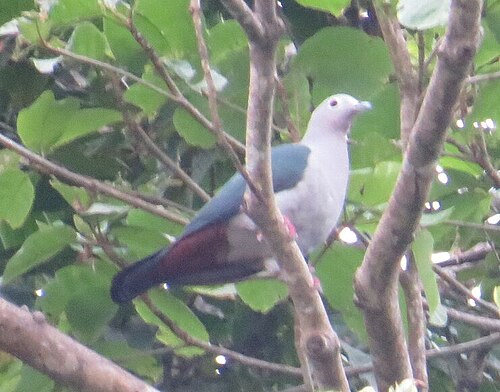
Norma Malinowski, some rights reserved (CC BY) https://www.inaturalist.org/photos/50657893

Basic Information

Specialized fruit eater capable of swallowing large fruits whole; moves between mainland and islands following fruit availability; spends most of its time in the canopy rather than on the ground; strong flier able to cross open water; plays a major role in spreading seeds across forests; often seen flying overhead rather than perched; conservation depends on protecting coastal forests and reducing hunting pressure

Northern Australia; coastal rainforest; monsoon forest; mangroves; offshore islands; associated with fruiting tree distribution

38–42 cm; large pigeon

Monogamous; 1 egg; tree nest; seasonal breeder

~10–15 yrs
Large fruit; figs; canopy feeder
Least Concern
Stable

Large pale pigeon with creamy white body and dark flight feathers; strong wings and heavy body built for sustained flight; relatively small head compared to body size

Arboreal; canopy-dwelling; seasonal movement tied to fruiting cycles; often solitary or in small flocks; strong direct flight

Large gape for swallowing fruit; strong flight for long-distance travel; canopy lifestyle reduces predation risk; digestive system adapted to fruit diet

Feeds on fruit; preyed on by birds of prey; nests vulnerable to arboreal predators

Habitat loss; hunting; loss of fruiting trees

Critical long-distance seed disperser maintaining rainforest diversity and connectivity

Habitat conservation programs; protected areas; population monitoring

Protect coastal rainforest; preserve fruiting trees; reduce hunting pressure

Can travel long distances between islands in search of food


Guest Engagement

Encyclopedia

Lasted Updated

Views: 0

© 2026 Pittsburgh Zoo Docents