
Nyala
The nyala (Tragelaphus angasii) is a medium-sized spiral-horned antelope native to southeastern Africa. Renowned for its striking appearance and significant sexual dimorphism, the nyala is a shy and elusive animal often found in dense woodlands and areas near water sources. Its unique combination of camouflage, behavioral adaptations, and social structure makes it a fascinating species to observe.
Inhabiting countries such as South Africa, Zimbabwe, Mozambique, and Malawi, the nyala plays an important ecological role within its habitat. As a herbivore, it helps maintain the balance of vegetation, while also serving as prey for larger predators, including lions and leopards.
The nyala’s combination of physical beauty and intriguing behaviors, such as its mating displays, scent-marking, and social dynamics, contributes to its status as a popular species in both zoos and wildlife reserves. It is currently listed as a species of Least Concern by the IUCN, with stable populations across much of its range, though it faces threats from habitat loss and poaching.
Basic Information
Habitat: Found in southeastern Africa, preferring dense woodlands near water sources.
Diet: Herbivore, feeding on leaves, fruits, and grasses.
Activity: Active during early morning and late afternoon; shy and prefers hiding in dense vegetation.
Physical Traits:
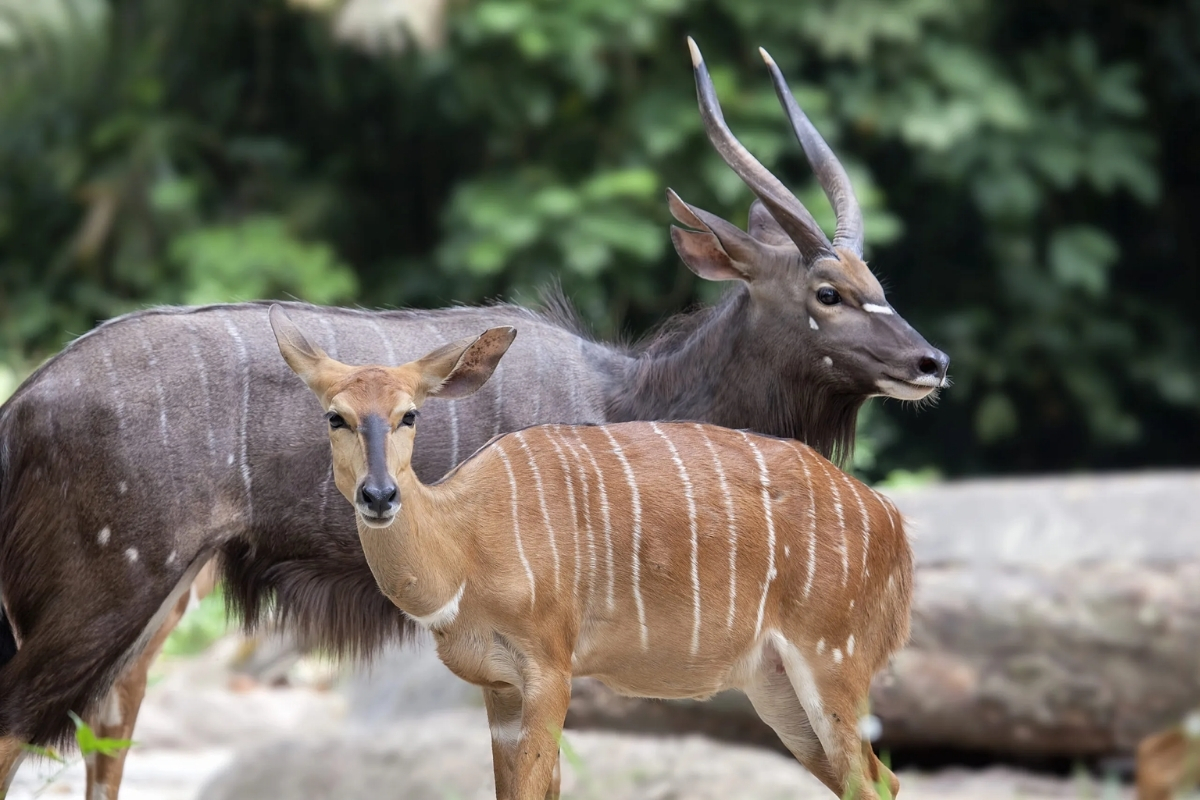
Males are larger with horns and dark grey coats.
Females and juveniles have rusty red coats with white stripes.
Social Behavior:
Males often live alone, while females and juveniles form small groups.
Non-territorial; ranges may overlap.
Communication: Use a dog-like bark to warn of predators and respond to alarms from other species like baboons and kudu.
Predators: Include lions, leopards, hyenas, and wild dogs.
Reproduction:
Gestation: 7 months; typically one calf is born.
Calves stay hidden for the first 18 days.
Males mature at 18 months, females at 11–12 months.
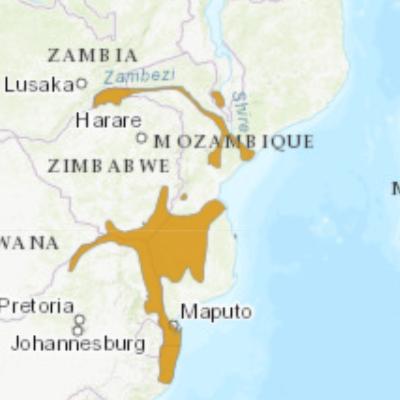
Found in south-eastern Africa, preferring dense lowland woodlands, thickets, and areas with ample shrub cover for hiding and grazing.
Commonly located near water sources, as they require regular access to fresh water.
Can adapt to regions with seasonal water availability, demonstrating resilience in semi-arid environments.
Thrives in areas with a mix of open grasslands and bushy vegetation, providing both food and protection.
Weight: Males: 216–276 lbs. Females: 121–150 lbs.
Length: Body: 53–77 inches. Tail: 16–22 inches. Horns: 24–33 inches (males only).
Mating Season: Peaks during spring and autumn, but nyalas can breed throughout the year.
Male Displays:
Males raise their white dorsal crest, lower their horns, and move stiffly to display dominance.
The shaggiest seniors with the longest horns have the advantage.
Males fight for dominance during mating, with larger males typically emerging as victors.
Aggression can be violent, and males may be killed by an adversary’s horn during combat.
Gestation: Lasts 7 months, resulting in the birth of a single calf weighing approximately 11 lbs.
Birth and Early Life:
Calves are born in thickets or other secluded areas to avoid predators.
They remain hidden for up to 18 days, with the mother nursing them at regular intervals.
Weaning: Calves are weaned at around 7 months, but they stay with their mother until her next calf is born.
Social Structure:
Young females stay close to their mother even after becoming independent.
Males and females reach sexual maturity at 18 months and 11–12 months, respectively, but remain socially immature until 5 years of age.

Activity: Mainly active in the early morning and late afternoon.
Behavior: Shy and cautious; they typically remain hidden rather than venturing out in the open.
Territoriality: Does not show signs of territoriality; individual home ranges can overlap.
Social Structure:
Adult males often live solitarily.
Groups of 2 to 10 individuals can be found, including single-sex or mixed-family groups.
Water Dependency:
Requires a regular intake of water and inhabits areas near water sources.
Adapted to live in regions with seasonal water availability.
Communication:
Uses a dog-like bark (primarily by females) to warn others about danger.
Reacts to warning calls from other species such as impalas, baboons, and kudu.
Exhibits the highest sexual dimorphism among spiral-horned antelopes.
Horns: Only males have horns, measuring 24–33 inches long with 1–2 twists and yellow tips.
Coat Coloration:
Females and juveniles have a rusty red-brown coat.
Males develop a dark grey coat with tan legs as they mature.
Stripes:
Females and young males feature 8–13 white stripes on their sides.
Older males have reduced or absent stripes.
Facial Markings: Both sexes display a white chevron between their eyes.
Crest: Both males and females possess a dorsal crest of hair from the back of the head to the tail.
Male Features: Males also have:
A long fringe from the throat to the hindquarters.
An erectile spinal crest running from the head to the tail.
Tail: Long, bushy tail with a white underside.
Scent Marking: The nyala has hairy glands on its feet, leaving a scent wherever it walks.
Common predators of nyala include lions, leopards, spotted hyenas, African wild dogs, and crocodiles.
Juveniles and calves are especially vulnerable to smaller predators like jackals and large birds of prey.
Nyala rely on their camouflage and shy nature to remain hidden from predators.
Warning Calls:
React to the alarm calls of other species such as impalas, baboons, and kudu, helping them detect danger early.
Females use a dog-like bark to alert the group of nearby threats.
Guest Engagement
Encyclopedia
Lasted Updated