
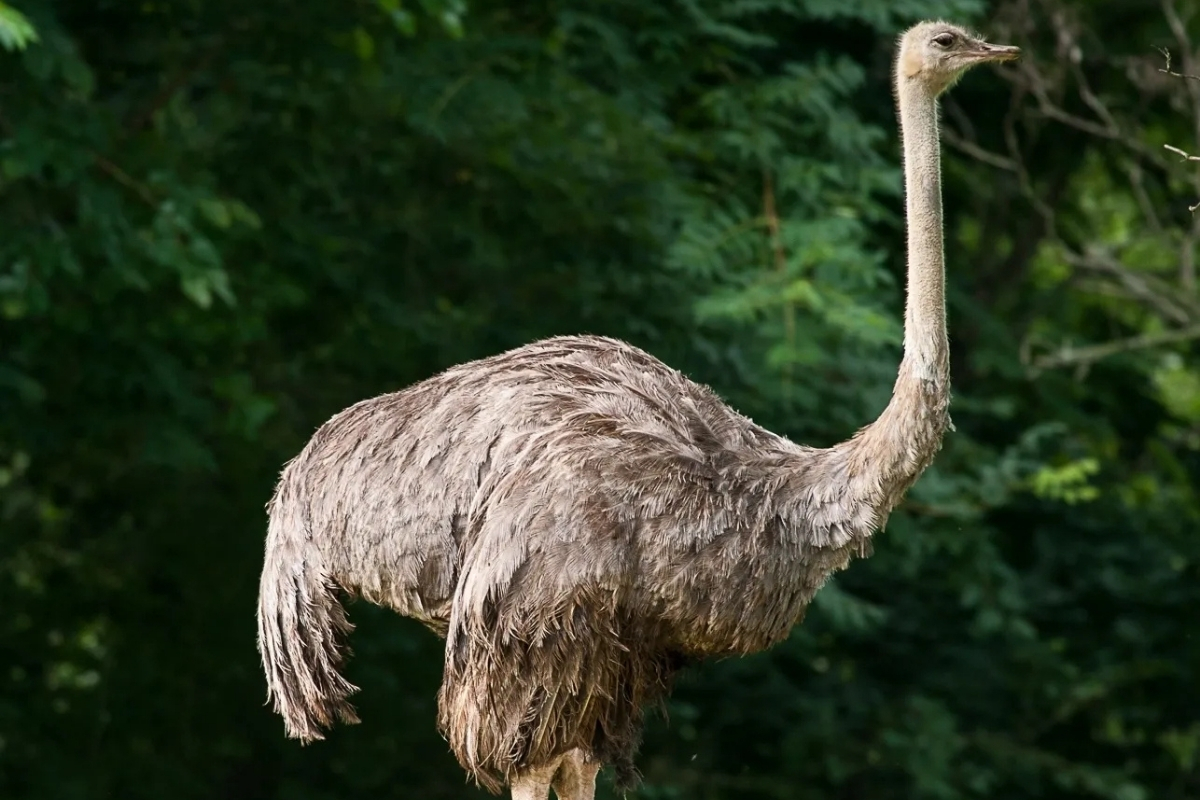
Ostrich


  • African Savanna
Back to Animals
News
Individuals
Basic Info
Guide
Biofacts
Encyclopedia

Ostriches (Struthio camelus) are one of the four large flightless birds, a group that includes emus, cassowaries, and rheas, and are the largest living birds in the world, standing up to 9 feet tall and weighing over 330 pounds; the only bird taller than the ostrich was the now-extinct moa of New Zealand. Ostriches are flightless due to their massive size, underdeveloped wing feathers, and flat breastbone, which lacks an anchor point for flight muscles, a structural adaptation shared by other ratites, including kiwis. Despite being unable to fly, ostriches are remarkable runners capable of sprinting up to 45 mph to evade predators. A common misconception is that ostriches bury their heads in the sand, but in reality they lower their heads and stretch their necks along the ground to blend into their surroundings when threatened. Fossil evidence of ostriches has been found in India, China, and Russia dating back nearly 7 million years, highlighting their ancient lineage and adaptability, while their size, speed, and ecological role make them an important part of Africa’s grassland biodiversity.

Blanche
Female • 3 yrs 3 mos
DOB: 06/01/2023
Born At: Ostrich Farm
Date In: 10/01/2025
Markings: Darker gray head and neck; approximately 230 lbs


Rose
Female • 3 yrs 3 mos
DOB: 06/01/2023
Born At: Ostrich Farm
Date In: 10/01/2025
Markings: Lighter head and neck; approximately 260 lbs


Gone and Moved


Basic Information

General Info: Largest birds in the world, reaching 9 feet tall and 330 pounds, native to Africa.
Speed and Defense: Flightless but capable of running up to 45 mph and defending themselves with powerful kicks.
Physical Traits: Have two toes, large eyes for spotting predators, black plumage in males, and gray-brown feathers in females.
Social Structure: Live in flocks of 5–50 birds, often alongside grazing animals. Use sharp eyesight and hearing to detect predators.
Diet: Omnivorous, eating plants, seeds, and insects, while swallowing stones to aid digestion. Require little water and obtain much of their moisture from food.
Breeding: Males dig nests up to 3 feet wide. Major hens place eggs in the center while minor hens lay around the edges. Eggs are about 7 inches long and can weigh as much as 30 chicken eggs. Males and major hens incubate eggs for about 42 days. Chicks can run shortly after hatching and reach full size by about 18 months.
Predators: Eggs are preyed upon by jackals and vultures, while adults may be targeted by lions and cheetahs. Ostriches may use zigzag running patterns to confuse predators.
Adaptations: Long necks help gather food and scan for danger, wings aid with balance while running, and swallowed stones assist with digestion.

Habitat: African savanna.

Range: Found across sub-Saharan Africa in open savannas, semi-deserts, and grasslands.
Climate: Thrive in hot, arid environments with sparse vegetation.
Coexistence: Often share habitats with grazing animals such as zebras and antelope.

Males: height 6′-9′. weight approx. 300 lbs.
Females: height 5’0″-6.5′; wt. 200 lbs

Incubation: 42-day incubation period.
Clutch Size: Nests typically contain 15–20 eggs.
Courtship: A male (cock) attracts a female (major hen) and digs a nest by flapping his wings to stir up sand. Nests are about 3 feet wide and 1 foot deep.
Egg Laying: The major hen lays first, followed by minor hens that add eggs to the same nest.
Egg Arrangement: Major hen eggs remain in the center while minor hen eggs are placed along the edges, where they are more vulnerable to predators.
Egg Size: Eggs are about 7 inches long, 5 inches wide, and can weigh as much as 30 chicken eggs.
Parental Care: The major hen incubates during the day while the darker-colored male incubates at night for camouflage.
Chicks: Chicks hatch about 12 inches tall and can run shortly after birth.
Nest Defense: Adults may use zigzag running displays to distract predators away from the nest.
Growth: Chicks reach full size at about 18 months old.

30-40 years in the wild. 70 years in human care.
Primarily herbivorous (grasses, seeds leaves & flowers), but will eat an occasional insect or reptile.
Zoo Ratite diet. Fed twice a day.
Least Concern as of 2018
Unknown but possible 150,000

Senses: Sharp eyesight and hearing help ostriches detect predators and benefit mixed-species grazing groups.
Male Coloration: Males have black plumage with white wing tips and tail plumes.
Female Coloration: Females have gray-brown feathers for camouflage.
Body Features: Both sexes have lightly downed heads, necks, and legs.
Toes: Ostriches have only two toes, the fewest of any bird, with the longest toe reaching about seven inches for traction.
Feet: Hoof-like feet help them run rapidly across open terrain.
Movement: Walk around 2 mph but can sprint up to 45 mph.
Wing Use: Wings act as brakes and help with steering while running and turning.

Herds: Form groups of 5–50 birds with one dominant male and one dominant female. Often associate with grazing animals for improved predator detection.
Sight and Hearing: Excellent eyesight and hearing help detect predators at long distances.
Threat Response: Escape danger by running up to 45 mph or defending themselves with powerful kicks.
Territories: Males establish and defend breeding territories during mating season.
Feeding: Use long necks to gather food and temporarily store it in the gullet.
Digestion: Swallow dirt, sand, and stones to help grind food during digestion.
Hiding Behavior: Lower their bodies and stretch their necks along the ground to blend into surroundings.
Activity: Diurnal animals that spend much of the day feeding and searching for water.
Social Nesting: Practice communal nesting with multiple females laying eggs in a shared nest.
Communication: Use booming calls, hissing sounds, and body displays to communicate.

Leg Strength: Deliver powerful kicks capable of seriously injuring or killing predators.
Two Toes: Have only two toes, the fewest of any bird, with a large main toe adapted for traction and speed.
Heat Tolerance: Adapted for extreme heat by minimizing water loss and extracting moisture from food.
Fat Storage: Store fat reserves to survive periods of limited food availability.

Egg Predators: Eggs are preyed upon by jackals, hyenas, vultures, and mongooses.
Chick Predators: Young ostriches are vulnerable to cheetahs, lions, leopards, and hyenas.
Adult Predators: Adults may occasionally be hunted by lions, leopards, and cheetahs, though their size, speed, and powerful kicks make them difficult prey.

Habitat Loss: Expansion of agriculture and human development reduces savanna and grassland habitat.
Hunting: Hunted for meat, feathers, leather, eggs, and oil.
Egg Collection: Eggs are sometimes collected from nests for food or trade.
Human Disturbance: Increasing human activity can disrupt nesting areas and breeding success.
Fencing & Roads: Fences and roads can fragment habitat and interfere with movement.
Climate Change: Changes in temperature and rainfall may affect food and water availability.

Seed Dispersal: Help spread seeds through digestion and waste.
Food Web Role: Eggs and young provide food for many predators.
Vegetation Balance: Feeding helps influence plant growth and grassland dynamics.
Scavenger Support: Broken eggs and remains provide food for scavengers and insects.
Indicator Species: Population health can reflect the condition of savanna ecosystems.

Protected Areas: National parks and wildlife reserves protect ostrich habitats across Africa.
Wildlife Laws: Hunting regulations help manage wild ostrich populations.
Habitat Conservation: Grassland and savanna conservation programs preserve key ecosystems.
Research Programs: Scientists monitor populations, breeding success, and habitat use.
Captive Breeding: Ostriches are bred in managed programs for agriculture, education, and conservation.
Education Programs: Zoos and conservation groups raise awareness about African grassland ecosystems.

Support Sustainable Products: Choose ethically sourced leather and feather products.
Protect Grasslands: Support conservation organizations working to preserve African savannas.
Reduce Emissions: Lower carbon footprints to help reduce climate impacts on grassland ecosystems.
Responsible Tourism: Support ethical wildlife tourism that protects natural habitats.
Educate Others: Share information about ostrich ecology and grassland conservation.
Support Zoos: Visit accredited zoos that participate in conservation education and research.

Largest Bird: Ostriches are the largest living birds in the world.
Largest Eggs: Lay the largest eggs of any living bird species.
Fastest Bird on Land: Can sprint up to 45 mph and maintain high speeds over long distances.
Powerful Kick: A single kick can seriously injure predators such as lions.
Big Eyes: Have the largest eyes of any land vertebrate, about 2 inches across.
No Teeth: Like all birds, ostriches do not have teeth and swallow stones to grind food.
Wing Use: Although flightless, they use their wings for balance, steering, and courtship displays.
Ancient Birds: Ratites represent an ancient group of flightless birds with deep evolutionary history.


Guest Engagement

Encyclopedia

Lasted Updated

Views: 0

© 2026 Pittsburgh Zoo Docents