
Polar Bear
Polar bears (Ursus maritimus) are the largest land carnivores and one of the most iconic animals of the Arctic. Descended from brown bear ancestors approximately 100,000–250,000 years ago, they evolved specialized adaptations for life on sea ice, including thick insulating fur, black heat-absorbing skin, large rough-padded paws for traction and swimming, and a streamlined body built for long-distance travel in freezing waters. Their diet is highly carnivorous and centered mainly on seals, while their exceptional sense of smell allows them to detect prey from up to 20 miles away. Although powerful apex predators perfectly adapted to extreme cold, polar bears face increasing threats from climate change, sea ice loss, pollution, and growing human-wildlife conflict. They are also an important cultural symbol for many Arctic Indigenous communities and have become a global symbol of climate change and Arctic conservation.
Basic Information
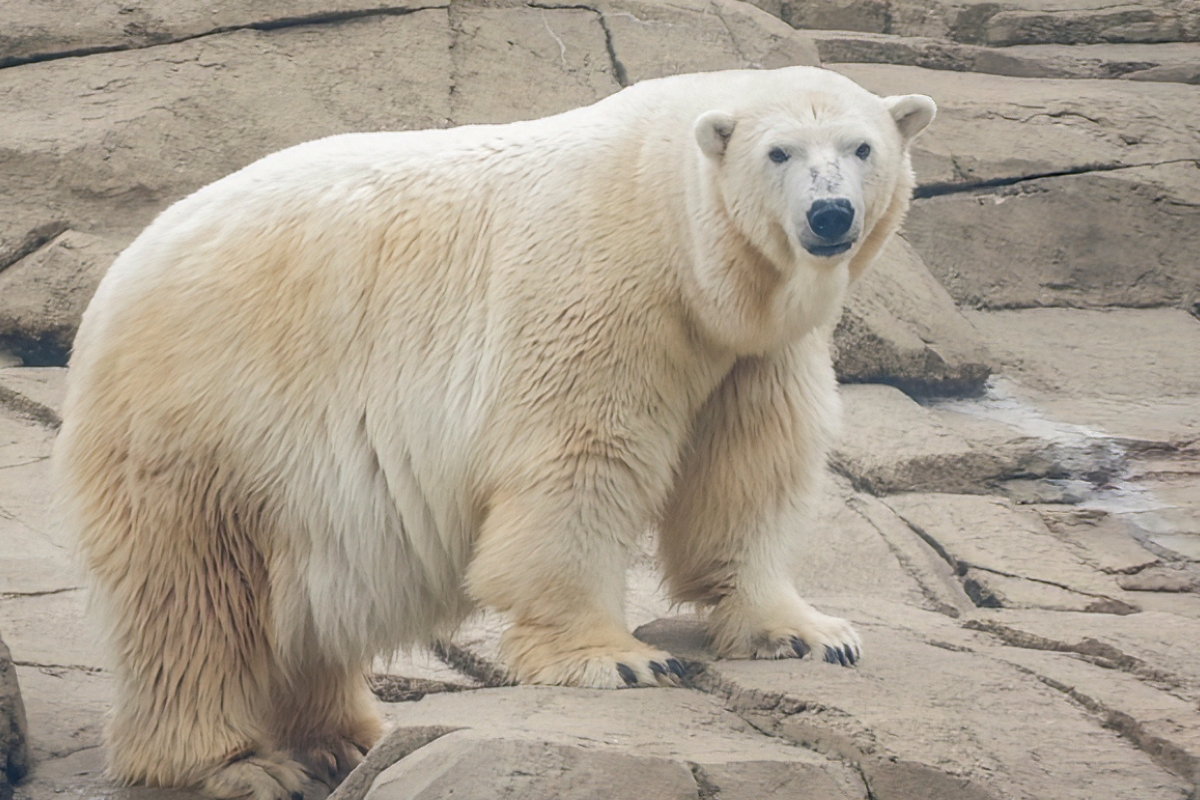
Why She May Not Be Visible:
Winter Behavior: Polar bears are often less active during winter and may spend more time resting in den-like areas.
Summer Heat: Polar bears are built for Arctic cold, not Pittsburgh summers. On hot days, she often chooses to stay in her air-conditioned indoor habitat.
Older Bear: As a senior bear, she spends more time resting and conserving energy.
Animal Choice:She always has the choice to be indoors or outdoors based on her comfort and well-being.
Best Time to View: Early morning, keepers put treats and enrichment in her habitat
Largest Carnivore: Largest land carnivore, with males weighing up to 1,500 pounds and females up to 550 pounds.
Black Skin: Black skin absorbs heat while transparent fur appears white for camouflage in snow and ice.
Two Fur Layers: Thick woolly underfur provides insulation, while hollow guard hairs repel water and improve buoyancy.
Paw Adaptations: Rough paw pads prevent slipping on ice, and large partially webbed forepaws aid in swimming.
Strong Swimmers: Swim using powerful front paws for paddling and hind legs for steering, capable of traveling over 60 miles without rest.
Swimming Speed: Can swim up to 6 mph and hold their breath for about 2 minutes.
Keen Smell: Able to detect seals up to 20 miles away and beneath several feet of ice.
Hunting Success: Spend nearly half their time hunting, though hunts are successful only about 20% of the time.
Denning: Females den in snowbanks from November through March, while males den for shorter periods.
Cubs: Cubs are born in January weighing less than 2 pounds, blind and nearly hairless, remaining with their mothers for more than a year.
Long-Distance Travel: Frequently travel massive distances between sea ice platforms in search of food.
Aggressive Defense: Known to aggressively defend food sources and may attack perceived threats, including helicopters.
Major Threats: Sea ice loss contributes to starvation, while pollutants such as PCBs, mercury, and other contaminants impact health and reproduction.
Males (boars): Considerably larger than females, standing 4 feet tall at the shoulders and measuring 7–11 feet long. Weight: 770–1,540 lbs.
Females (sows): Smaller than males, measuring 5.9–7.9 feet long. Weight: 330–550 lbs.
Maturity: Males mature around 4 years, females around 6 years, though most do not successfully breed until 8–10 years old.
Breeding Season: Breeding occurs from April to May. After courtship in June and July, pairs separate and return to solitary lifestyles.
Gestation: Approximately 8 months, including delayed implantation that helps time births with favorable conditions.
Litter Size: Usually 1–3 cubs born between November and January in dens.
Delayed Implantation: Fertilized embryos pause development until conditions are suitable for pregnancy.
Denning: Females build dens in snow drifts for birth and early cub development, remaining in a lethargic state from November through March.
Male Denning: Males den for shorter periods, usually from late November to late January, but may remain active year-round.
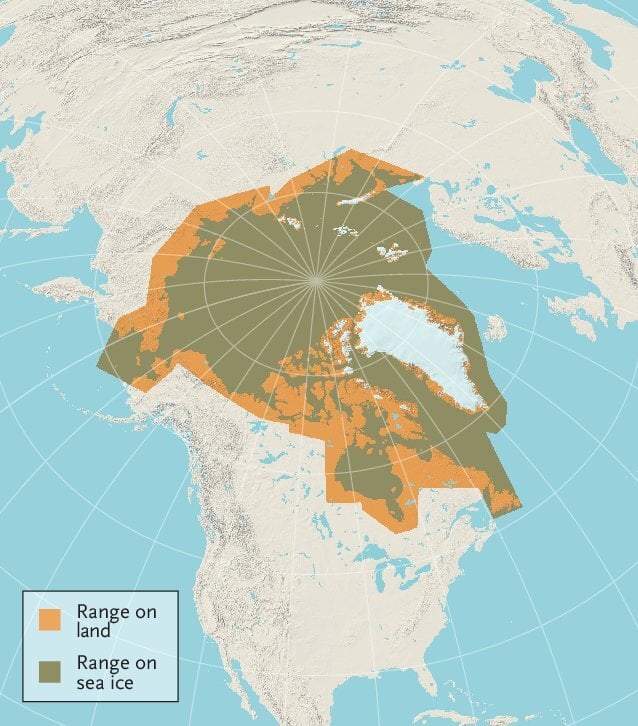
Den Locations: Large denning areas occur around Hudson Bay and James Bay, where some bears dig dens into permafrost and earth rather than snow.
Cub Development: Cubs are born blind, toothless, hairless, and under 2 pounds. White fur begins growing immediately after birth.
Den Emergence: Cubs remain in dens until March, gaining weight and strength before emerging.
Learning Survival: Cubs learn hunting and swimming behaviors by following and observing their mother.
Maternal Care: Cubs stay with their mother for more than a year until the next breeding cycle.
Cub Mortality: Many cubs die during the first year due to starvation, predation, accidents, or hunting pressure.
Independence: Cubs typically weigh 180–200 pounds by the time they leave their mother.
An apex predator beginning life smaller than a housecat and surviving Arctic conditions entirely through maternal dedication is one of evolution’s more stressful parenting strategies.
Opportunistic Eaters: Seals (ringed and bearded), walrus (young and/or adult), fish, birds and their eggs, small mammals, carrion, shellfish, crabs, starfish, mushrooms, grasses, berries, and algae. Also adapted to eating garbage.
Zoo Diet: Herring, capelin, polar bear biscuits, mulberry and/or Norway maple branches, and a small amount of produce.
Activity: Unlike most North American bears, polar bears may be active at any time of day or night, hunting during long Arctic summer days and winter darkness.
Hunting Time: Spend more than half their time hunting, though hunts succeed only about 20% of the time.
Long-Distance Travel: Travel enormous distances between ice packs, sometimes crossing open water or drifting on icebergs in search of food.
Grooming: Meticulous groomers that may spend up to 15 minutes cleaning themselves after feeding because dirty fur loses insulating ability.
Aggression: Among the most dangerous bear species and known to aggressively defend food or react to disturbances.
Deep Growls: Used to warn other bears, especially near food sources.
Hissing & Snorting: Signals aggression and often accompanies lowered head posture and flattened ears.
Roaring & Growling: Express anger, agitation, or displeasure.
Chuffing Sounds: Often associated with stress or nervousness.
Mother-Cub Communication: Mothers use soft growls and gentle physical cues to guide and discipline cubs.
Climate Change & Sea Ice Loss: Rising temperatures reduce sea ice, limiting hunting opportunities and increasing time spent on land, leading to malnutrition and lower cub survival.
Food Scarcity: Declining seal availability and longer fasting periods weaken polar bears and reduce reproductive success.
Pollution: Persistent pollutants such as PCBs and mercury accumulate in body tissues, affecting health, immunity, and cub development.
Human-Wildlife Conflict: Increased time on land leads to more encounters with people, sometimes resulting in lethal control measures.
Habitat Disruption: Oil drilling, shipping traffic, and industrial development disturb denning areas and increase oil spill risks.
Hunting & Poaching: Although Indigenous subsistence hunting is regulated, illegal hunting still occurs in some regions.
Guest Engagement
Encyclopedia
Lasted Updated