
Red-necked Wallaby
The Red-Necked Wallaby is a medium-sized marsupial native to eastern and southeastern Australia, including Tasmania. Recognized by its distinctive reddish fur on the neck and shoulders, this species is closely related to kangaroos but is generally smaller and more solitary. Adaptable to a variety of habitats, red-necked wallabies thrive in woodlands, scrublands, and coastal heathlands, where they graze on grasses and other vegetation.
Unlike their larger kangaroo relatives, red-necked wallabies are primarily nocturnal and crepuscular, meaning they are most active during dawn and dusk. They are known for their strong hind legs, which allow them to cover large distances with powerful leaps, as well as their pouch, where young joeys develop after birth.
Though not currently endangered, red-necked wallabies face threats from habitat loss, vehicle collisions, and introduced predators. Their ability to survive in fragmented landscapes has helped maintain stable populations, but conservation efforts continue to ensure their long-term survival in the wild.
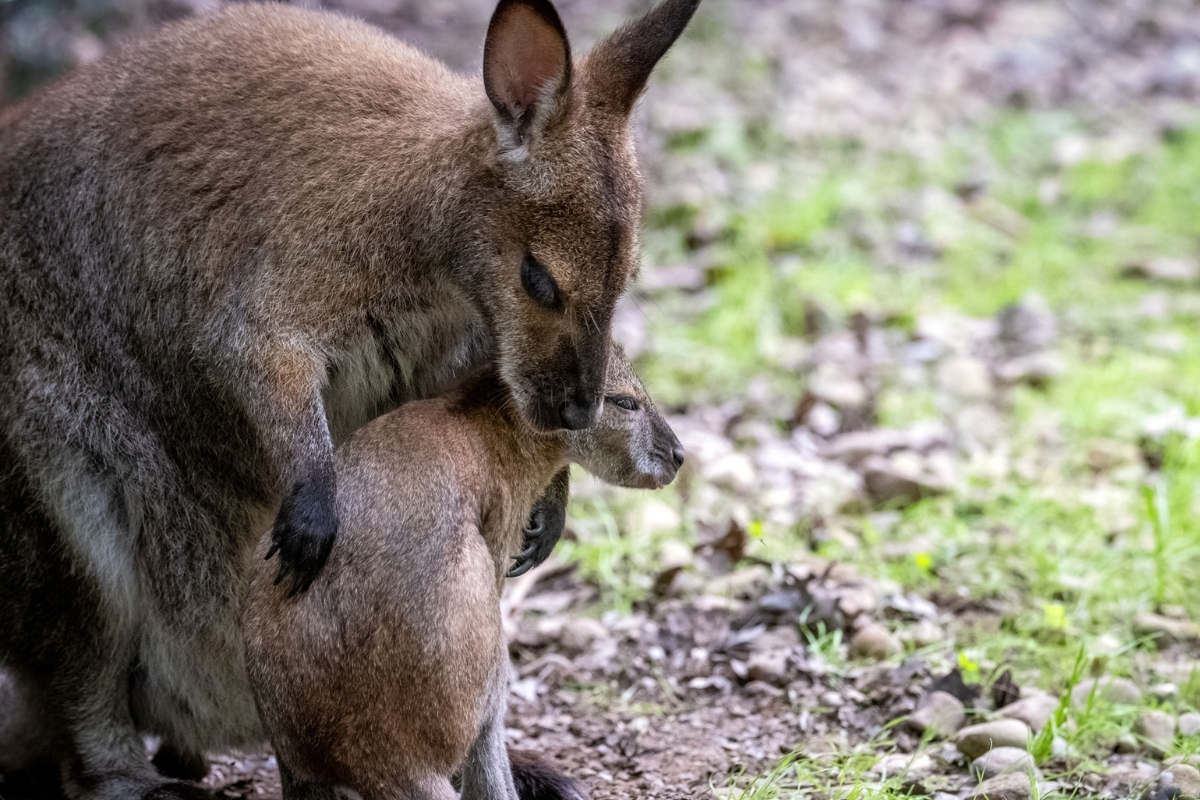
Basic Information
Native to Australia: Found in eastern and southeastern Australia, in forests and grasslands.
Adapted for Hopping: Travels efficiently using strong hind legs.
Diet: Herbivores, feeding on grasses, leaves, and shrubs.
Breeding: Females have pouch-developing joeys for 8-9 months.
Conservation Status: Least Concern, stable population, but faces habitat loss and road mortality.
Cultural Significance: An icon in Aboriginal art and Australian heritage.
Ecological Role: Helps maintain plant diversity and seed dispersal.
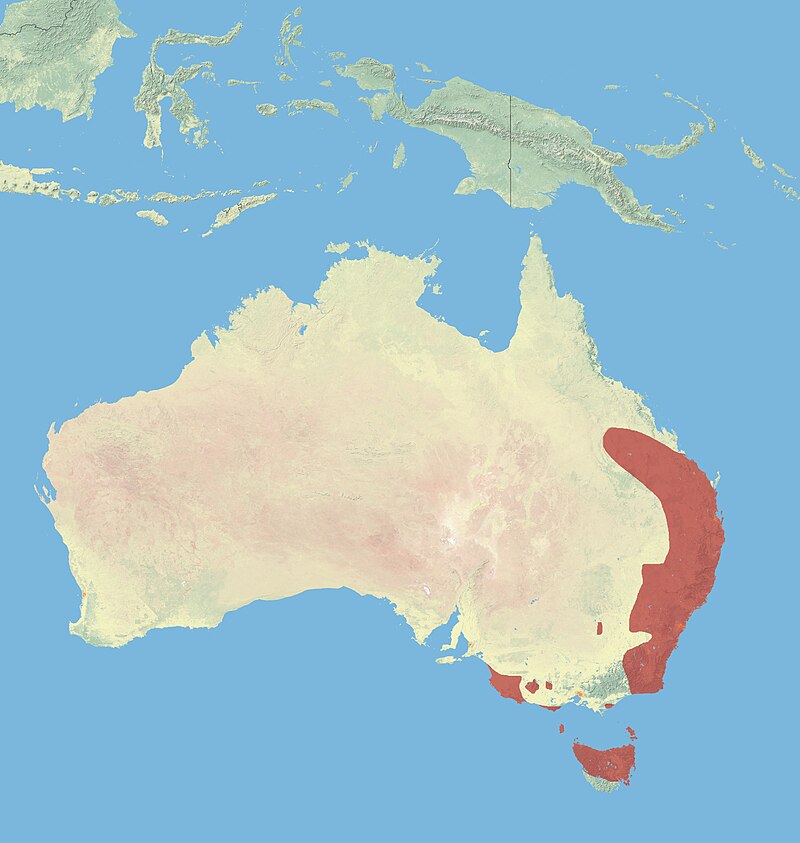
Eastern Australia and Tasmania (Introduced to New Zealand, the United Kingdom (in England and Scotland), Ireland, the Isle of Man, France and Germany).
Eucalyptus forests and open areas with nearby tree shelter.
Reproductive Strategy: Polygynous, with dominant males mating with multiple females.
Mating Season: Varies by region but often peaks in spring and summer.
Gestation Period: Approximately 30 days.
Birth: Gives birth to a single joey, which is born underdeveloped and crawls into the mother’s pouch immediately after birth.
Pouch Life: The joey remains in the pouch for about 8–9 months, continuing to nurse and develop.
Weaning: Occurs around 12–15 months, although young may still stay near the mother.
Embryonic Diapause: Females can delay embryo development until the pouch is vacant, allowing for continuous reproduction.
Parental Care: Mothers provide milk and protection, while males do not participate in rearing.
Also called Bennett’s wallaby.
Fur is tawny grey with a white chest and belly; dark brown muzzle, paws, and feet. Red-tinted fur on the back of the neck and shoulders.
Senses include an acute sense of smell and hearing; ears can rotate 180° independently.
Anatomy includes highly developed hind legs, a sturdy, tapered tail for balance, a forward-opening pouch with four teats, underdeveloped vocal cords, and eyes set high on the skull.
Related species include kangaroos and wallaroos, but wallabies are smaller and have a more compact build.
Nocturnal & Crepuscular: Most active during the early morning and late afternoon/evening, resting during the day in shaded areas.
Solitary but Social: Typically found alone or in small, loose groups, unlike the more social kangaroos.
Territoriality: Not highly territorial; home ranges may overlap with others.
Grooming: Frequently grooms itself and other wallabies as a social behavior.
Communication: Uses foot thumping, hissing, and guttural sounds to signal danger or distress.
Defense Mechanisms: When threatened, may flee using powerful jumps or defend itself with strong kicks.
Feeding: Grazes on grasses, herbs, and shrubs, using forelimbs to manipulate food.
Reproduction-Related: Males may engage in “boxing” contests to establish dominance during mating season.
Thermoregulation: Licks forearms to cool down through evaporative cooling in hot weather.
Efficient Hopping: Uses hind legs for long-distance, energy-efficient movement.
Pouch: Female wallabies have a protective pouch for joey development.
Thermoregulation: Fur provides insulation against temperature extremes.
Nocturnal Activity: Primarily crepuscular, active at dawn and dusk.
Social Flexibility: Typically solitary, but form loose groups in times of abundance.
Wallabies have a few natural predators: Dingoes, wedge-tailed eagles and Tasmanian Devils.
But the introduction of feral predators – foxes, cats and dogs – has been disastrous for many species,
Habitat Loss: Deforestation, land clearing for agriculture, and urban expansion reduce natural habitats.
Vehicle Collisions: Frequently struck by cars, especially in areas where roads cut through habitats.
Hunting & Culling: Sometimes hunted for their meat and fur or culled in regions where they are considered agricultural pests.
Climate Change: Altered weather patterns, droughts, and habitat shifts affect food availability and survival rates.
Competition for Resources: Domestic livestock compete for grazing areas, leading to food shortages.
Disease: Susceptible to toxoplasmosis, tuberculosis, and other diseases that can spread from domestic animals.
Herbivory: Helps maintain plant dynamics by grazing on grasses and shrubs.
Seed Dispersal: Contributes to seed dispersal and plant growth.
Ecosystem Balance: Controls plant spread, ensuring balanced ecosystems.
Prey for Predators: Serves as a key food source in the food web.
Habitat Protection: Focus on preservation and restoration of natural habitats.
Road Mortality Prevention: Installation of wildlife corridors and road signs.
Population Monitoring: Regular surveys to track health and distribution.
Climate Adaptation: Research to support adaptation to climate change and protect habitats.
Appreciate from Afar: Enjoy wildlife responsibly by observing animals in their natural habitats without disturbing them.
Support Conservation Programs: Donate to or volunteer with organizations that protect habitats and wildlife.
Reduce Environmental Impact: Make sustainable choices like reducing waste, conserving water, and using eco-friendly products.
Drive with Caution: Be mindful of wildlife crossing roads, especially in areas near natural habitats.
Respect Local Wildlife: Avoid feeding or approaching wild animals, as human interaction can be harmful to them.
Learn & Educate Others: Share knowledge about the species and the importance of conservation with friends and family.
Visit Accredited Zoos & Sanctuaries: Support institutions that contribute to research, education, and conservation.
Guest Engagement
Encyclopedia
Lasted Updated