
Siamang
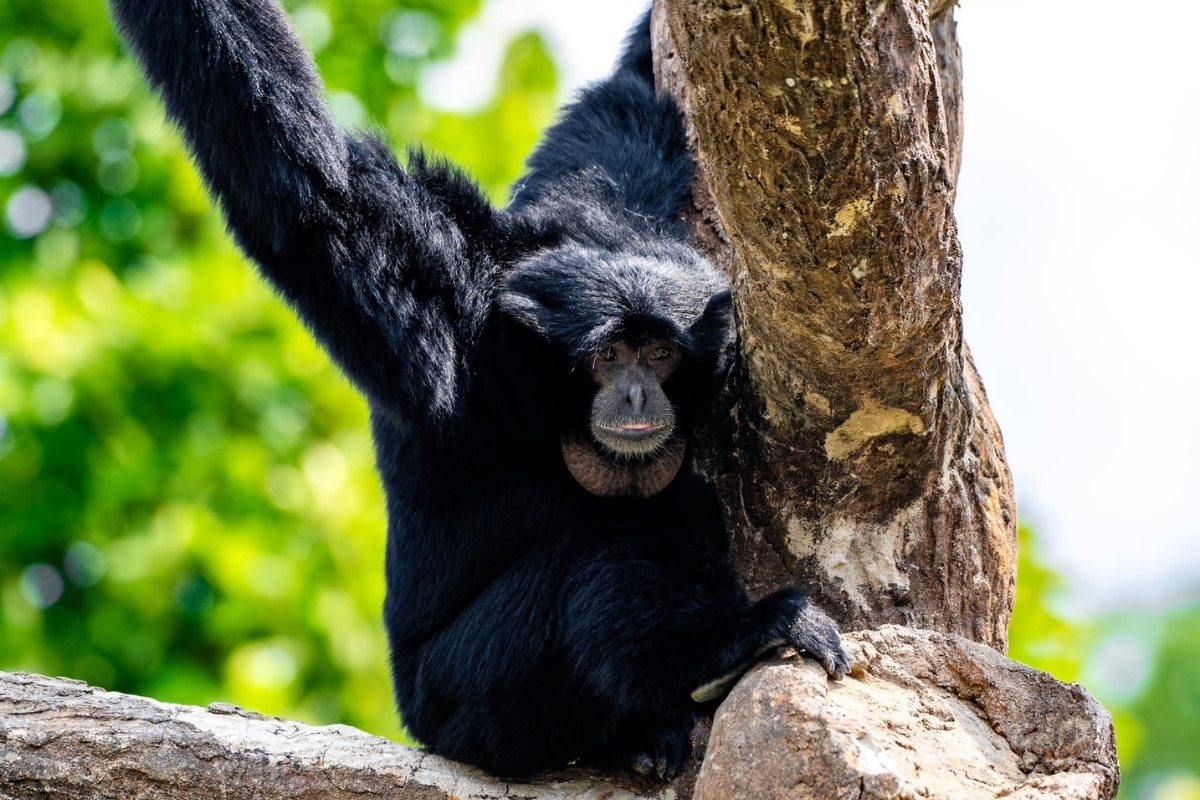
The siamang (Symphalangus syndactylus), the largest of the lesser apes, is native to the forests of Sumatra, Malaysia, and Thailand. As lesser apes, siamangs are tailless, like great apes, but smaller and more specialized for an arboreal lifestyle, using their long arms for brachiation—a fast and efficient way to swing through the trees.
Siamangs are famous for their loud vocalizations, amplified by a throat sac, used to mark territory and strengthen pair bonds. Their shaggy black fur, hairless face, and distinctive mustache make them visually unique. They exhibit a monogamous lifestyle, forming lifelong bonds and sharing parenting duties.
Highly intelligent and social, siamangs rely on vocal communication more than smell, a characteristic of lesser apes. As an endangered species, they emphasize the importance of conserving Southeast Asian forests and the unique biodiversity they support.
Basic Information
Tailless: Lesser apes like siamangs lack tails, relying on other adaptations for balance.
Locomotion: Siamangs swing (brachiate) with long arms, moving efficiently through the trees.
Size and Proportions: Lesser apes have longer arms relative to their body size, adapted for an arboreal lifestyle.
Social Structure: Form monogamous family groups, strengthening bonds through cooperative parenting.
Communication: Siamangs use loud vocalizations (up to 113 decibels) for bonding and territorial defense, audible up to 2 miles.
Brain and Intelligence: Gibbons demonstrate advanced intelligence but lack the tool use of great apes.
Arboreal Lifestyle: Lesser apes live almost entirely in trees, rarely coming to the ground.
Geographic Range: Gibbons, including siamangs, are native to Southeast Asia.
Gibbon Diversity: There are 20 known gibbon species divided into four genera across Asia.
Siamang Distinction: Siamangs are the largest gibbons and the only species in their genus, Symphalangus.
Conservation : Deforestation from unsustainable palm oil plantations, illegal pet trade, and habitat fragmentation threaten siamang survival.
: Choose sustainable palm oil products to protect Southeast Asian forests and siamang habitat—scan barcodes with the PalmOil Scan app or check labels while shopping in Pittsburgh-area stores.
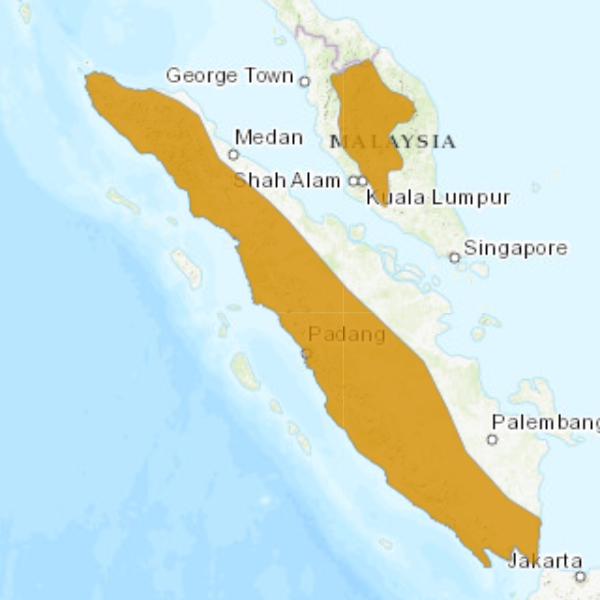
Distribution: Sumatra and peninsular Malaysia.
Habitat:
The Siamang can be found in the rainforests, monsoon forests and mountian forests of Sumatra and peninsular Malaysia.
Siamangs are found in lowland, hill, and upper dipterocarp forest. They spend most of their time in the mid-upper canopy.
Territory can be as large as 50 acres
7-8 months Single infant birthBreeding Info
Monogamous: Forms long-term pair bonds, usually for life.
Mating Season: Breeds year-round, more common during the wet season.
Gestation: 7-8 months, giving birth to a single infant.
Offspring: Infant clings to the mother for 12 months, becoming more independent at 2 years.
Parental Care: Both parents care for the young, with the mother providing the primary care.
Largest Gibbon: Nearly twice the size of other gibbons.
Adapted Limbs: Long fingers, opposable thumbs, and toes for grasping and swinging.
Distinctive Fur: Dense, shaggy, and the darkest among gibbons, aiding camouflage.
Extra-Long Arms: Longer than legs, enabling efficient swinging up to 10 feet and speeds of 35 mph adapted for brachiation.
Unique Face: Mostly hairless with a thin mustache.
Reduced Smell: Relies on sound and sight for communication.
Arboreal Experts: Rarely descend, specializing in brachiation for treetop travel.
Tailless: Like all apes, lack a tail.
Intelligent: Exhibit problem-solving abilities without tool use.
Family Groups: Live in small, close-knit family units with strong bonds.
Monogamous: Form lifelong pairs; both parents actively raise offspring.
Duetting: Mated pairs sing loud, long duets to mark territory and reinforce bonds.
Vocalization: Use a large throat sac to amplify calls, heard up to 2 miles away.
Territorial: Defend territories with vocal displays, avoiding physical conflict.
Arboreal: Highly skilled in brachiation, spending most of their lives in trees.
Diet: More folivores than other gibbons, consuming leaves, fruits, and flowers.
Childcare: Males actively carry and protect infants after a few months.
Diurnal: Active during the day; split time between foraging, resting, and grooming.
Playful Juveniles: Young siamangs engage in play to build coordination and social skills.
Brachiation: Long arms and specialized shoulders for efficient swinging through trees.
Throat Sac: Inflates to amplify calls for communication and territory defense.
Hands and Feet: Syndactylous hands and prehensile feet for grasping.
Low Metabolic Rate: Conserves energy, allowing for less frequent feeding.
Have no natural predators as adults. However, they are threatened by humans who hunt them for the pet trade:
Habitat Loss: Deforestation and palm oil plantations destroy and fragment their habitats.
Illegal Trade: Infants are captured for the pet trade, often killing adults.
Human Encroachment: Expanding settlements displace siamangs and cause conflicts.
Ecological Importance
Seed Dispersal: Aids in plant diversity by dispersing seeds.
Forest Health: Regulates plant populations, maintaining ecosystem balance.
Indicator Species: Reflects the health of rainforest ecosystems.
Protected Areas: Establishment of protected zones in Sumatra and Malaysia.
Anti-Poaching: Stronger enforcement of laws against illegal trade and poaching. – Aspinall Foundation.
Breeding Programs: Captive breeding to support wild populations.
Rehabilitation and Re: Siamangs rescued from the pet trade or unsuitable captivity undergo rehabilitation before being released into protected areas. – Wilmar International & Kalaweit Project.
Public Awareness: Education campaigns to highlight the species’ Endangered status.
Habitat Restoration: Efforts to restore degraded habitats and promote sustainable land use.4o
Choose Sustainable Products: Encourage buying items with Roundtable on Sustainable Palm Oil.
Do Not Engage with Pet Trade Content: Avoid liking, sharing, or commenting on social media posts or videos showing siamangs or other exotic animals as pets. Even negative attention can increase the popularity of such content.
Recycle: Reduce waste to help protect forests.
Support Eco-Friendly Businesses: Choose companies that prioritize sustainability and ethical sourcing of materials.
Guest Engagement
Encyclopedia
Lasted Updated